Inclusive education within the Cardiff midwifery teaching team
30 April 2026
Context
In 2023, we started embedding the Royal College of Midwives’ Decolonising Midwifery Education toolkit across our programme. This marked the beginning of an ongoing journey that has encouraged us to keep learning, reflecting, and rethinking the experience we offer our students.
Decolonisation and inclusivity have become increasingly important within midwifery, particularly as UK maternal mortality data continue to show that Black and Brown women are more likely to die during childbirth than White women. Although this disparity has reduced, it remains a serious concern. Alongside this, we recognised a lack of diversity within our own student cohorts. Together, these factors prompted us to make changes aimed at widening participation, improving representation within the profession, and supporting better outcomes for women from the Global Majority.
Implementation
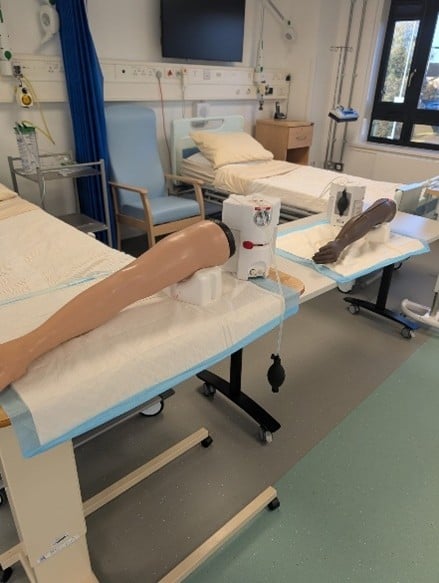
Many of the changes we have made are practical but powerful. This includes ensuring that the manikins used in simulation learning, along with the images and clinical scenarios used in teaching, represent a range of skin tones and cultural backgrounds. We place particular emphasis on enabling students to recognise clinical deterioration and skin changes across different skin tones so that they can respond quickly and appropriately in practice.
Working in partnership with students is central to this approach. As a team of White female educators, we recognise that we learn from our students every day. Only they truly know what their learning experience feels like, and by fostering open, adult-to-adult relationships, we are able to listen, learn, and work together to shape an experience that is meaningful, supportive and responsive to their needs.
Impact
Our thinking has expanded from focusing solely on Global Majority students to reflecting more broadly on how inclusive our programme is for all learners, including those who are neurodivergent or have additional needs, whether formally diagnosed or not.
One of the most tangible outcomes has been a shift in cohort diversity. While just 3.3% of students in our current third year identify as Black, Asian or from ethnically diverse backgrounds, this figure has increased to 15% in our current first-year cohort—early but encouraging evidence of meaningful change.
Reflections / What’s next
Inclusion is now part of every conversation we have and every decision we make as a team. In April this year, we were awarded Gold in the Diverse Cymru Cultural Competence accreditation scheme—the only institution to receive Gold out of more than 20 entrants. This recognition has validated our work and strengthened our commitment to building an inclusive community that supports everyone, with the ultimate aim of improving outcomes for women and babies across Wales.Starter for ten
Inclusion and decolonisation are long journeys, and the first step is simply deciding that this work matters, and giving yourself permission to start the conversation — as a team, as a wider community, and together with students. One helpful thing to keep in mind is that you don’t have to work this out on your own. There’s already a lot of thoughtful work happening, and connecting with others who share this interest can be a great source of encouragement.