Seeing Inclusion Differently: How a Pair of Coloured Glasses Changed the Conversation
Introduction
Universities are committed to creating learning environments where all students can participate and succeed. However, providing every student with the same resources does not always result in equal access.
A simple activity I developed demonstrates this difference.
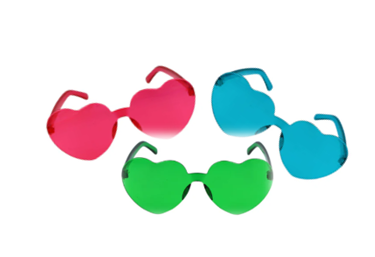
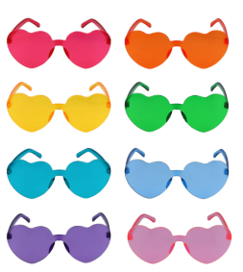
During an (unsuccessful!) interview with three senior members of staff from within the School, I presented the following image as part of my presentation. I then nervously reached into my suit jacket and pulled out three heart-shaped sunglasses: blue, red and green.
Thankfully… phew… all three agreed to wear them. What I would have done if they had not, I do not know! Probably would have been a nod to history…next slide please.
For two participants, the glasses made no difference at all. For one participant, however, a hidden message suddenly appeared: “LOVE THE SUNNIES.” The information had always been there. The difference was that one person had the right tool to access it.

The activity: same task, different experience
All three participants were given at the same time:
- the same image,
- the same instructions,
- the same amount of time.
On paper, this appeared fair. Before reading on, take a moment to look at the image above. Can you see the hidden message?
Take 10 seconds before scrolling further… Can you spot the hidden message?
Same image → Different lens → Different experience
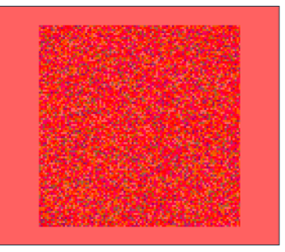
Figure 2: Same image as viewed with the red ‘sunglasses’ filter
The information was present throughout. Access depended on having the appropriate tool.
However, the experience was not equal. Two participants were unable to access information that was available to the third. The difference was not due to ability or effort. After all, the information was presented to everyone in the same way, as it often is in a lecture theatre. The difference was access to the right tool. This mirrors the experiences of many disabled students, where barriers within environments, systems, or resources can prevent them from demonstrating their knowledge and skills.
Moving from equality to equity
What struck me afterwards was how clearly this demonstrated the difference between equality and equity.
Equality means giving everyone the same thing.
Equity means recognising that different people may need different tools or approaches to access the same opportunity.
The participant who could see the hidden message did not have an advantage over the others. Heck no, they simply had what they needed to access information that was already there. Just as the appropriate lens allowed one participant to access information that was already present, appropriate support does not change a student’s ability or reduce expectations; it enables them to access the same opportunities as their peers.
This also resonated with findings from my MSc research into the support available to dyslexic students during clinical placements. What became clear was that students often had the knowledge, skills and ability to succeed, but barriers within systems and environments affected whether they could demonstrate those capabilities.
Inclusive practice in action
The sunglasses activity made me reflect on how easily barriers can become part of everyday learning experiences without us realising it. The image itself was not the problem; the issue was whether everyone had access to the information within it.
Reflecting on this activity also made me think about findings from my MSc research. Some students spoke about not disclosing their disability because they were worried about being treated differently or singled out. That got me thinking about how many barriers we might never know about if we only wait for students to tell us. Perhaps the challenge for us as educators is to think about learner diversity from the start, rather than only when a difficulty becomes visible.
While completing my FHEA I found that there’s actually a name for this way of thinking: Universal Design for Learning. In simple terms, it’s about recognising that students learn differently, and thinking about that when designing teaching and assessment. Rather than expecting every student to engage with learning in the same way, it encourages us to build flexibility in from the outset.
I will hold my hands up and say that I am very much still a novice teacher. As someone developing my own teaching practice, I find this particularly relevant. Small changes in the way we design learning activities can create more opportunities for students to participate and succeed.
For example:
- Could students engage with content in different ways, such as through interactive activities, discussion, visuals, or written materials?
- Are we providing students with different ways to demonstrate their understanding?
- Could feedback be delivered in formats that are accessible and meaningful to different learners? Feedback is often provided through written comments. Could alternative approaches, such as recorded verbal feedback, sometimes communicate tone, nuance and encouragement more effectively? For some learners, hearing feedback may also improve accessibility and engagement.
- Are there barriers within our existing approaches that we have simply accepted as “the way we do things”?
The question is not whether one method is better than another, but whether the method chosen enables students to understand, participate, and progress.
Reflection: What can we learn from the glasses?
The glasses did not change the message. Nor did they make the task easier. They simply allowed someone to access what was already there.
Inclusive teaching works in much the same way. The goal is not to lower expectations but to remove unnecessary barriers so that students have a fair opportunity to meet them.
Sometimes inclusion begins with a simple question:
“Who can access this, and who might be unintentionally excluded?”
Often, the smallest adjustments are not about changing learning itself. They are about making sure everyone has access to it. Just like the sunglasses, inclusive practice doesn’t change the message. It simply helps more people see it.