More than research: what I learned during my WHO Collaborating Centre Internship
24 September 2026
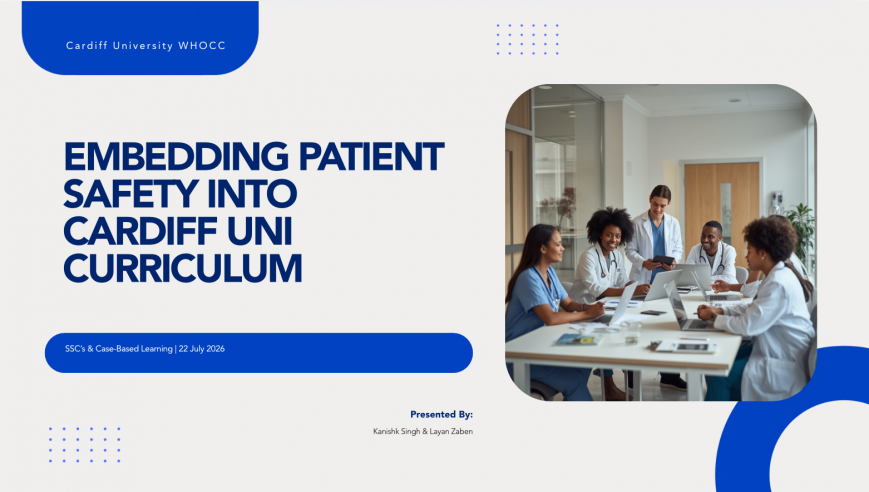
Layan Zaben, a second year School of Medicine student shares her On-campus Internship experience.
Before beginning my internship at the WHO Collaborating Centre for Patient Safety Learning and Improvement, I viewed patient safety fairly straight forwardly. I understood its importance, but I assumed it was primarily about preventing mistakes in healthcare. Similarly, I believed that the end goal of research was publication—a paper marking the completion of a project.
Over the course of my internship, both of these assumptions changed.
Not only did I gain an introduction to the field of patient safety, but I also discovered the complex systems that underpin safer healthcare. Patient safety is far more than reducing individual errors; it is about understanding why incidents occur, learning from them, and designing systems that continually improve care. Seeing the work that happens behind the scenes gave me a new appreciation for the scale of collaboration and evidence required to make meaningful improvements.
Perhaps the biggest lesson I learned was that research does not end when a paper is published. In many ways, publication is only the beginning.
One of the most rewarding aspects of the internship was contributing to the translation of research into practical resources that could have a real impact. I worked on projects that transformed evidence into educational materials, supported the development of webpages to communicate research more effectively, and explored how research findings could be embedded within university teaching. Being involved in work that bridges research, education, and practice demonstrates how evidence can influence not only healthcare, but also how future healthcare professionals are trained.
Alongside the technical knowledge I gained, some of the most valuable outcomes were the professional skills I developed. Interviewing researchers required me to build confidence in my communication skills, ask thoughtful questions, and present information clearly to different audiences. Delivering presentations strengthened my ability to communicate ideas effectively, while collaborating with colleagues from different professional backgrounds taught me the importance of teamwork, adaptability, and learning from others’ perspectives.
These experiences helped me become more confident in working within multidisciplinary teams and reinforced how essential communication is in both research and healthcare.
Looking back, this internship offered far more than an introduction to patient safety. It changed the way I think about research, demonstrating that its greatest impact often comes not from publication itself, but from how it is translated into education, policy, and practice. I leave with a much deeper understanding of patient safety, greater confidence in my own abilities, and a genuine appreciation for the collaborative work that drives improvement in healthcare.
For these reasons, this is an experience I would highly recommend for any students considering it. It is a chance not only to learn about an important field, but also to contribute to work that is meaningful, develop valuable professional skills, and see firsthand how research can create real-world impact.
A huge thank you to Dr. Joy McFadzean, a clinical lecturer of patient safety and Professor Andrew Carson Stevens, a clinical professor of patient safety, as well as Mr. Saptarshi Putatunda Data Manager for the Cardiff University Patient Safety Group for their fantastic guidance and support throughout this experience.
On-campus Internships
Learn more about the Learning and Teaching Academy’s On-campus Internships scheme.