Edubot’s insights into how students view AI
5 October 2026
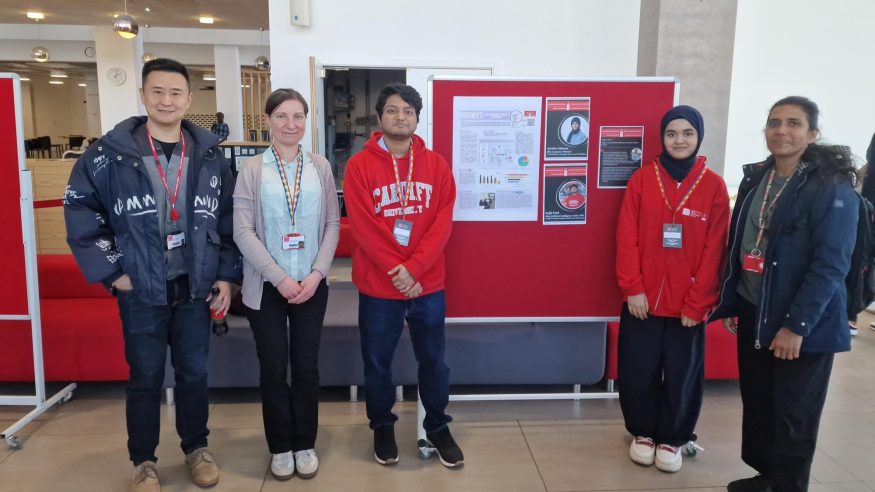
Academic Lead, Ramalakshmi Vaidhiyanathan, shares her AI insights.
My journey with Generative AI integration in education commenced with the use of Poe’s Chatbot as an assessment support system for students. A year later, when I provided students with an AI-integrated assessment, there was a change in their perception of AI. Almost 15% of them did not want to use AI as their client to gather requirements for their coursework. This prompted the creation of a Student Experience Partner (SEP) project called Edubot in collaboration with Marianna Majzonova and Nan Zhang from the Learning and Teaching Academy. Srijit Paul and Ayesha Faheem, student experience partners who were also Computer Science and Informatics students, were involved in this study investigating students’ assessment experiences and perceptions of Generative AI in higher education.
As part of this project, we conducted a study that raised important questions about student learning, assessment practices and employability skills. We explored students’ perceptions of AI and its perceived impact on their academic experience through a mixed-methods investigation.
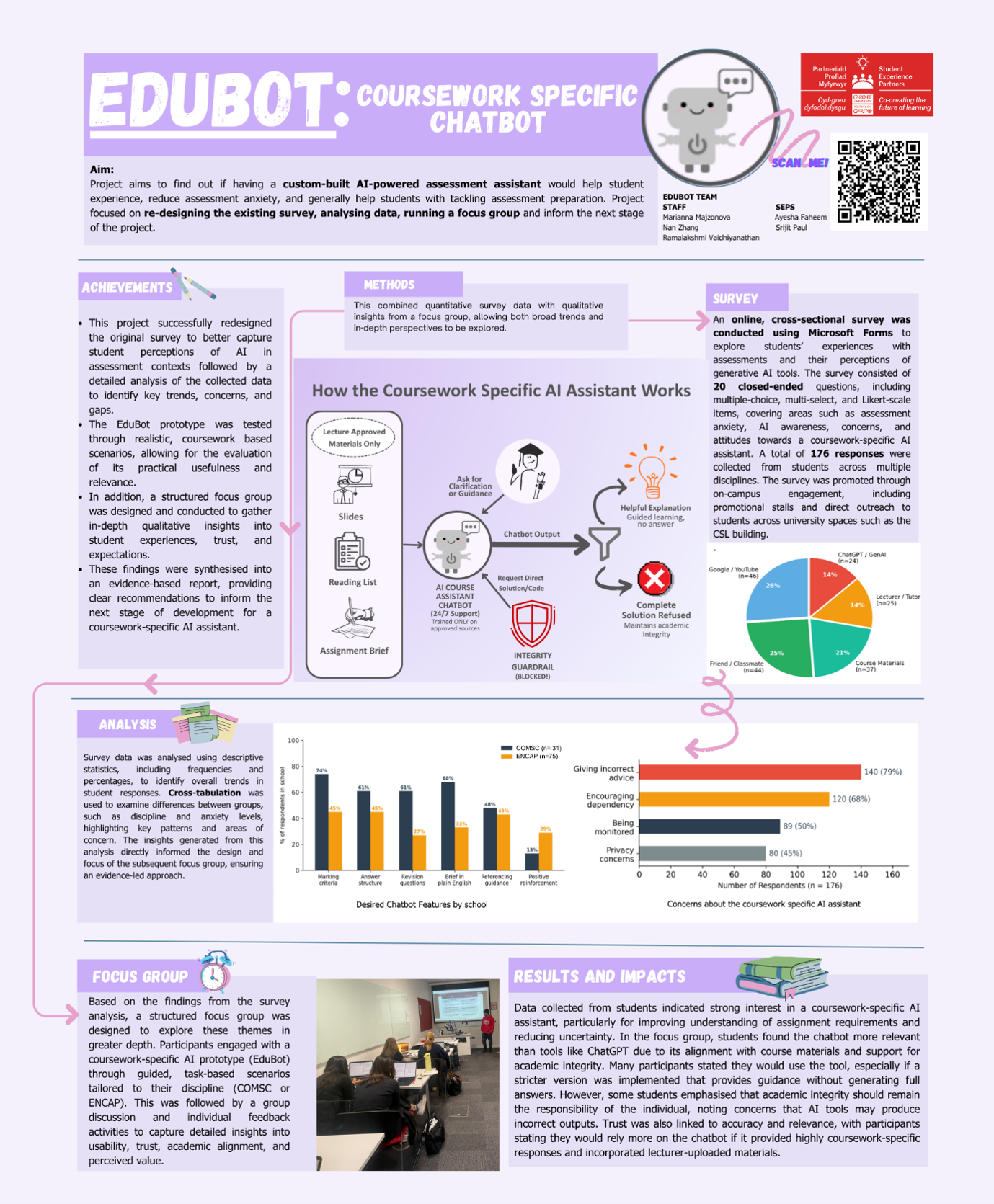
A cross-sectional survey of 176 undergraduate and postgraduate students across 20 academic schools examined assessment anxiety, AI awareness, acceptable uses of AI and attitudes towards a hypothetical coursework-specific AI assistant trained exclusively on lecturer-approved materials. This was followed by a focus group with students from Arts, Humanities and Social Sciences, which explored real-time interactions with an early prototype of such an assistant.
A majority reported some assessment anxiety, particularly a fear of not being “on the right track”, and a consistent reluctance to seek help directly from lecturers. Fourteen percent of respondents reported using generative AI when they became stuck on a concept. This confidence increased substantially, with 63.7% stating they would trust an AI assistant more if it was trained exclusively on course-specific materials. However, strong concerns were expressed regarding accuracy.
Key considerations include dependency, transparency, monitoring, critical thinking and environmental impact. Disciplinary differences emerged with Computer Science students showing higher acceptance and usage of AI than students in humanities-based disciplines. Focus group findings reinforced these concerns highlighting issues of trust, a lack of visible reasoning, blurred boundaries between guidance and answer generation and scepticism regarding the educational value of AI tools.
These findings suggest that while students recognise the potential of AI to support learning and confidence, adoption depends on transparent design, clear academic boundaries and respect for student choice. The study also revealed that students view generative AI as both a valuable support tool and a potential risk to learning and skill development. While it can support confidence and accessibility concerns about trust dependency and employability persist. AI integration in higher education must therefore prioritise transparency, ethical use and the preservation of critical thinking. A balanced and student-centred approach is essential to ensure that AI enhances rather than diminishes learning outcomes and promote responsible design of AI-supported assessment practices that support learning without undermining academic integrity or career readiness skills.