All change! The 2026 Senedd Election
12 May 2026
This is a guest post from Dr James Griffiths at University of Manchester. Follow him on Bluesky here: @jamesdgriffiths.bsky.social
The 2026 Senedd election was one of momentous change. Using a new electoral system, on new constituency boundaries, for a newly expanded Senedd, Plaid Cymru became the largest party in Wales for the first time, ending Labour’s 100-year winning streak in the process. While we are waiting on the data required to understand the changes among the public, this feels like a good time to take stock of one change that we can explore: the electoral system.
The previous system, AMS, combined (very disproportionate) first-past-the-post constituency ballots with a ‘top-up’ regional list ballot. When the expanded Senedd was proposed, the Welsh Government said it wanted to “change the electoral system to one fully based on the principle of proportional representation.” This principle essentially is that the share of seats that a party gets should match the share of votes that it receives.
Given this justification, their choice of closed-list D’Hondt was a surprise. In this system, voters choose a party in their constituency. The party with the most votes wins the first seat, then has its vote total divided by seats won plus one. This repeats until all six seats are filled. In 2026, the first seat was the most difficult to win (Figure 1), with winners getting around 37 percent on average. Each subsequent seat requires sequentially fewer votes to win, with the sixth seat being won with around only twelve percent.
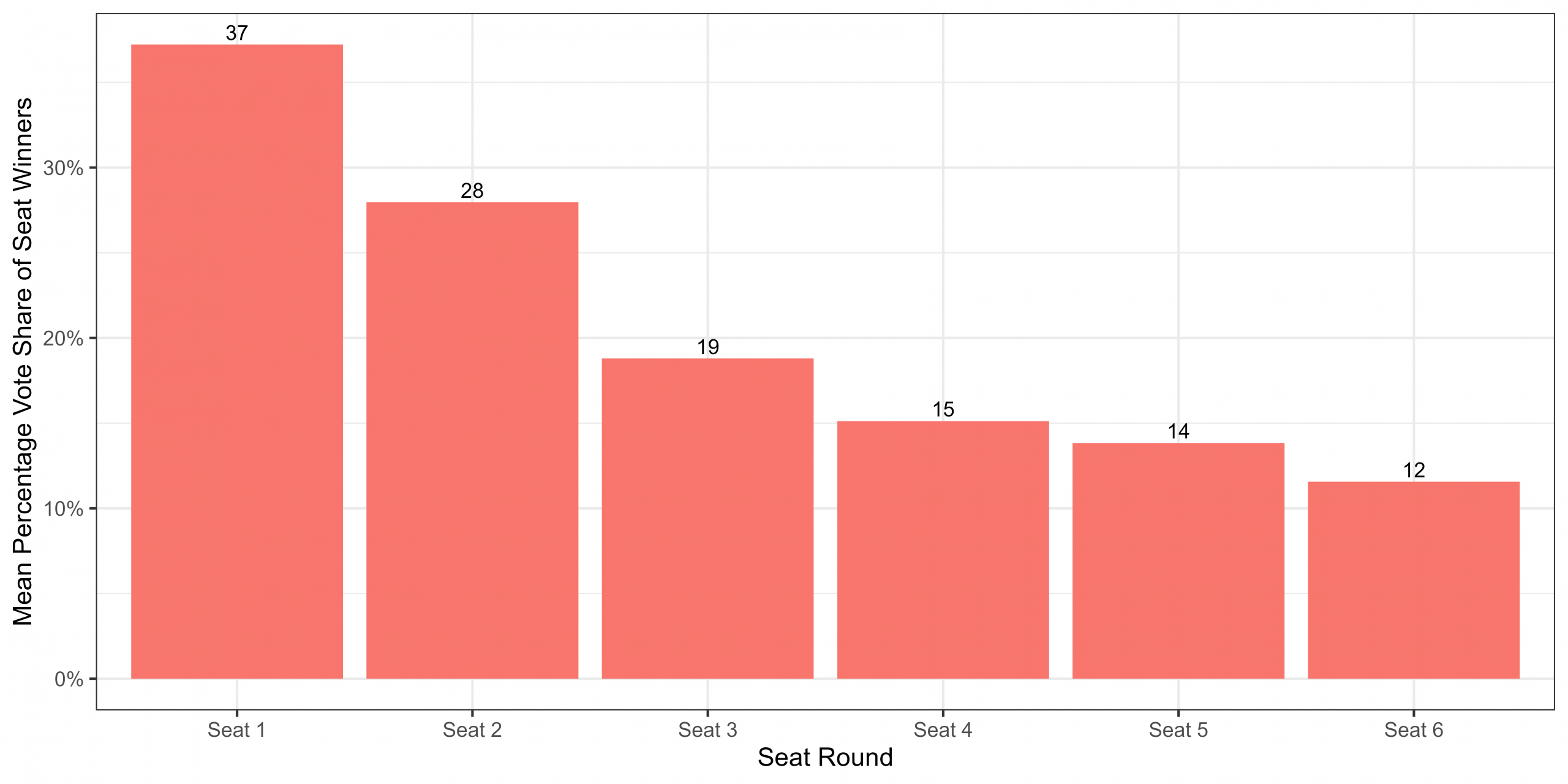
Figure 1: Average votes/quotient obtained by winners of each seat round
So, was this system more proportional than the old one? In a word, no. If we look at the Gallagher index (a widely used measure of the gap between votes received and seats won, where higher values mean greater distance), there was not much difference between 2021 and 2026 (Figure 2). In fact, the 2026 Senedd election was similarly proportional to every past Senedd election. These devolved elections are still far less disproportionate than first-past-the-post, though that’s an incredibly low bar to clear, but these results indicate that this new system was not really the move towards proportional representation that was promised.
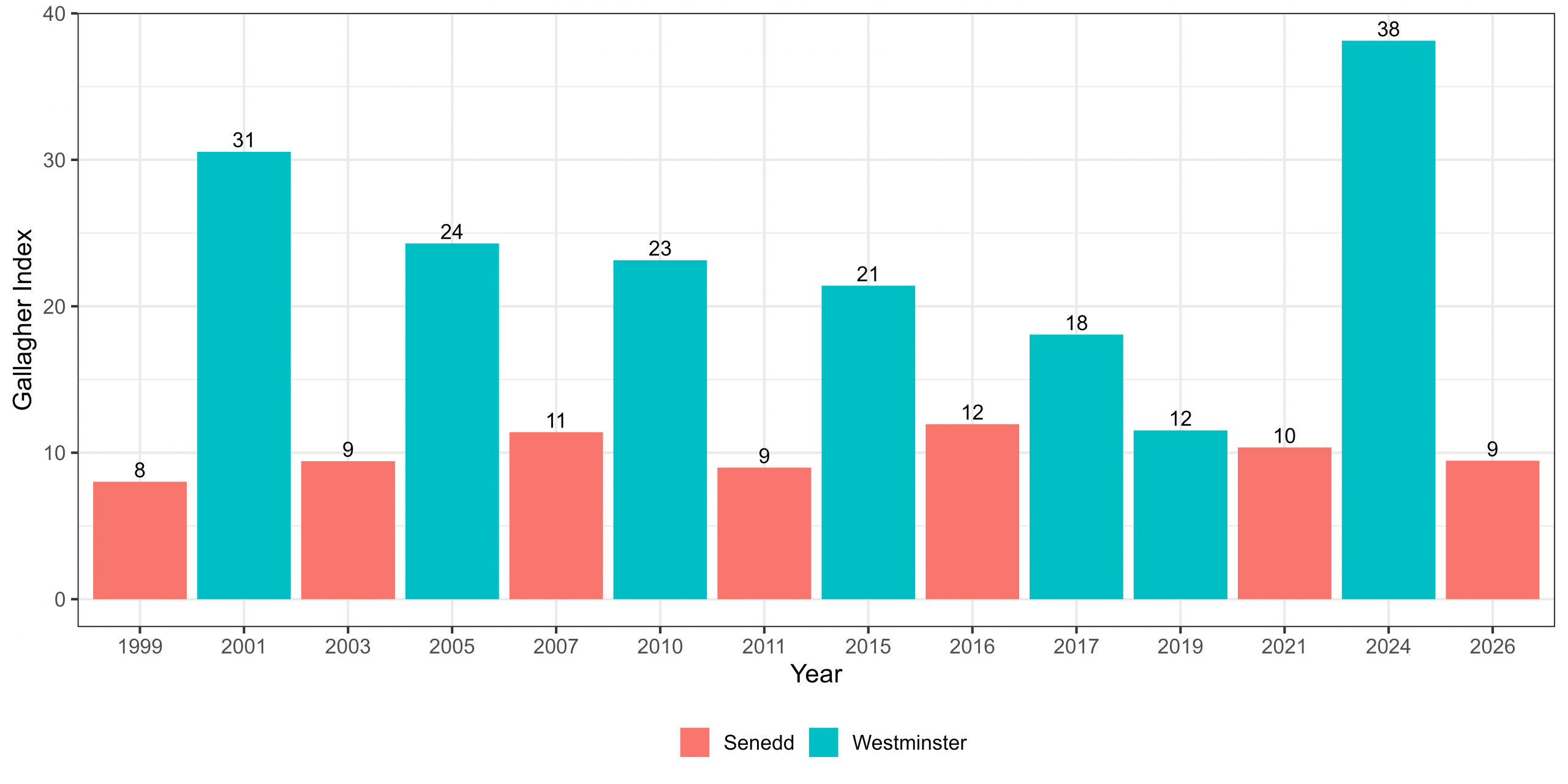
Figure 2: Gallagher index for every UK General and Senedd election in Wales between 1999 and 2026
To calculate the Gallagher index, you calculate the difference between seat share and vote share for each party, square it, add those values together, half that new value, and then take the square root. If you want to know more about proportionality, or how Wales compares with Scotland, see this piece by Simon Hix.
The lack of change in proportionality happens because D’Hondt has an inbuilt bias towards larger parties. I won’t go into the dynamics explaining why this happens (Jac Larner has done that for me), but I can show you how that played out in the two most recent devolved elections (Figure 3).
In 2021, Labour were significantly advantaged by the electoral system: winning 12 percentage points more seats than their vote share, which came primarily from their dominance in the constituency contests. Things were far less disproportionate for the other parties, though they were still slightly underrepresented.
In 2026, this overrepresentation has not been eradicated: it has simply been redistributed, as Plaid Cymru and Reform UK won a higher share of the seats than the votes. In contrast, this system disadvantaged the smaller parties, with the Greens and Liberal Democrats getting fewer seats than their vote share. This illustrates the bias: larger parties get an advantage, and smaller parties are penalised.
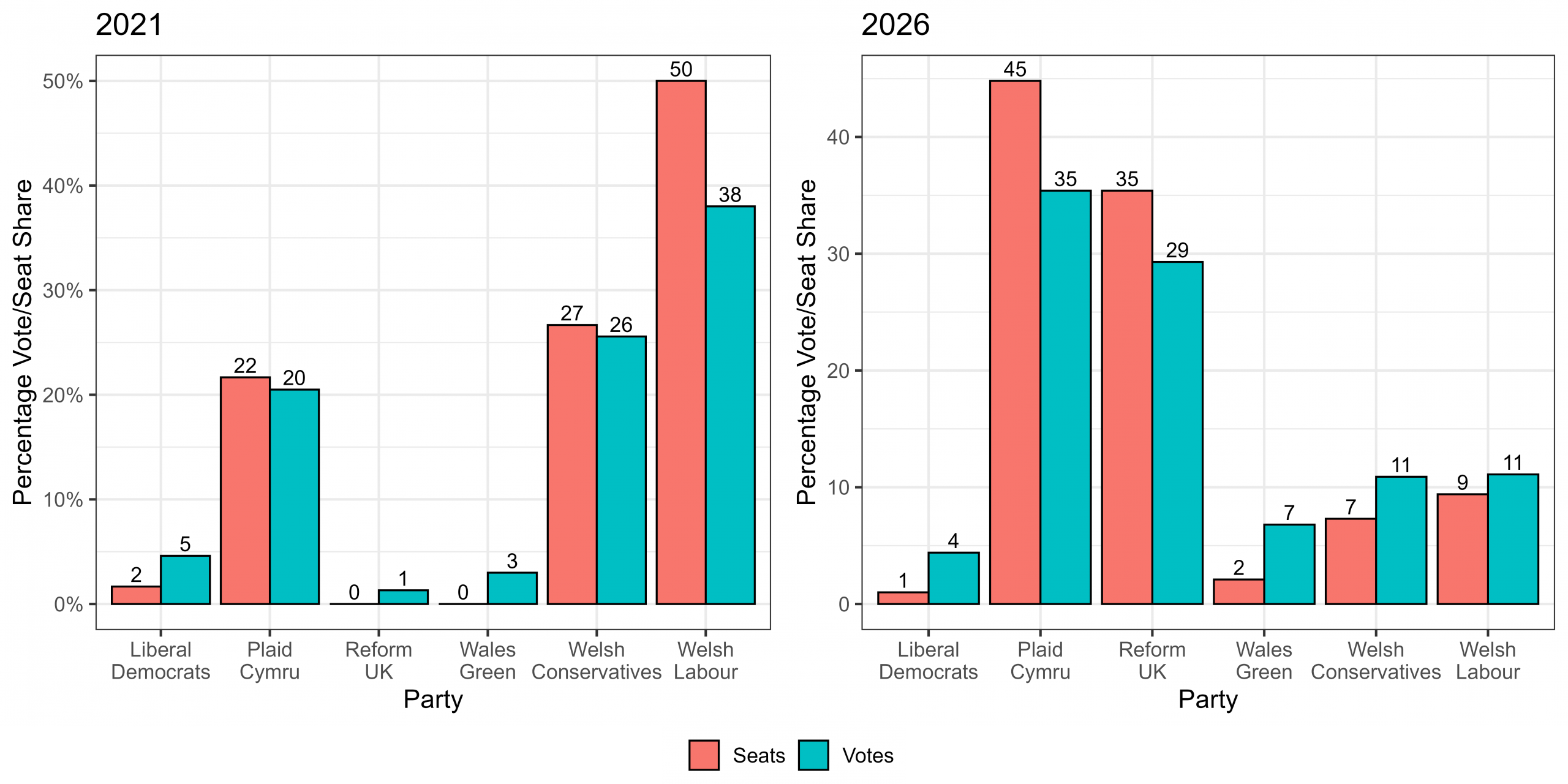
Figure 3: Votes and seat share of major parties in 2021 (constituency + region) and 2026 Senedd elections
My values for 2021 are a little different to Simon Hix, who focuses on the regional ballot, as I opted to measure vote share as the percentage a party received across both ballots in 2021
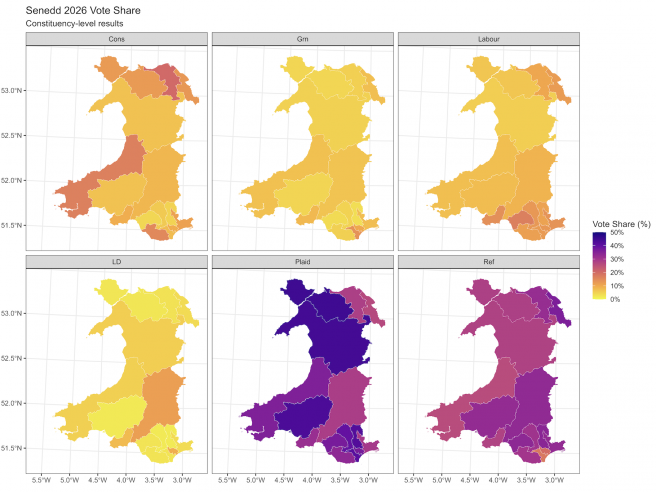
As a result, spreading support across the country only pays off for larger parties. Plaid Cymru are the clearest example (Figure 4). While strongest in the northwest, they won consistent representation across constituencies because of their strong cross-national support, even in the historically unproductive northeast and southeast. Reform benefited for the same reason, posting consistent returns across constituencies outside the two notably urban Caerdydd seats.
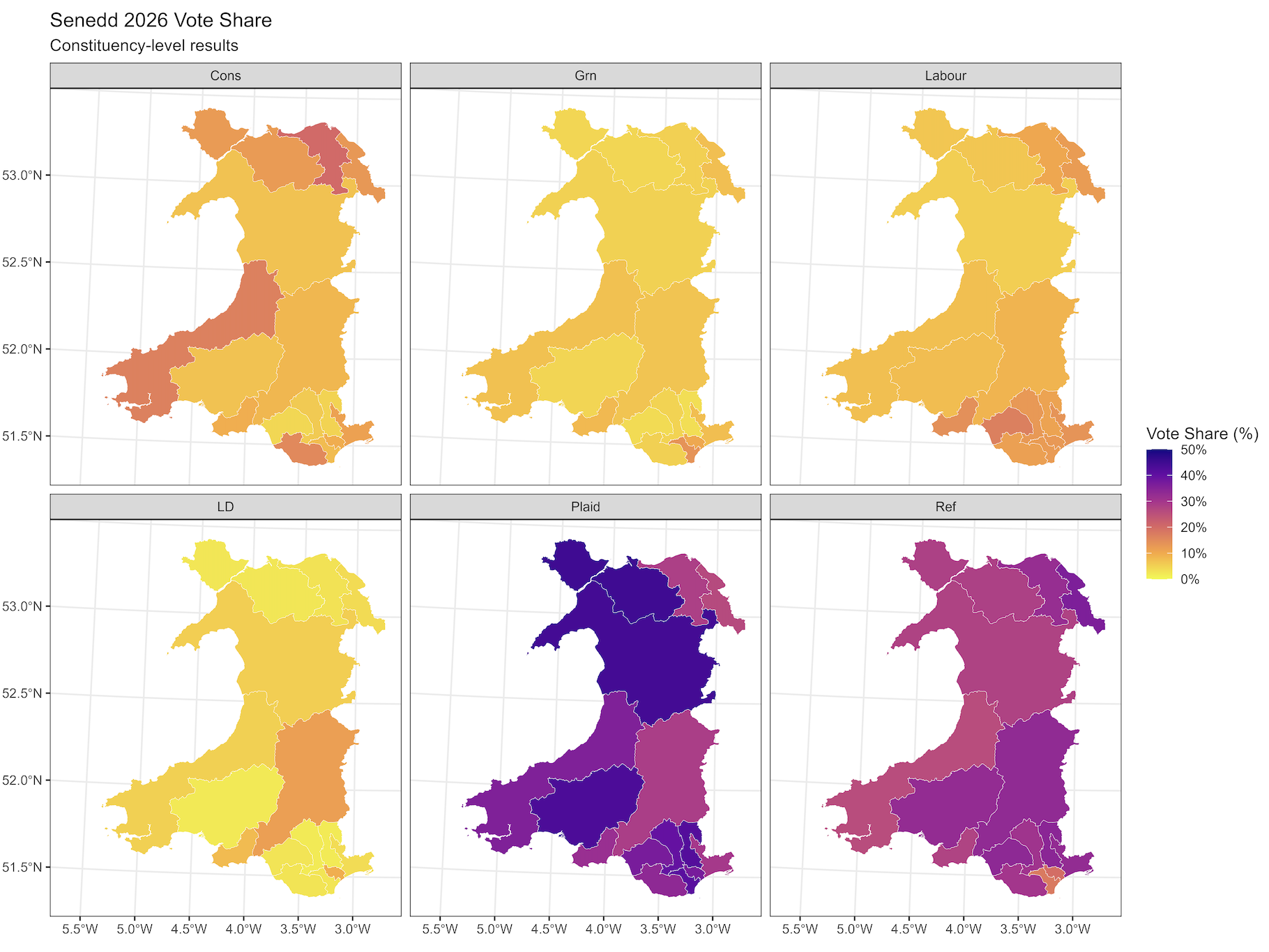
Figure 4: Vote share across Wales
In contrast, the spread of much lower support for Labour and the Conservatives meant they found themselves just below the threshold for seats across much of Wales. Labour’s support was relatively consistent but thin; slightly higher in the south, but never enough for more than one seat. The Conservatives were more variable in predictable ways: weak in the valleys, stronger in Pembrokeshire and the northeast.
The Greens and Liberal Democrats were further back still, winning seats only where their vote was unusually concentrated: both Caerdydd constituencies for the Greens, Brycheiniog Tawe Nedd for the Liberal Democrats. In this sense, having a base of support can help smaller parties win representation, but it is not enough for sustained gains.
So, can anyone feel a little unlucky? If we look at the votes that a party would need to have won an additional seat in every constituency (Figure 5), there are some cases that were definitely close. Labour will feel particularly aggrieved to have missed out on a seat in Blaenau Gwent Caerffili Rhymni and Clwyd by fewer than 300 votes. The Conservatives were very close to winning a seat in Caerdydd Ffynnon Taf and a second in Clwyd, while Reform UK were also close in Caerdydd Ffynnon Taf and Casnewydd Islwyn. In contrast, there are also some seats where a party is unlikely to win further support even if they stacked up thousands more votes. For example, it would take a small miracle for Plaid Cymru to win an additional seat in Gwynedd Maldwyn, or for Reform UK to win an extra seat in Clwyd.
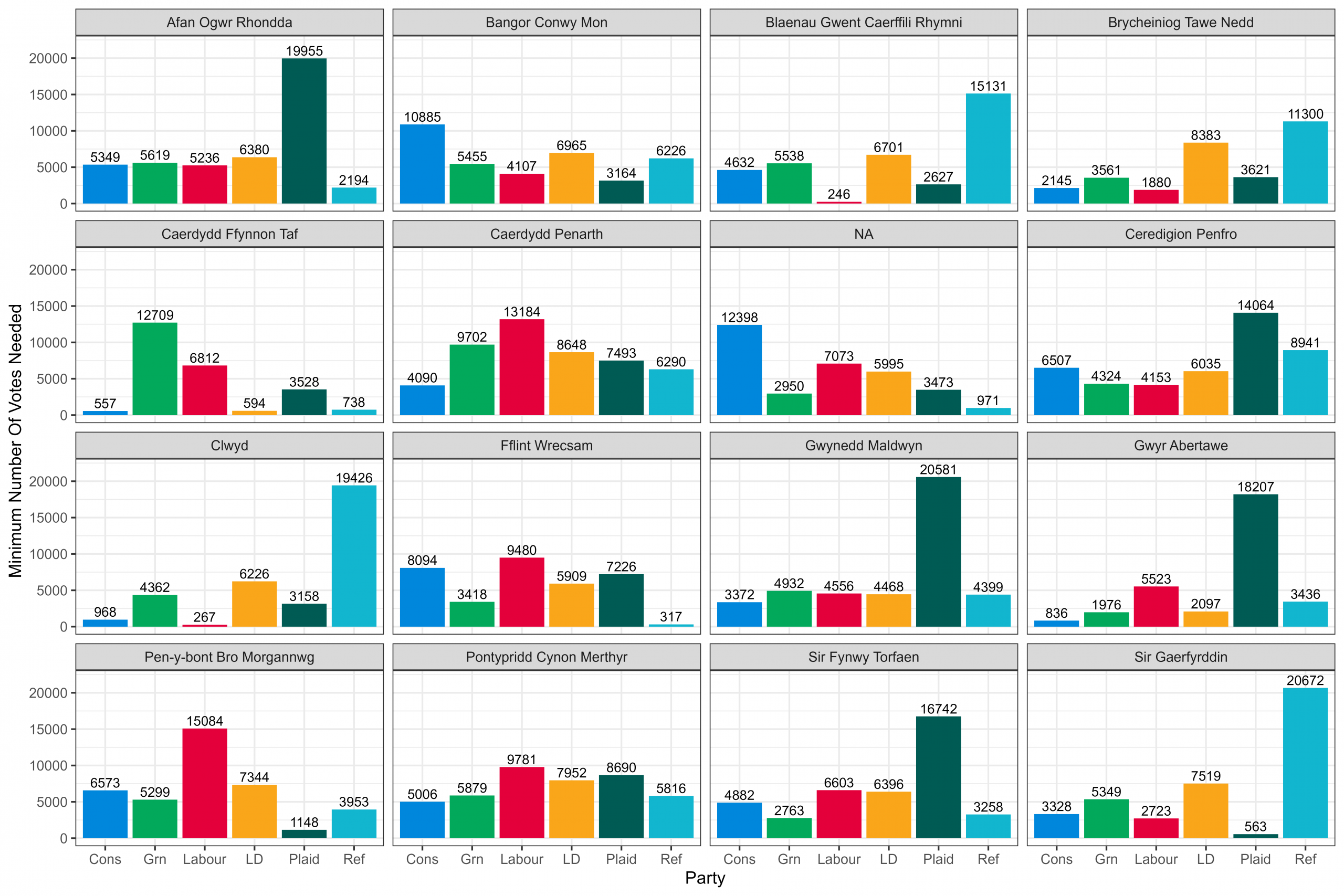
Figure 5: Additional votes a party would have needed to win an extra seat in every constituency, assuming all other parties remained constant
As we evaluate this election, the dramatic changes in the Senedd’s composition will rightly take most of the attention, but the electoral system deserves some too. Parties and voters will probably not want to think ahead to the next Senedd election just yet, but (given D’Hondt’s biases) it is important for understanding where extra support can actually convert into seats. Without reliable constituency-level data, that kind of tactical awareness will be a real challenge — one that parties will have to grapple with in just under five years. For now, though, there is just the small matter of governing Cymru to think about…
- October 2026
- July 2026
- June 2026
- May 2026
- April 2026
- March 2026
- December 2025
- November 2025
- October 2025
- September 2025
- June 2025
- May 2025
- March 2025
- February 2025
- December 2024
- October 2024
- September 2024
- July 2024
- June 2024
- December 2023
- November 2023
- August 2023
- February 2023
- December 2022
- November 2022
- September 2022
- July 2022
- April 2022
- March 2022
- January 2022
- October 2021
- July 2021
- May 2021
- March 2021
- January 2021
- November 2020
- October 2020
- August 2020
- July 2020
- June 2020
- May 2020
- April 2020
- March 2020
- October 2019
- September 2019
- June 2019
- April 2019
- March 2019
- February 2019
- December 2018
- October 2018
- July 2018
- June 2018
- April 2018
- December 2017
- October 2017
- July 2017
- June 2017
- May 2017
- April 2017
- March 2017
- February 2017
- January 2017
- December 2016
- November 2016
- October 2016
- September 2016
- Bevan and Wales
- Big Data
- Brexit
- British Politics
- Constitution
- Covid-19
- Democracy
- Devolution
- Elections
- Equality
- EU
- Finance
- Gender
- History
- Housing
- Introduction
- Justice
- Labour Party
- Law
- Local Government
- Media
- National Assembly
- National identity
- Plaid Cymru
- Prisons
- Reform UK
- Rugby
- Senedd
- Senedd Election 2026
- Theory
- Uncategorized
- Welsh Conservatives
- Welsh Election 2016
- Welsh Elections