WasteReBuilt: a circular approach to transform waste sand into REsource for the Built environment
18 December 2025
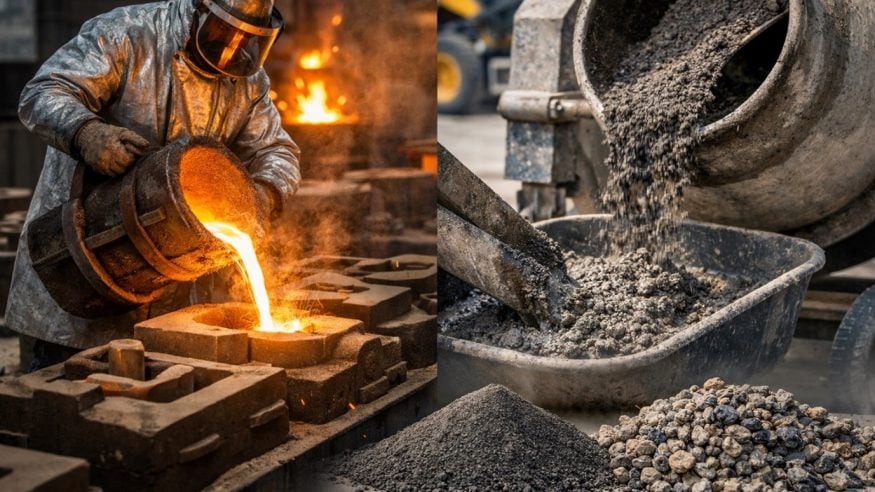
Concrete is the most widely used construction material in the world, yet one of its key ingredients is becoming an increasingly valuable natural resource. Aside from water, suitable construction sand is the most extracted natural resource, with global demand continuing to rise. Consequently, finding alternatives that reduce waste and conserve natural resources is becoming a significant challenge for the construction industry.
Supported by Cardiff University’s Engineering and Physical Sciences Research Council (EPSRC) Impact Acceleration Account (IAA), Dr Riccardo Maddalena (Senior Lecturer in Civil Engineering) and Joseph Pugh (Civil Engineering Research Associate) have been investigating whether waste foundry sand from the metal casting industry can safely replace virgin sand in concrete.
By working closely with industry partners, this project helps demonstrate how waste materials can support a more circular economy while reducing landfill use and preserving valuable natural resources.
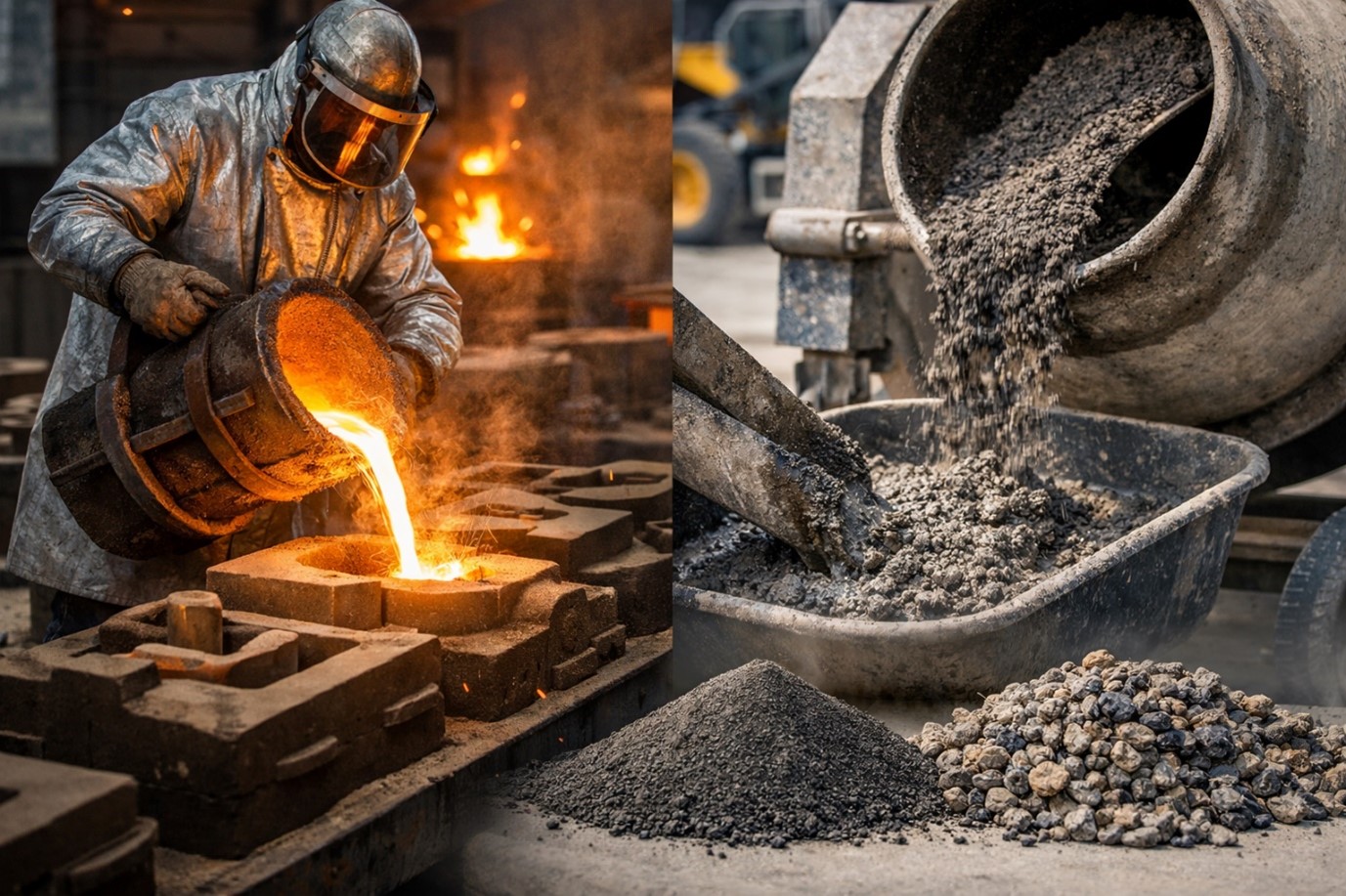
WasteReBuilt aimed to demonstrate that waste foundry sand from the cast metal industry can replace virgin sand in concrete, reducing landfill disposal and protecting natural resources. The project explored the feasibility of using up to 100% waste sand, challenging current standards that allow only 30%.
We characterised waste sand, produced and tested concrete mixes, and assessed durability and environmental impact. Results were shared at national and international conferences, including a keynote at the first International Conference of Spent Foundry Sand in Brazil, 2025, and featured in industry media.
A workshop with industry partners including Weir Ltd, Cemex, MPA, Knights Brown amongst others, facilitated technology transfer. One journal paper has been published and one more in press. The project also secured co-funded PhD studentships to advance the technology.
IAA funding enabled proof-of-concept testing, industry engagement, and visibility at key events. The project has also benefitted from IAA KEPS funding. This accelerated the impact via a real-scale site trial and industry engagement.
Next steps include scaling up to TRL6-7 through Innovate UK and EU funding, influencing policy via stakeholder workshops, and publishing findings to support a REF case study. The team aims to attract business investment and integrate circular economy principles into construction standards.
The WasteReBuilt project demonstrates how collaborative research can help the industry find practical solutions to major environmental challenges. By combining engineering research with industry expertise, the team supports the development of more sustainable construction materials and helps reduce the demand for new natural resources.
Read more about the projects here: https://www.cardiff.ac.uk/cy/community/our-local-community-projects/community-projects-in-wales-and-further-afield/2023-projects/wasterebuilt-a-circular-approach-to-transform-waste-sand-into-resource-for-the-built-environment
- AHRC
- BBSRC
- Cardiff Business School
- Case studies
- EPSRC
- ESRC
- Institutional Collaboration
- MRC
- Public Engagement
- School of Biosciences
- School of Computational and Mathematical Sciences
- School of Dentistry
- School of Engineering
- School of English, Communication and Philosophy
- School of Geography and Planning
- School of History, Archaeology and Religion
- School of Journalism, Media and Culture
- School of Law and Politics
- School of Medicine
- School of Optometry and Vision Sciences
- School of Psychology
- Welsh School of Architecture
- Eight Voices in Darkness recognised for sharing lived experiences of sight loss and mental health
- How can research become more inclusive for people who have difficulty giving informed consent?
- How can medical imaging software developed in Cardiff reach more researchers, clinicians and healthcare innovators?
- What does it take to make secondhand economies more sustainable, accessible and socially connected?
- What happens when retailers cannot trust their stock records?