Monitoring and reporting genetic diversity with GBF indicators are feasible, affordable and effective
3 November 2025

Monitoring and reporting genetic diversity with GBF (Global Biodiversity Framework) indicators are feasible, affordable and effective.
At the 2024 UN Biodiversity Conference (COP16), Dr Isa-Rita represented the COST Action GENOA (Genetic Nature Observation and Action). She was part of the Coalition for Conservation Genetics (CCG). She facilitated booth sessions, highlighting the importance of genetic diversity through games, printed materials, and policy briefing guides for National Biodiversity Strategies and Action Plans (NBSAPs), as well as demonstrating genetic diversity indicator tools.
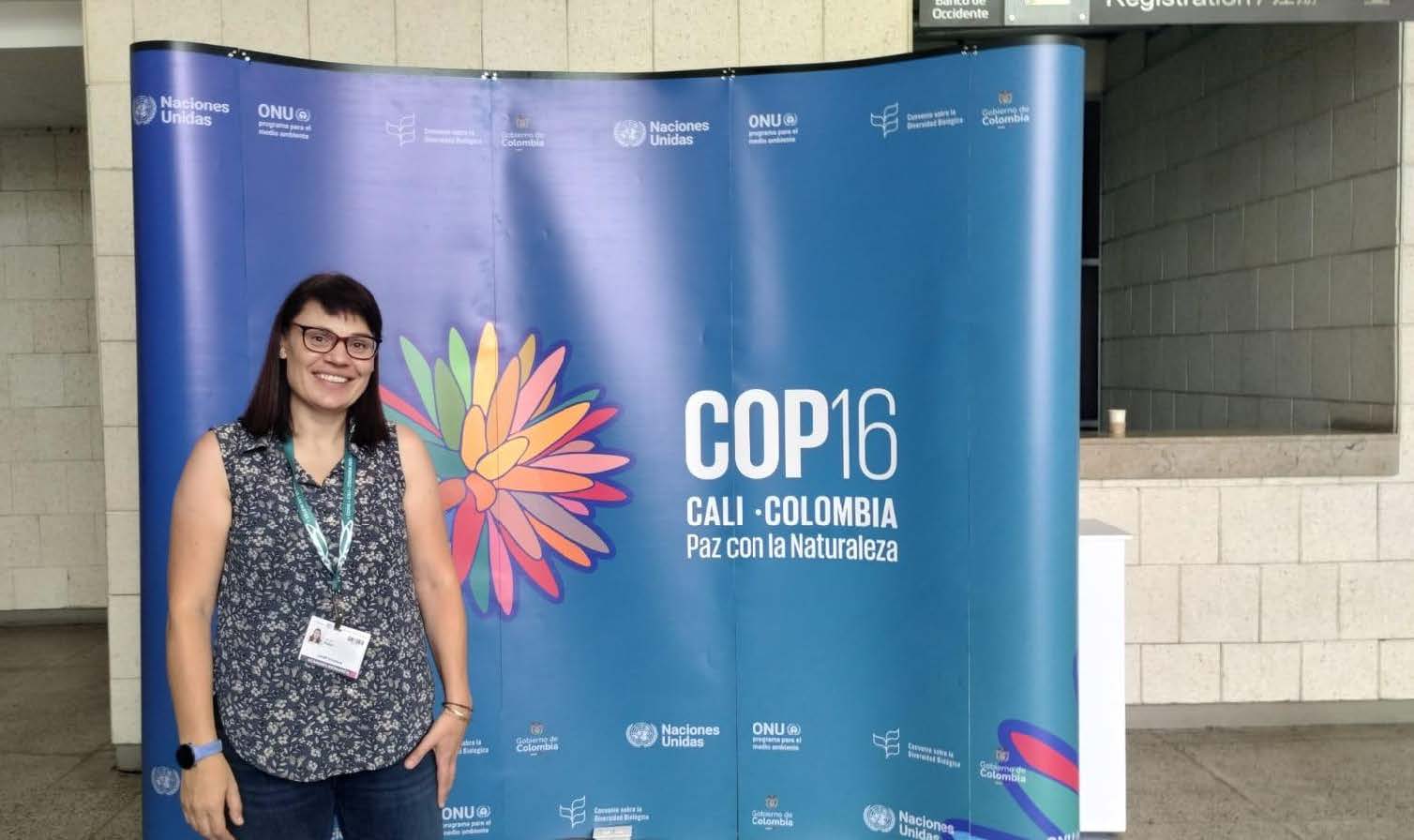
In addition, research supporting the inclusion of genetic diversity in biodiversity policy was highlighted. This project was funded by the Biotechnology and Biological Sciences Research Council (BBSRC) as part of Cardiff University’s Impact Acceleration Accounts (IAAs).
Genetic diversity is essential for species resilience under disease and climate change and for sustaining ecosystem services that benefit society. Research shows monitoring genetic diversity is both feasible and necessary for a biodiverse future. This project delivered knowledge exchange activities at the United Nations Convention on Biological Diversity Conference of the Parties (CoP16).
At CoP16, the Coalition for Conservation Genetics (CCG) ran a booth and facilitated sessions showcasing the importance of genetic diversity using games, printed materials, policy brief guidance for NBSAPs, and demonstrations of genetic diversity indicator tools. In addition, they highlighted research supporting the inclusion of genetic diversity in biodiversity policy. As part of the CCG Isa-Rita also represented the GENOA (Genetic Nature Observation and Action) e-COST Action.

Evidence-based relationships were built with stakeholders including South African National Biodiversity Institute, Natural History Museum London, United Nations Development Programme, and others. Feedback showed increased recognition of genetic diversity monitoring. Over 130 people joined a contacts database, and Cardiff University is now an official observer of the Convention on Biological Diversity.
Further information about the partners –
GENOA
https://www.genoageneticdiversity.eu
Coalition for Conservation Genetics
- AHRC
- BBSRC
- Cardiff Business School
- Case studies
- EPSRC
- ESRC
- Institutional Collaboration
- MRC
- Public Engagement
- School of Biosciences
- School of Computational and Mathematical Sciences
- School of Dentistry
- School of Engineering
- School of English, Communication and Philosophy
- School of Geography and Planning
- School of History, Archaeology and Religion
- School of Journalism, Media and Culture
- School of Law and Politics
- School of Medicine
- School of Optometry and Vision Sciences
- School of Psychology
- Welsh School of Architecture
- Eight Voices in Darkness recognised for sharing lived experiences of sight loss and mental health
- How can research become more inclusive for people who have difficulty giving informed consent?
- How can medical imaging software developed in Cardiff reach more researchers, clinicians and healthcare innovators?
- What does it take to make secondhand economies more sustainable, accessible and socially connected?
- What happens when retailers cannot trust their stock records?