Issues, Accountability, and Labour’s Declining Support in Wales
29 April 2026
This is a guest post from Dr James Griffiths at University of Manchester. Follow him on Bluesky here: @jamesdgriffiths.bsky.social
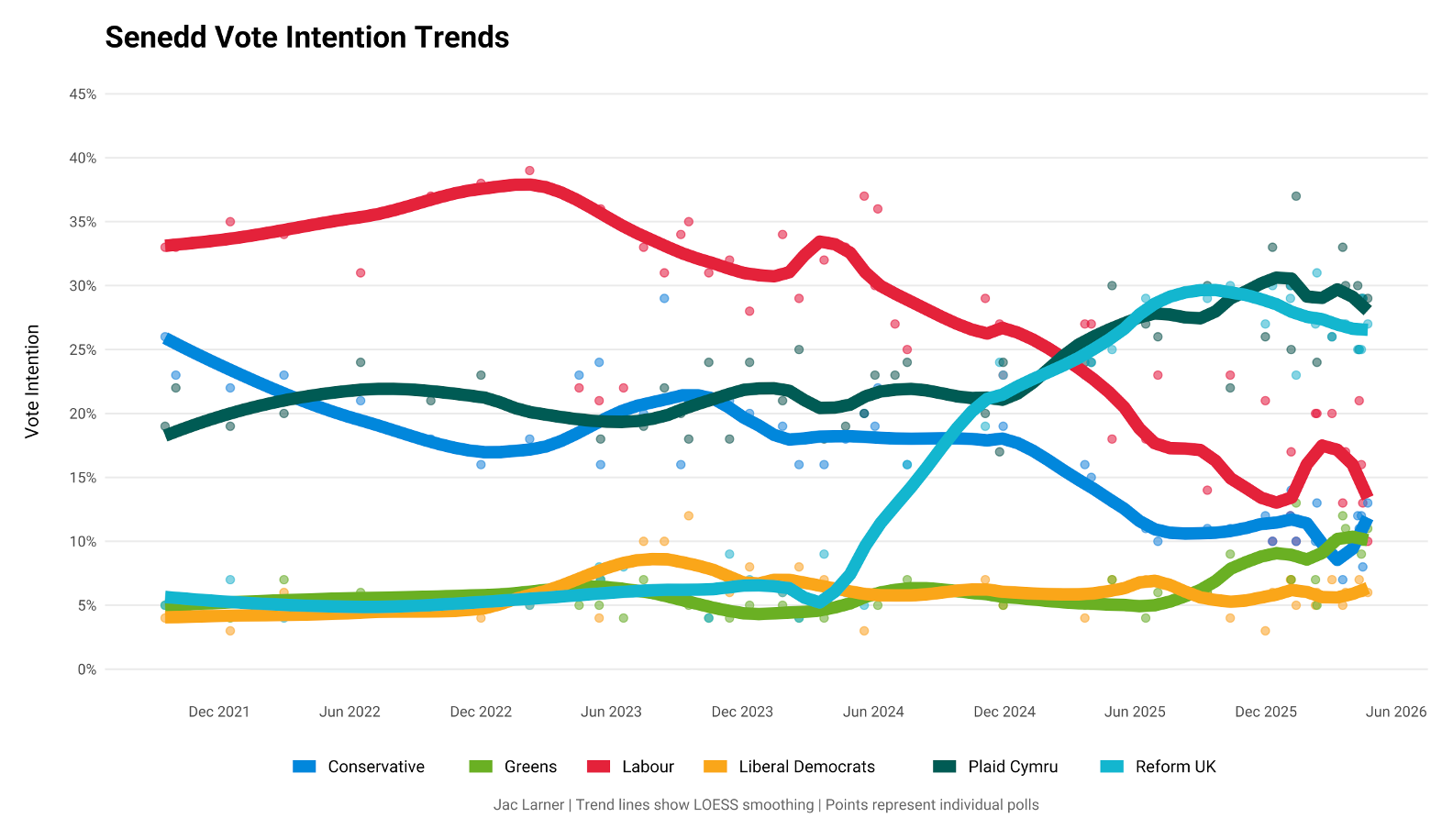
Polling day is fast approaching, and the 2026 Senedd election looks set to be historic. If we’re honest, previous Welsh elections have rarely been of interest to those outside our borders, and for good reason. To paraphrase a football parable, they are pretty simple: a bunch of politicians contest the campaign and at the end, Welsh Labour always win. However, the polls suggest that things are going to change (Figure 1), as Labour now finds itself languishing behind Plaid Cymru and Reform UK.
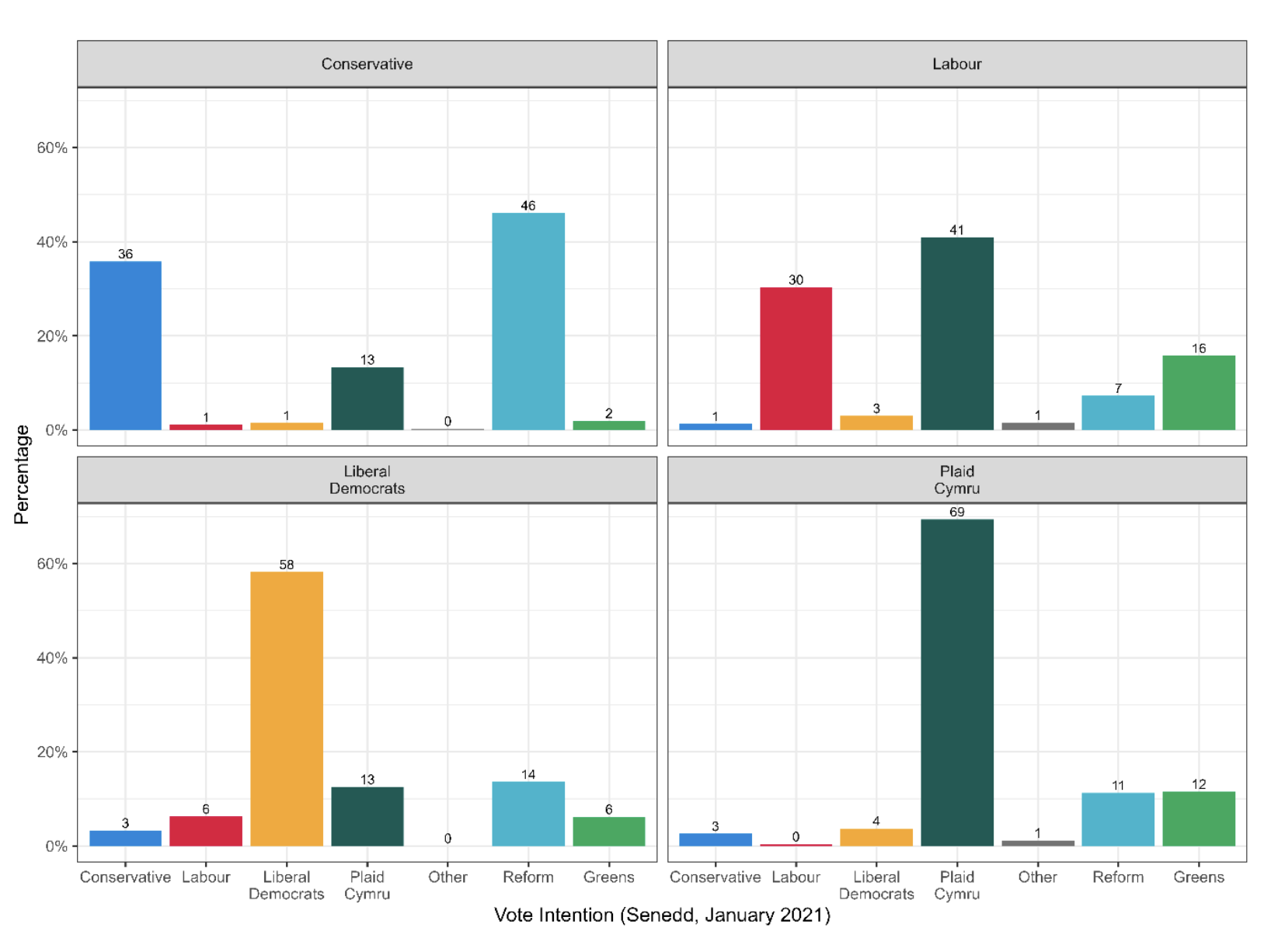
So where has their support gone? Between 2021 and January 2026, Labour shed over half their (constituency) voters (Figure 2). Around forty percent have moved to Plaid Cymru, with a further sixteen percent backing the Greens. Relatively few Labour voters have gone to Reform UK, whose support has instead mostly come from the Conservatives, who find themselves facing electoral oblivion only five years on from their best-ever Senedd return.
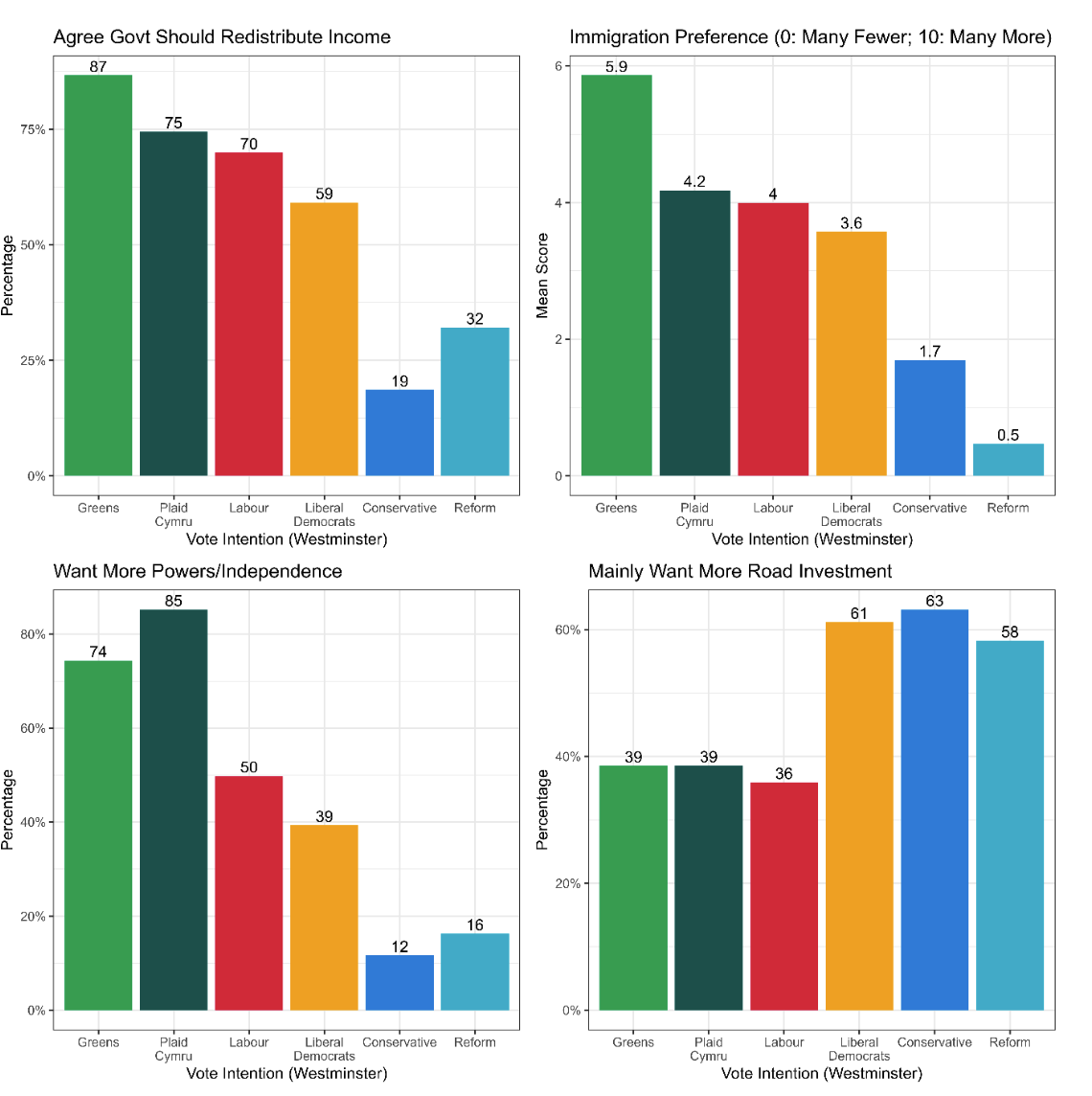
The direction of this switching makes sense when we consider that Welsh voters divide broadly into two blocs (Figure 3): a Welsh/left/liberal bloc (Labour, Plaid, Liberal Democrats, Greens) and a British/right/conservative bloc (Conservatives and Reform UK). Those in the left-bloc are more supportive of income redistribution, are more moderate on immigration, and more supportive of Welsh political autonomy than people in the right-bloc. The supporters of the parties within each bloc even converge on specific policies like transport investment, with people in the right-bloc more likely to favour investment in road travel than those in the left-bloc (bar the Liberal Democrats).
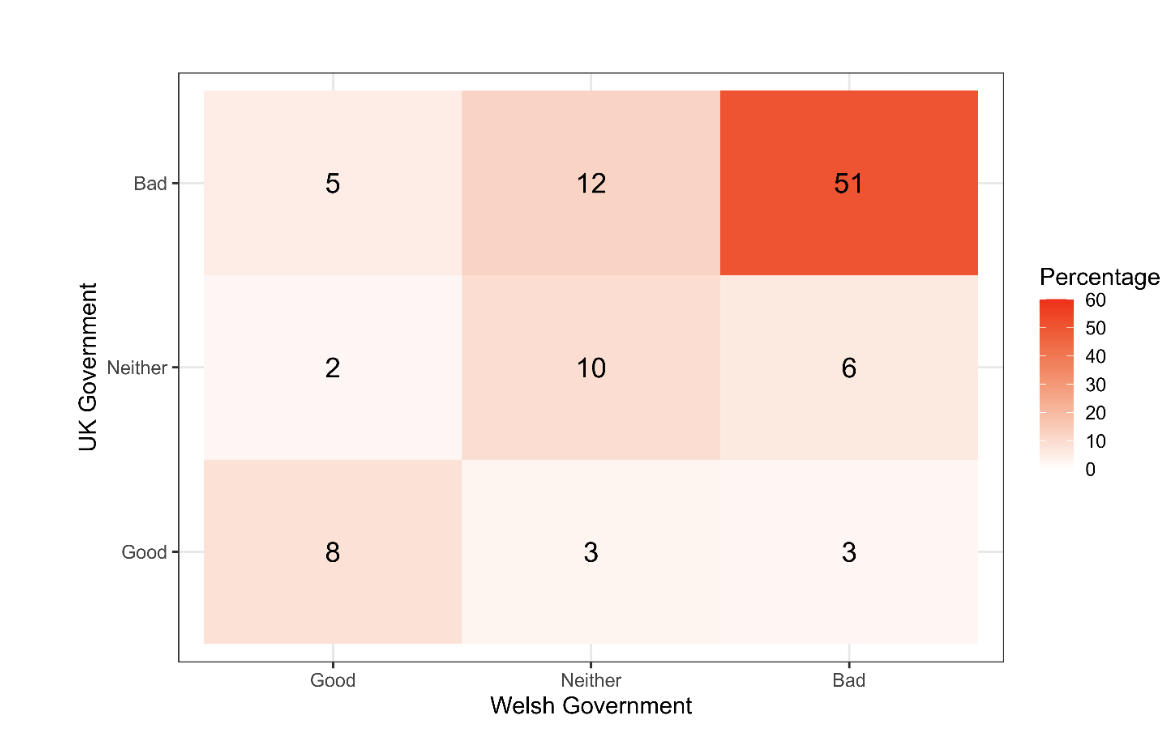
While Labour still has time before polling day, convincing these voters to return will be incredibly tricky given the deep frustration that people feel towards both the UK and Welsh governments (Figure 4). In 2024, voters parked their grievances with Cardiff long enough to oust the Conservatives from Westminster, and Labour benefitted by winning nearly all Welsh seats. Two years on, with no unpopular Conservative government to serve as a lightning rod, Welsh Labour’s own record is now squarely under scrutiny, and voters don’t like what they see.
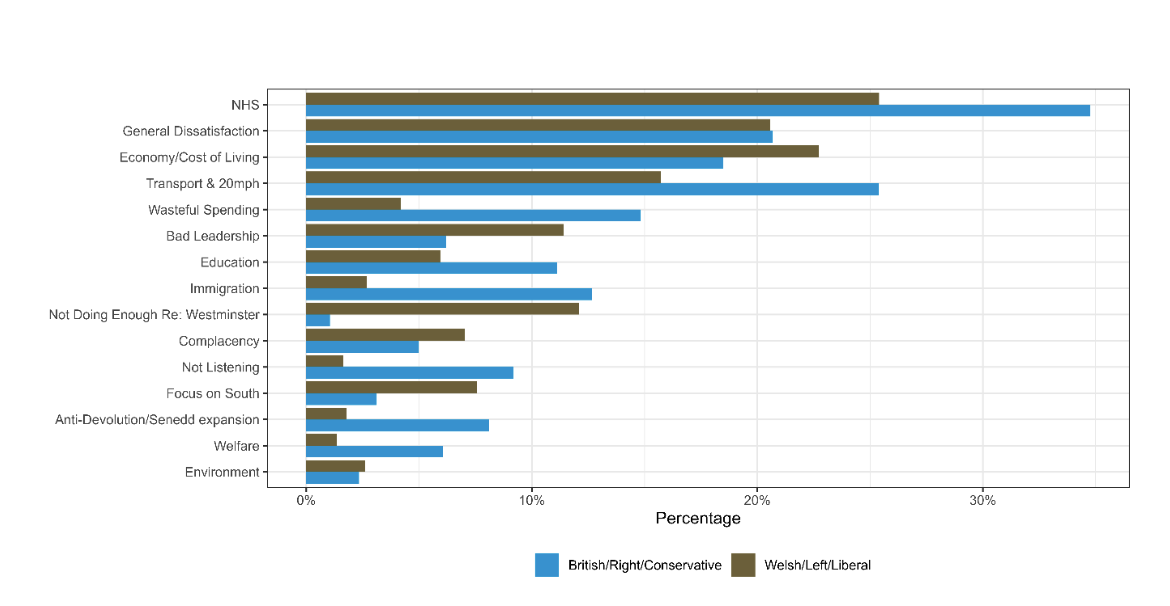
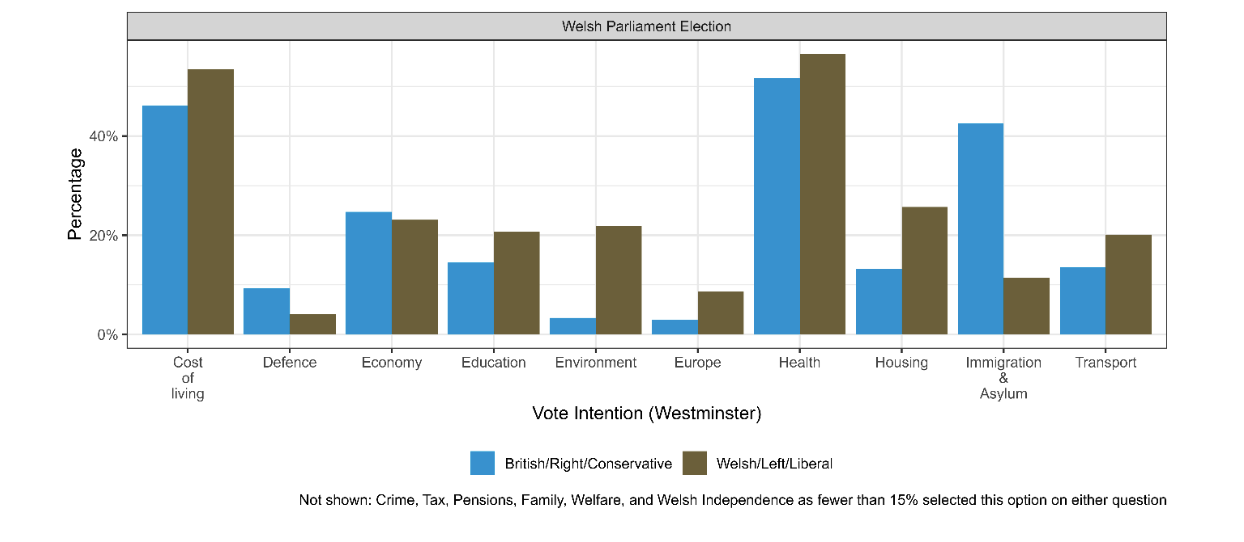
When the April YouGov/ITV poll asked those who rated the Welsh Government poorly to explain why, the frustrations were familiar: the NHS, the economy and cost of living, and transport (Figure 5). The two blocs differed on emphasis (right-bloc supporters were more likely to say NHS, 20mph, immigration, and wasteful spending, and the left-bloc were more likely to say poor leadership, a perceived neglect of north Wales, and Wales being shortchanged by Westminster), but the general trends were similar across both. Crucially, the issues where people are most critical of Labour’s record are also the issues they say matter most heading into this election (Figure 6).
Incumbent parties almost always shed support over time, but Labour had managed to defy that pattern for years. In recent years, they have been able to use the pandemic and the Conservatives in Westminster to (sometimes reasonably) deflect criticism of their record in office. Those shields are now gone, and Labour faces this election with dissatisfaction high, and their support fragmenting to other viable Welsh/left/liberal parties. With no party likely to win an outright majority under the new voting system, this bloc structure will also be important for understanding any coalition or confidence-and-supply arrangements that emerge. Regardless of how these discussions play out, Wales seems like it is entering uncharted territory, with Labour’s century of dominance under serious threat.
- July 2026
- June 2026
- May 2026
- April 2026
- March 2026
- December 2025
- November 2025
- October 2025
- September 2025
- June 2025
- May 2025
- March 2025
- February 2025
- December 2024
- October 2024
- September 2024
- July 2024
- June 2024
- December 2023
- November 2023
- August 2023
- February 2023
- December 2022
- November 2022
- September 2022
- July 2022
- April 2022
- March 2022
- January 2022
- October 2021
- July 2021
- May 2021
- March 2021
- January 2021
- November 2020
- October 2020
- August 2020
- July 2020
- June 2020
- May 2020
- April 2020
- March 2020
- October 2019
- September 2019
- June 2019
- April 2019
- March 2019
- February 2019
- December 2018
- October 2018
- July 2018
- June 2018
- April 2018
- December 2017
- October 2017
- July 2017
- June 2017
- May 2017
- April 2017
- March 2017
- February 2017
- January 2017
- December 2016
- November 2016
- October 2016
- September 2016
- Bevan and Wales
- Big Data
- Brexit
- British Politics
- Constitution
- Covid-19
- Democracy
- Devolution
- Elections
- Equality
- EU
- Finance
- Gender
- History
- Housing
- Introduction
- Justice
- Labour Party
- Law
- Local Government
- Media
- National Assembly
- National identity
- Plaid Cymru
- Prisons
- Reform UK
- Rugby
- Senedd
- Senedd Election 2026
- Theory
- Uncategorized
- Welsh Conservatives
- Welsh Election 2016
- Welsh Elections