From catnip to community enterprise: IAA funding supports mosquito repellent development in Uganda
29 October 2026

A Cardiff University project developing a plant based mosquito repellent from locally grown catnip in Uganda has been supported through three Biotechnology and Biological Sciences Research Council (BBSRC) Impact Acceleration Account (IAA) awards, managed by Cardiff University. Led by Dr Simon Scofield and Dr Peter Randerson from the School of Biosciences, alongside Professor John Pickett from the School of Physical, Chemical and Environmental Sciences, the work is helping move a promising research idea towards practical use, with the aim of reducing mosquito bites, supporting malaria prevention and creating sustainable economic opportunities in eastern Uganda.
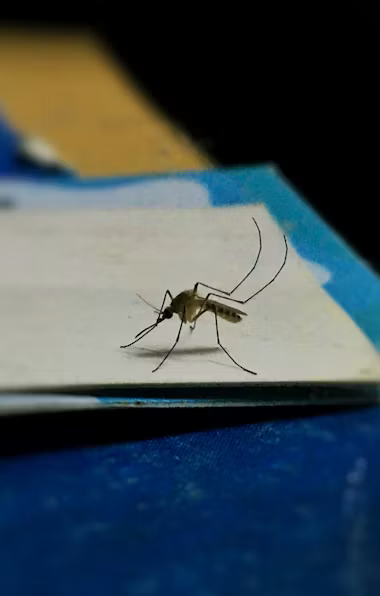
Initially the project asked whether locally grown plants be used to create products that support both public health and economic opportunity in Uganda? Early work focused on mint crops and essential oils, with the potential to create food, drink and personal care products from plants grown and processed locally.
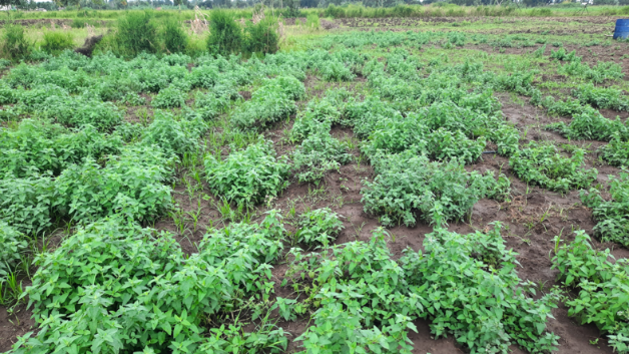
That model was important because mint plants can be grown alongside existing crops, rather than replacing them. This meant the work could support additional income for farmers and communities without asking people to move away from established agricultural practices.
The project later shifted towards catnip, a plant in the mint family that produces nepetalactone, a compound known for its insect repellent properties. The need for an affordable, locally produced repellent was clear. Commercial products such as DEET can be expensive and imported, while mosquito nets do not protect people when they are outside in the late afternoon and evening, when mosquitoes may still be biting.
IAA funding helped the team move from a promising idea towards real world testing. Laboratory work showed that catnip essential oil had strong repellence against mosquitoes, and the team then developed a lotion that could be tested in field conditions.
Human field trials in Uganda compared the catnip based lotion with DEET and with a control lotion that contained no active ingredient. These trials showed that the active lotion was highly effective, with the strongest formulation performing as well as DEET. Acceptance testing with local participants was also very positive, with more than 95% of respondents saying they liked the repellent, felt it was effective and would be willing to buy it.
Through partner organisation CEMPOP Uganda Ltd, the work involved direct engagement with more than 100 members of rural communities, helping build trust and opening a pathway towards wider local roll out.
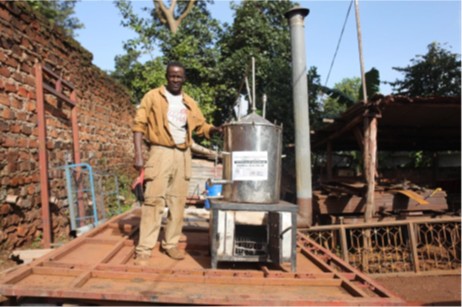
Further IAA support then addressed a practical barrier to scale up: producing enough catnip oil for wider use. The team tested a range of extraction methods, including CO2 extraction, solvent based techniques and hydrodistillation. Some methods produced useful data but were too expensive, technically demanding or unsuitable for use by partners in Uganda.
The work led to an improved extraction approach that could be shared with the Ugandan team and used to support larger scale oil production. New hydrodistillation equipment and increased land for catnip cultivation have helped partners begin scaling up production for use in the mosquito repellent formulation.
The project has also placed strong emphasis on commercial sustainability. Working with CEMPOP Uganda Ltd and Lisk and Jones Consultants Ltd, the team gathered detailed information on cultivation, harvesting, transport, extraction yields, formulation, packaging, marketing and regulatory costs. This has been used to develop a costed route to market strategy for the repellent.
A Knowledge Exchange Partnership enabled the Cardiff team to travel to Uganda in October 2025 to meet farmers, manufacturers, distributors, medical practitioners, regulators and government representatives. Through these meetings, the project secured support from the Ugandan Government Science, Technology and Innovation Secretariat, including access to infrastructure and facilities that could help support future roll out.
The wider benefits of the work are already visible. The project has provided income for people involved in farming, fieldwork, extraction, formulation and production. During visits to Uganda, the team heard how income linked to the project had helped support children’s education, employment opportunities and new local enterprise.

The next stage is to scale up production and distribution, beginning in the Budaka district of eastern Uganda. The team aims to produce thousands of bottles of the repellent for local use, with distribution linked to malaria treatment clinics and wider community engagement. Future plans also include further funding applications, work towards regulatory approval, and development of related products such as repellent wristbands.
The team is also exploring an awareness campaign around Parthenium hysterophorus, an invasive weed that attracts mosquitoes and has been observed near schools, homes and malaria clinics. Alongside the repellent itself, this could support wider malaria prevention by helping communities reduce mosquito attracting plants in local environments.
Across the three IAA supported projects, the work has moved from laboratory evidence to field testing, extraction optimisation, community engagement, business planning and government backed scale up. The long term ambition is to create a locally produced repellent that can support malaria prevention, generate income and become commercially sustainable beyond grant funding.

Further information:
Read the full Cardiff University story:
Growing catnip, mosquito repellence, and economic prosperity in Uganda
Read their latest Open Access paper here:
- AHRC
- BBSRC
- Cardiff Business School
- Case studies
- EPSRC
- ESRC
- Institutional Collaboration
- MRC
- Public Engagement
- School of Biosciences
- School of Computational and Mathematical Sciences
- School of Dentistry
- School of Engineering
- School of English, Communication and Philosophy
- School of Geography and Planning
- School of Healthcare Sciences
- School of History, Archaeology and Religion
- School of Journalism, Media and Culture
- School of Law and Politics
- School of Medicine
- School of Optometry and Vision Sciences
- School of Psychology
- Welsh School of Architecture
- Advancing tsunami awareness and early warning
- From catnip to community enterprise: IAA funding supports mosquito repellent development in Uganda
- From Invisible Work to Practical Impact: Strengthening Care Coordination in Healthcare
- Eight Voices in Darkness recognised for sharing lived experiences of sight loss and mental health
- How can research become more inclusive for people who have difficulty giving informed consent?