Advancing tsunami awareness and early warning
5 May 2026
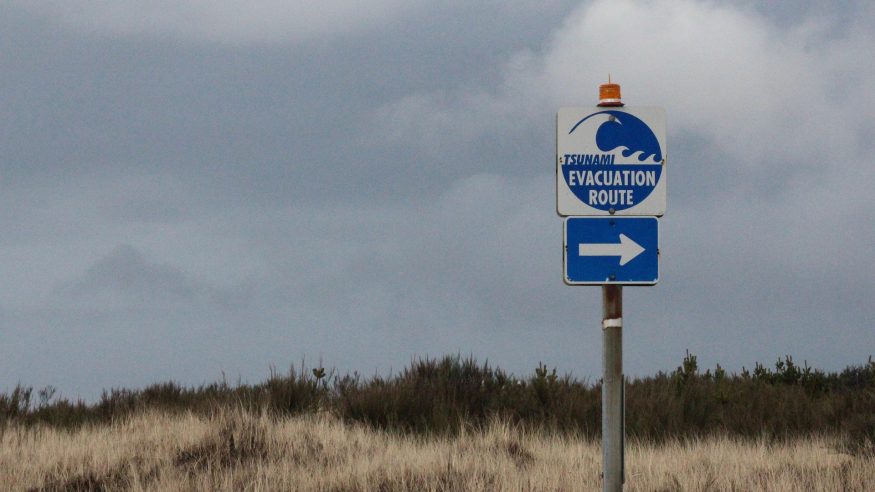 xtinarson from Pixabay">
How can faster real time assessment help coastal communities understand and respond to tsunami risk?
Published to mark World Tsunami Awareness Day, this blog highlights how EPSRC Impact Funding through Cardiff University’s Impact Acceleration Accounts (IAAs) is supporting research led by Professor Usama Kadri of the School of Computational and Mathematical Sciences to advance tsunami awareness, early warning and preparedness.
Unlike other natural hazards, like storms and hurricanes, tsunamis can travel very rapidly across oceans, leaving coastal communities with limited time to assess risk and respond. Professor Kadri, and his partners Dr Ali Abdolali from University of Maryland and Dr Maxim Filimonov from Cardiff, are developing methods and a real-time operational software that uses fast-propagating acoustic—gravity waves and hydroacoustic observations to provide earlier information about potentially hazardous tsunami events.
This work forms part of a developing programme of IAA-supported activity, moving from software development and testing towards regional validation, hydroacoustic deployment and collaboration with tsunami warning partners in the UK and internationally.
The challenge in tsunami warning is not only detecting that an event has happened, but assessing its likely scale, location and risk quickly enough to support decision making. Professor Kadri’s research explores how ocean signals, real time data and operational software can support faster assessment and improve preparedness for coastal communities.
A series of EPSRC IAA-supported projects helped develop and test tsunami assessment tools including SMART, Software Monitoring and Assessment in Real Time, and GREAT, Global Real-time Early Assessment of Tsunami. Activity included developing and refining mathematical and computational models – in partnership with Dr. Ali Abdolali from the University of MAryland – including machine-learning approaches, for acoustic—gravity wave detection and tsunami-source assessment; improving real-time software performance; analysing historical and real-time events; developing regional models; integrating complementary observational data; and engaging directly with the international tsunami-warning community through UNESCO-IOC Executive Council meetings and the , regional frameworks, as well as with national warning and monitoring centres including IPMA, INCOIS, MetMalaysia and BMKG, alongside other scientific, operational and policy stakeholders.
IAA funding helped create the conditions for impact to emerge by supporting software development, validation, stakeholder engagement and international collaboration. This helped move the research towards real world application, including future uptake in tsunami warning practice, regional deployment and policy integration.
Future IAA work will focus on further testing, regional deployment and international collaboration. The next phase of the programme includes planned work with the Indian National Centre for Ocean Information Services (INCOIS) on hydrophone deployment near the Andaman Islands, alongside work with Universiti Putra Malaysia (UPM) on regional optimisation, bathymetric analysis, data integration and stakeholder engagement.
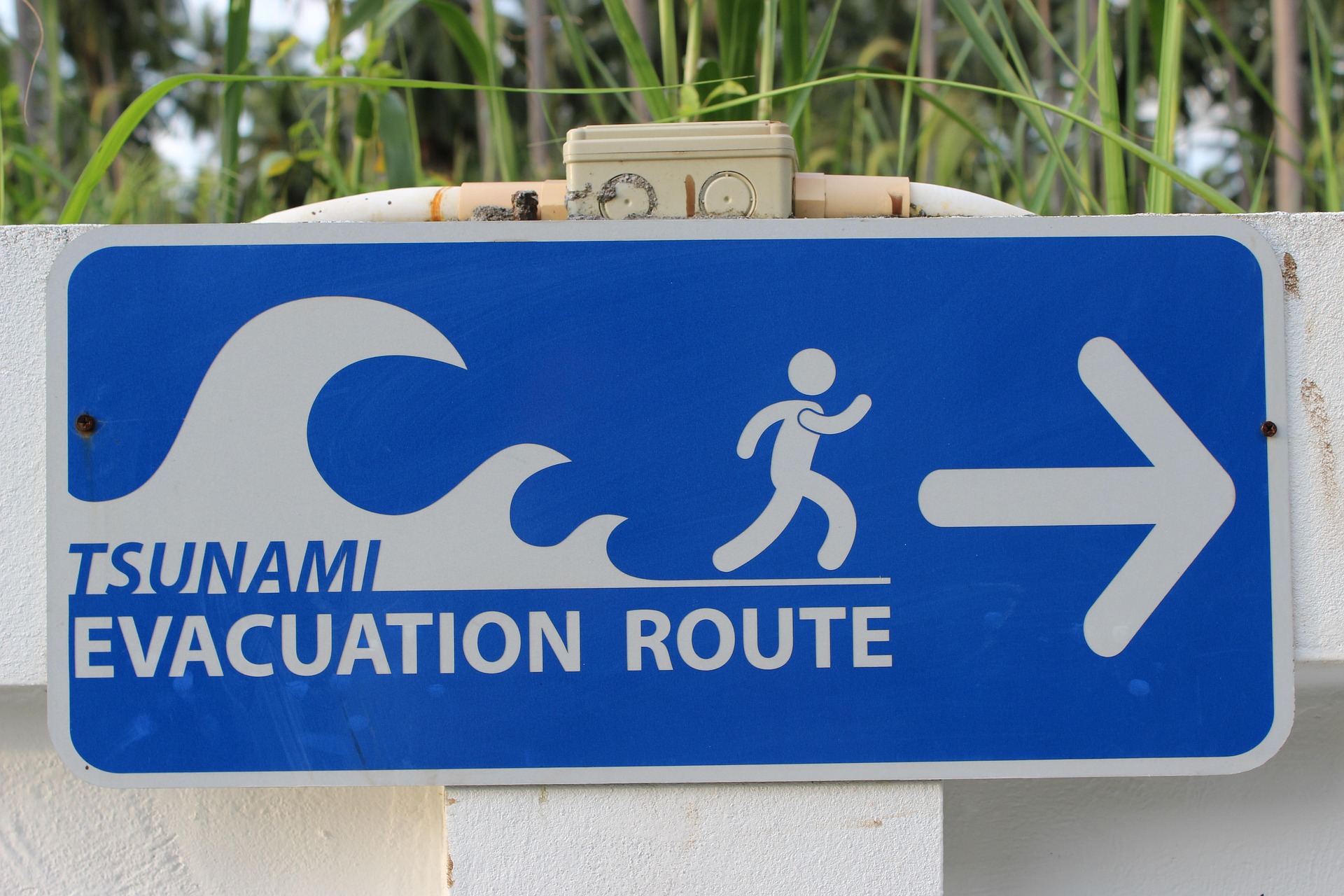
The work also has potential relevance for emerging UK discussions around tsunami preparedness and warning capability. While the strongest immediate application is in regions with greater tsunami exposure, the research may also support wider conversations about coastal hazards, monitoring infrastructure and future resilience.
The team also plans to share the work through technical reports, stakeholder briefings, a policy note and public communication materials, including an updated animation explaining the technology and its potential applications. These outputs will build on existing international engagement through UNESCO-IOC, Ocean Decade activity and tsunami warning partners, helping support future conversations around warning practice, regional policy integration and coastal resilience.
Please see other UNESCO World Tsumai Awareness day resources events and information:
World Tsunami Awareness Day
For UNESCO Policy Information on Tsunamis: UNESCO-IOC Global Tsunami Early Warning and Mitigation Programme
For current details of UNESCO tsunami-warning systems, coordination and preparedness: UNESCO-IOC Tsunami Programme
GREAT has been endorsed by the United Nations as an Ocean Decade project.
Articles on the wider work of the team:
Read the Cardiff University GREAT feature
Using artificial intelligence to create a tsunami early warning system
Cardiff University tsunami mitigation feature
Open access publication:
- AHRC
- BBSRC
- Cardiff Business School
- Case studies
- EPSRC
- ESRC
- Institutional Collaboration
- MRC
- Public Engagement
- School of Biosciences
- School of Computational and Mathematical Sciences
- School of Dentistry
- School of Engineering
- School of English, Communication and Philosophy
- School of Geography and Planning
- School of History, Archaeology and Religion
- School of Journalism, Media and Culture
- School of Law and Politics
- School of Medicine
- School of Optometry and Vision Sciences
- School of Psychology
- Welsh School of Architecture
- Eight Voices in Darkness recognised for sharing lived experiences of sight loss and mental health
- How can research become more inclusive for people who have difficulty giving informed consent?
- How can medical imaging software developed in Cardiff reach more researchers, clinicians and healthcare innovators?
- What does it take to make secondhand economies more sustainable, accessible and socially connected?
- What happens when retailers cannot trust their stock records?