

Pythagorean-Astronomy: ExoMars and Galaxies

Posted on 27 October 2016 by Chris North

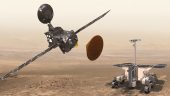
A lot has happened this month – ESA got a spacecraft into orbit around Mars, but sadly lost the Schiaparelli lander, China launched two new taikonauts to their space station, and the Swarm mission uncovered details from Earth depths. Edward Gomez and I discussed these, and more, this month (though before the full nature of
Read more


Astronomy inspires public park art

Posted on 24 October 2016 by Chris North

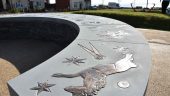
School of Physics and Astronomy staff, Professor Haley Gomez and Dr Chris North, were honoured guests at the unveiling of a specially commissioned art work at Channel Heights Housing Development (Rhoose Point, Vale Of Glamorgan) on Friday, 21st of October. Students and staff of Rhws Primary School also attended the event and took part in
Read more


Pythagorean Astronomy: Rosetta & OSIRIS-Rex

Posted on 26 September 2016 by Chris North

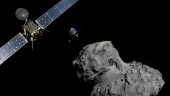
This month sees the start of one mission and the end of another. NASA’s OSIRIS-REx mission launched at the start of the month to go and study asteroid Bennu, and even bring back a sample to Earth. Meanwhile, the end of the month sees the finale of ESA’s Rosetta mission, which has spent two years studying comet 67P/Churyumov-Gerasimenko. With
Read more


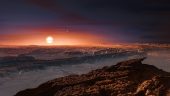
Artist's impression of Proxima b

Pythagorean Astronomy: Proxima b

Posted on 26 August 2016 by Chris North

After a few weeks of rumours, the announcement of the discovery of an Earth-size (maybe!) planet around the Sun’s nearest neighbour has caused quite a stir. The planet is more massive than the Earth, but probably not by much, and sits in a location where liquid water could (at least in principle), exist on it’s
Read more


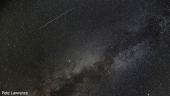
Perseid Meteor by Pete Lawrence

Perseid Meteor Shower

Posted on 9 August 2016 by Chris North

Meteors, or shooting stars, are bright streaks of light originating from tiny grains of debris — often only the size of a grain of sand — whizzing through our atmosphere at speeds of tens of thousands of km per hour. Most of them originate from the trails of debris left by comets as they move
Read more


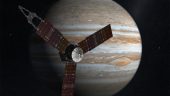
Pythagorean Astronomy: Mission Juno

Posted on 28 July 2016 by Chris North

In July 2016 NASA’s Juno spacecraft completed its five year journey to the planet Jupiter. On board is a suite of instruments and experiments that will provide exquisite insight into the history of our Solar System’s largest planet. The process of Jupiter’s formation is a long-standing mystery that planetary scientists have been trying to answer for decades. As the University
Read more


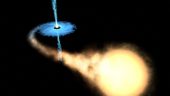
Pythagorean Astronomy: The Origins of Black Holes

Posted on 30 June 2016 by Chris North

On 15th June 2016 the LIGO collaboration released more detections of gravitational waves. As with the first detection, announced back in February, these gravitational waves were emitted by pairs of black holes, spiralling together and merging, But of course, those black holes need to come from somewhere, and in this case it’s thought to be the deaths of
Read more


Pythagorean Astronomy: New worlds

Posted on 26 May 2016 by Chris North

This month’s focus is on two different stories, but both involving the same spacecraft: Kepler. Edward Gomez and I discuss a result from the outer edge of our Solar System, regarding the icy world that goes by the catchy name of “2007 OR10”. By combining information from the Kepler Spacecraft, now in the second phase
Read more


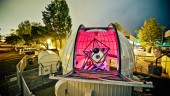
A 1-meter telescope in the LCOGT network

ISE 2016 Observing Challenge

Posted on 17 May 2016 by Brychan Govier

Take part in the ISE 2016 Observing Challenge and receive a personalised astronomical poster for your class! The Universe is a big place. More than big — it includes everything that exists! Help your students understand the magnitude of the cosmos by using your class time to explore some of the objects in the vast
Read more