What can researchers learn from elite sportspersons?
17 June 2026
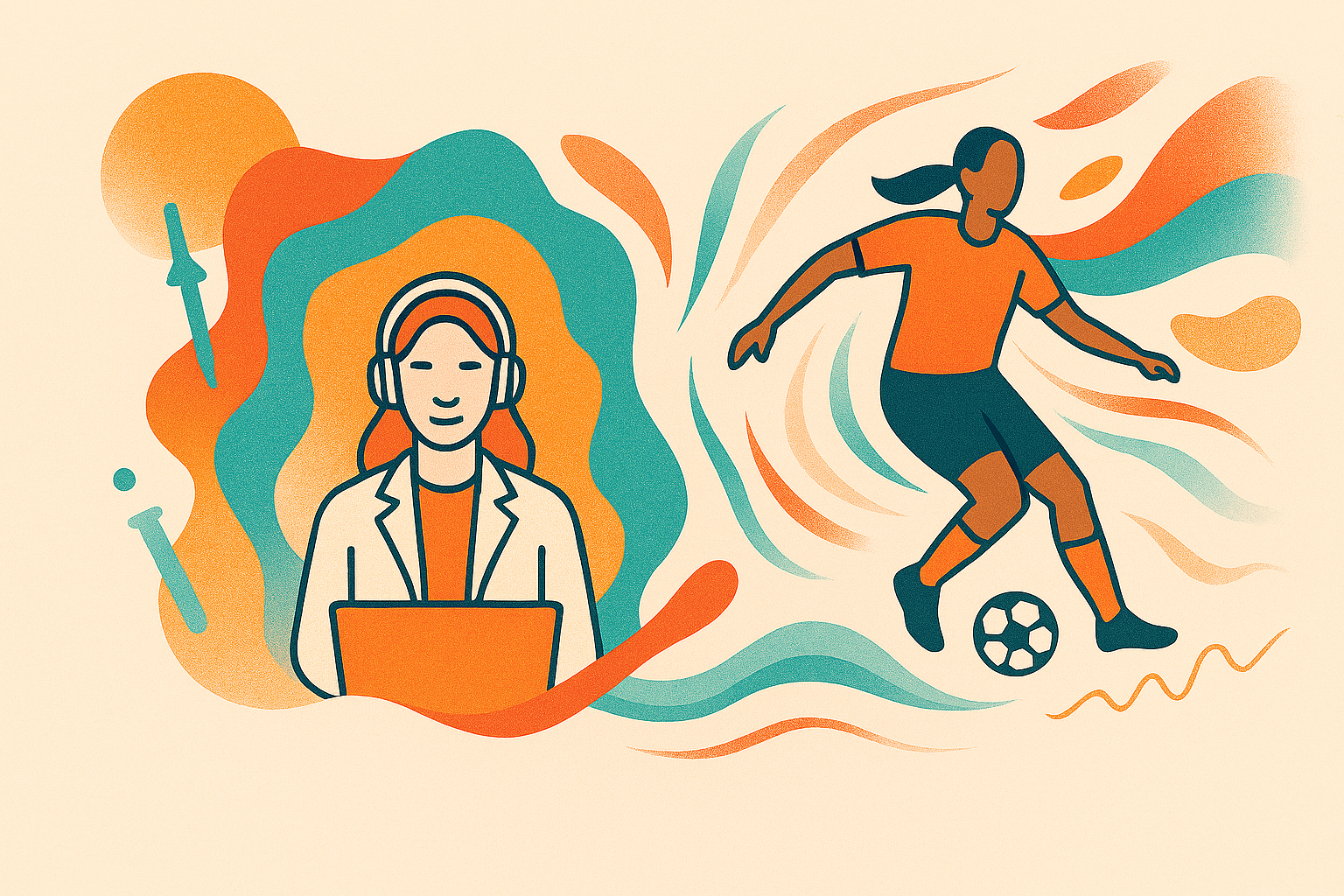
I am, by professional training, a research scientist. My early career was grounded in cancer biology, using molecular genetic techniques to explore what I prefer to call fundamental science (a much better term than basic science). What this is, is the kind of research that seeks to understand how things work at their most basic level, as opposed to applied or translational research which focuses on translating findings into clinical practice. It is perhaps an unfashionable distinction to draw in an era that rightly values impact and application, but it matters here because it shapes the lens through which I view research, careers, and the systems that support (or fail to support) those who pursue them.
During my daily commute, which offers a pocket of uninterrupted thinking time, I often listen to podcasts spanning science, sport, and something lighter in between. Over time, I have noticed a recurring theme, with the challenges described by elite athletes, particularly around career management, resilience, and identity, feeling strikingly familiar to those I experienced as a research scientist. Although the contexts are different with laboratories rather than sports arenas and grant applications rather than competitions, the underlying experiences often seem to overlap. This has prompted me to reflect more intentionally on what these two worlds might learn from each other.
At first glance, the parallels may not seem obvious. Science is often perceived as cerebral and methodical, whereas elite sport is physical and immediate. Yet both are highly competitive, performance-driven environments where success is uncertain, careers are rarely linear, and progression depends on a combination of talent, opportunity, support, timing and a whopping big serving of luck. For some, it doesn’t matter how hard you work, or how many sacrifices you make for your career, in both fields, the uncomfortable truth is that most people will not reach what might traditionally be defined as “the top.” Not everyone will secure a permanent academic position, just as not every athlete will compete at the highest level. That reality is rarely discussed openly, but it shapes decision-making, wellbeing, and long-term planning in profound ways. It also means that at some point, the majority of people need to transition away from their first career into an alternative, yet often linked career.
One of the more subtle but important similarities, I think, lies in the role of planning. Both researchers and athletes are encouraged, indeed required, to set goals, develop strategies, and map out their next steps. Grant timelines, publication plans, and career milestones could be said to mirror training cycles, competition schedules, and performance targets. Yet in both domains, success is rarely the result of planning alone. There is always an element of unpredictability. An experiment fails or produces an unexpected finding. An injury disrupts months of preparation. A chance collaboration opens a new avenue of research, or a last-minute opportunity changes the trajectory of a sporting season. It is, in many ways, about planning for serendipity. In other words, creating the conditions in which opportunities can be recognised and acted upon when they arise.
Technology and innovation provide another interesting intersection. Elite sport has been quick to adopt and integrate new technologies, from wearable devices to advanced analytics, to optimise performance. Science, of course, is a driver of technological advancement, but there may be opportunities to think more creatively about how these tools are used to support not just experimental work, but the individuals conducting it. The increasing presence of artificial intelligence in research and writing is a clear example of this shift. AI is beginning to influence everything from data analysis and pattern recognition to literature searching and drafting early-stage manuscripts. When used thoughtfully, it has the potential to reduce some of the administrative and cognitive burden on researchers, freeing up time for deeper thinking, creativity, and collaboration. Much like technology in sport, however, it raises important questions about balance. How do we ensure we use these tools to enhance, rather than replace, the human insight, judgement, and curiosity that remain at the heart of both scientific discovery and meaningful work.
Yet another shared experience between elite sport and research is the need for continuous learning. In science, knowledge evolves rapidly, and techniques that were cutting-edge a decade ago may now be obsolete. Similarly, elite athletes must constantly refine their skills, adapt to new strategies, and integrate advances in training, nutrition, and recovery. There is no point at which one can stand still. The commitment to lifelong learning is not optional, but it is vital and intrinsic to remaining relevant and competitive. Linked to this is the continual need for performance evaluation. In sport, performance is highly visible and often immediately measurable. Times, scores, rankings etc. provide clear, if sometimes unforgiving, indicators of success. In science, performance metrics are perhaps less visible but no less influential. Publications, citations, grant income, collaborations and impact factors become proxies for achievement. While these metrics serve a purpose, in both contexts they can also narrow definitions of success and, at times, obscure the broader contributions individuals make. There is also much that science can learn from the way elite sport has embraced the study of performance. The systematic approach to understanding how individuals achieve and sustain peak performance, incorporating physiology, psychology, nutrition, and recovery, offers valuable insights. Positive environments that promote high performance are recognised and celebrated. In research environments, we often speak of productivity and output but perhaps spend less time considering the conditions that enable individuals to do their best work. Questions around workload, rest, mental wellbeing, and sustainable working practices are just as relevant in the laboratory as they are on the training field. My current concern around the working conditions in Cardiff Uni, which has gone / is going through a turbulent time of restructure, is we are forgetting the impact our environment has on our performance.
Rejection also seems to be an inherent part of both academic and sporting life, whether in the form of unsuccessful grant applications, manuscript rejections, non-selection, defeat, or the ever-present risk of injury. What becomes clear is not just the need to withstand these setbacks, but to navigate them thoughtfully, to learn from them without allowing them to define the path ahead. This is less about persistence alone and more about adaptability: knowing when to push forward, when to change direction, and when to redefine one’s goals. These moments of challenge are often closely tied to questions of identity. For many athletes, retirement, whether planned or abrupt, requires a profound reimagining of who they are beyond their sport. In academia, while careers may not have such a clearly defined endpoint, similar transitions occur, whether moving between roles, sectors, or stepping away from research altogether. It took me several years to adjust to life outside of the lab. Shifts in career paths can unsettle a sense of professional identity built over many years, and perhaps both fields would benefit from more open conversations that normalise transition as part of a career, rather than viewing it as a failure or last resort.
I find it compelling, that both sport and academic have a shared commitment to excellence. Whether in a laboratory or on a track, there is a drive to understand limits, to push boundaries, and to improve. This is underpinned by discipline, curiosity, and often a deep intrinsic motivation. Yet, as already stated, there is also a need to balance this with wellbeing. The narratives of overwork and sacrifice, while sometimes romanticised, are increasingly being questioned in both fields. Sustainable success requires not only effort, but also recovery, reflection, and support. The benefits of teamwork and collective performance can’t be understated. While academia can, at times, reward individual achievement, much of modern science is inherently collaborative. Understanding how teams’ function effectively, how trust is built, how conflict is managed, how diverse perspectives are integrated, can only enhance research outcomes. Some of the most successful breakthroughs arise not from isolated brilliance, but from well-functioning teams working towards a shared goal. And alongside this sits the importance of mentorship and support networks. Few successful scientists or athletes have progressed entirely alone. Behind each published paper or podium finish is often a network of supervisors, coaches, collaborators, and peers who have offered guidance, feedback, and, at times, critical challenge. Yet access to such support is not always equitable. Both fields still grapple with issues of representation and inclusion. The observation that leadership and management structures often lack diversity, particularly in terms of gender, is not new, but it remains pertinent. In both academia and elite sport, this has implications not only for fairness, but for the range of perspectives and experiences that shape decision-making.
Ultimately, reflecting on these parallels has reinforced for me that careers, whether in science or sport, are rarely straightforward. They are shaped by a complex interplay of personal ambition, external opportunities, structural factors, and, at times, sheer chance. Recognising this complexity does not make the journey easier, but it does perhaps make it more understandable. I’m sure an equivalent comparison could be made to those embarking on a career in medicine. I’m considering this as it also prompts a broader question about how we prepare individuals for these careers, something that is relevant to my role in medical education. In both science and sport, technical skills are essential, but they are not sufficient. Equipping individuals with the ability to navigate uncertainty, build networks, seek and offer mentorship, and adapt to change is equally important. These are not always formally taught, yet they underpin long-term success and satisfaction.
As someone who now spends much of their time supporting students at the very beginning of their scientific journeys, these reflections feel particularly relevant. If there is one thing both science and sport teach us, it is that potential is only part of the story. How that potential is nurtured, supported, and sustained matters just as much. And perhaps that is where the most meaningful overlap lies. Whether we are looking at a researcher in a laboratory or an athlete on a field, we are ultimately looking at individuals navigating complex, demanding, and often uncertain careers. The more we can learn across these domains, the better equipped we are to support them.
- Making Yourself a Priority: Reflections on Diarising Your Development
- What can researchers learn from elite sportspersons?
- Epigenetics: How our environment shapes our genes, and why it matters – learning from students.
- WCRC 2026: Reflections on Learning, Listening, and the Power of Community
- Why Tackling Gender Inequality Still Matters