Epigenetics: How our environment shapes our genes, and why it matters – learning from students.
24 May 2026
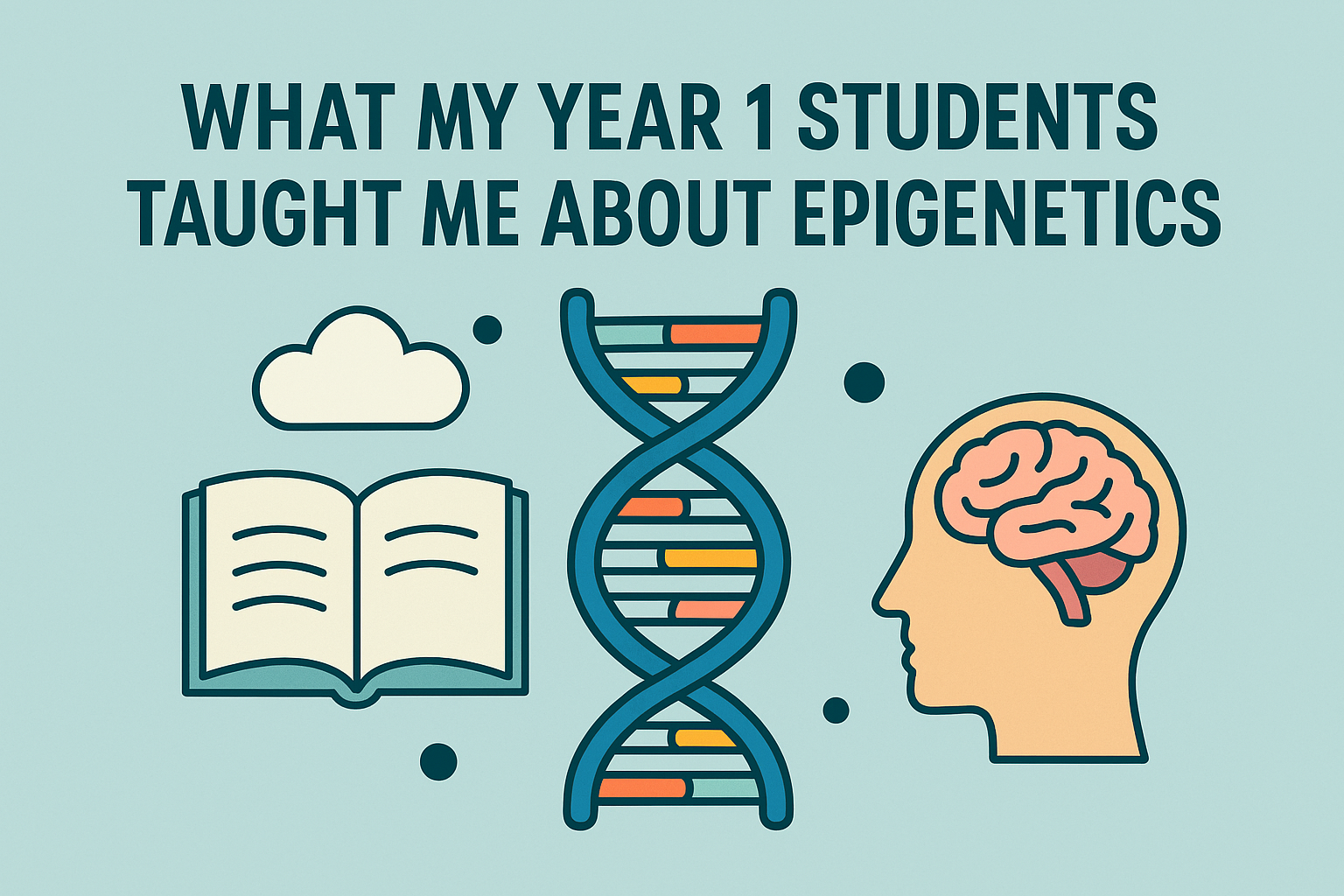
Each year, I have the privilege of working with Year 1 medical students on their first literature review project. The topic I provided to them, “Epigenetics: How our environment shapes our genes, and why it matters”, is purposefully broad, to allow them the opportunity to explore areas of medicine that is of interest to them. However, it is also a challenging topic, but ever since completing my PhD, I have maintained an interest in epigenetics. This is an ambitious, complex field and is often completely new to the students. For the last 8 year’s I have enjoyed supporting students to explore this field, and still, every year, the students surprise me, and I learn new interesting things from them.
This year was no exception. I have never previously considered the epigenetic consequences of post-traumatic stress disorder (PTSD), so that was an interesting read. It is rewarding to see that through their work, they not only developed their research skills but brought fresh perspectives to an area of science that is influencing how we think about health and disease. They also reminded me that good science doesn’t just look at what we know, it asks questions to explore what we have yet to discover. I love that they appear to have been inspired to ask interesting questions.
But let’s start with a definition. What is epigenetics?
In simple terms, epigenetics is about how our environment can influence how our genes behave, without changing the DNA code itself.
If our DNA is like an instruction manual, epigenetics is the system that decides:
- which instructions are read
- when they are read
- and how strongly they are followed
Things like stress, smoking, diet, exercise and life experiences in general, can “switch genes on or off” through chemical changes in or around the DNA, such as DNA methylation.
And importantly, some of these changes can last for years, or even decades, and a passed down to new cells when cells divide.
What the students explored.
Across their projects, this year the students delved into how our environment interacts with our genes in ways that have real health outcomes on topics spanning, smoking and heart disease, smoking and lung health, diabetic eye disease, Alzheimer’s disease, and as I mentioned PTSD.
Each topic demonstrated the same underlying idea that our experiences can leave a biological imprint on our bodies. For example, several students examined the effects of smoking. It is well accepted and understood, that chemicals in cigarette smoke can directly damage DNA, and predispose to several diseases including cancer. What stood out most from the literature reviews was how deeply smoking affects the body, beyond the genetic level. They highlighted literature that shines a light on the ability of cigarette smoke to change how genes linked to inflammation behave, with altered immune and repair processes, and genes that usually protect the heart and lungs can be switched off. What is more, these effects can have a lasting impact, with some studies showing that these epigenetic changes can remain even after someone stops smoking.
In other words, the body “remembers” exposure.
One of the most fascinating ideas the students brought forward was something called “metabolic memory.” In diabetic retinopathy (a condition affecting vision), high blood sugar can trigger epigenetic changes that contribute to damage to retinal cells, increase inflammation and promote abnormal blood vessel growth. What is perhaps remarkable is that these changes can persist even after blood sugar levels improve. Just like with smoking exposure, the body doesn’t just react in the moment, but it records past exposures.
Understanding this could help explain why some complications continue to progress even after treatment begins, and why early intervention is so critical.
The review of Alzheimer’s disease explored the notion that studying epigenetics could help us detect this disease earlier, which is currently an area that is incredibly challenging. Their review highlighted work that shows how epigenetic changes may influence inflammation in the brain, affect energy production in nerve cells and potentially contribute to disease progression. Perhaps most exciting was the idea that epigenetic markers in blood samples could help identify Alzheimer’s disease earlier, long before symptoms appear.
While this research is still developing, it shows the potential for epigenetics to move us towards:
- earlier diagnosis
- better prediction of risk
- and more personalised treatments
This mirrors my understanding of epigenetic research in the cancer field. Exciting times.
And then there was the review on PTSD and epigenetics. In all my years of running this project, this topic stood out this year as something entirely new, never previously chosen. This review explored how traumatic experiences can subtly shape our biology, through inducing changes in DNA methylation of stress‑related genes that can alter how the body controls stress hormones, like cortisol, especially after early-life trauma. In some people, this leads to an overactive, long-lasting stress response that may contribute to PTSD. More broadly, these biological shifts can affect how the body manages stress and may increase vulnerability to long‑term mental health conditions.
Importantly, understanding of these molecular mechanisms can help explain why two people can experience the same trauma but respond so differently. And this understanding advocates for a shift in the conversation from simply asking what happened to someone, to looking to understand how their body responded. This has the potential to opening new ways to think about resilience, reduce stigma, and develop more targeted support and treatments.
Epigenetics matters
The joy of reading these literature reviews is that it has reemphasised how epigenetics is more than an abstract scientific concept. It has real-world implications for all of us. It helps explain why our lifestyle choices can influence our health, how early‑life experiences can shape wellbeing across a lifetime, and why people differ in how they respond to and recover from adversity. Crucially, understanding epigenetics also offers a sense of hope. Understanding epigenetic markers can offer new / improved diagnostic / prognostic tests. And unlike our fixed DNA sequence, epigenetic changes are not always permanent, rather they can sometimes be modified or even reversed. This is yet another exciting research topic. Modifying epigenetics could open the door to better prevention strategies and more personalised approaches to healthcare that take both our experiences and our biology into account.
Having been reminded to keep asking questions, and with a growing interest in how people experience perimenopause and menopause so differently, I’m now finding myself wondering how menopause and epigenetics might influence each other. It seems likely there is a two‑way relationship, where hormonal changes interact with the way our genes are regulated over time. That, perhaps, is a question for another day, and another project.
- Making Yourself a Priority: Reflections on Diarising Your Development
- What can researchers learn from elite sportspersons?
- Epigenetics: How our environment shapes our genes, and why it matters – learning from students.
- WCRC 2026: Reflections on Learning, Listening, and the Power of Community
- Why Tackling Gender Inequality Still Matters