What does it take to make secondhand economies more sustainable, accessible and socially connected?
28 September 2026
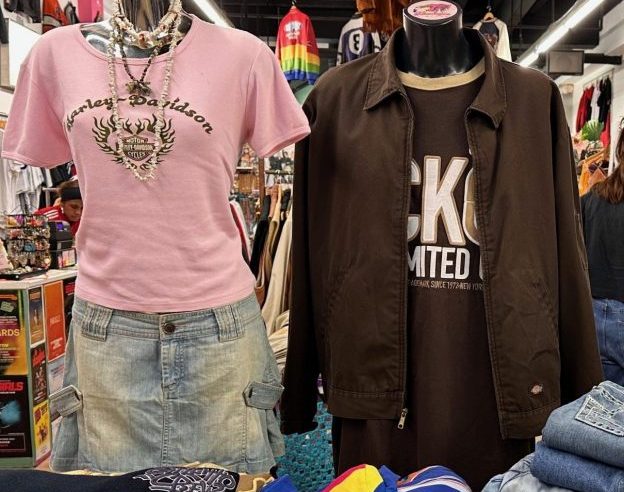
As ‘Second Hand September’ encourages people to think differently about what they buy, reuse and pass on, research at Cardiff University is exploring the wider networks and practices that sustain secondhand economies.
Supported by Cardiff University’s Economic and Social Research Council (ESRC) Impact Acceleration Account (IAA) Follow-on Fund, Dr Alida Payson from the School of Journalism, Media and Culture worked with researchers, practitioners and community organisations to build connections, share learning and develop accessible resources for people working in secondhand spaces.
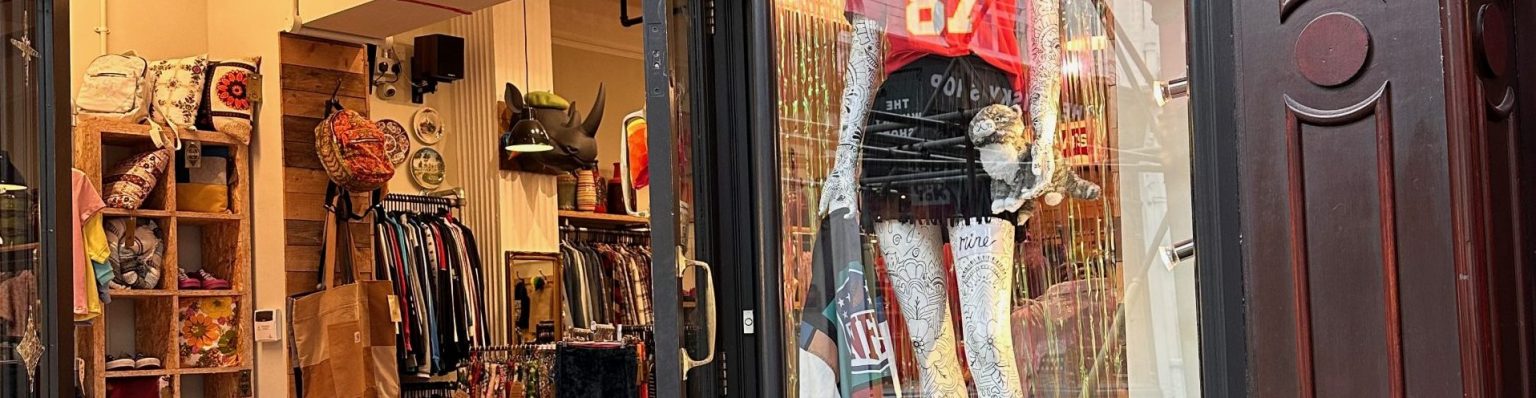
Secondhand spaces such as charity shops, reuse projects, repair networks and community exchanges are often understood through sustainability and waste reduction, as they extend the useful lives of a wide range of objects and materials. This project focused on the wider role these spaces can play in community life by bringing together staff, volunteers, and other participants in shared work and conviviality. In particular, it explored how secondhand spaces can become more accessible, more inclusive of Disabled people, and better able to support shared knowledge, care and social connection.
The team, which included Dr Violet Broadhead, Dr Rhiannon Craft, and Lizzie Harrison, expanded a network of researchers, practitioners and policymakers working in secondhand economies. We developed new partnerships with organisations involved in wood recycling, paint reuse, clothes exchange, disability access, charity retail, and community repair and heritage collections.
From interviews and site visits, we created two plain-language toolkits focused on accessibility and social repair.
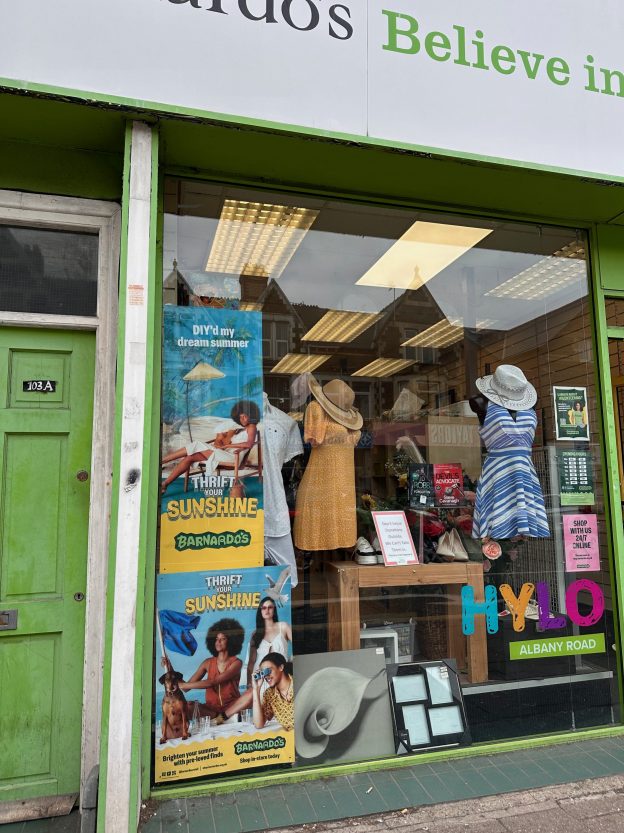
Find out more about partners for our toolkit on Social Repair to Sustain Secondhand Economies:
- Bristol Wood Recycing Project https://www.bwrp.org.uk/
- Leeds Community Clothes Exchange https://leedscommunityclothesexchange.com/
- Seagulls Paint Recycling Project https://seagullsreuse.org.uk/
Find out more about partners for our toolkit on Fostering accessibility and equity for disabled people in second-hand spaces:
- Miranda Evans (Disability Wales https://www.disabilitywales.org/), Siobhan Kelly (University of Salford),
- Ollie Ayres (the Hobby Hub Yaxley CIC),
- Jessica Chudasama-Alloway and Ben Usher-Barrass (Aucademy),
- and Fiona Wonford and Elizabeth Cake (the ScrapStore @ East Kent Mencap)
We also worked with policy organisation Fashion Roundtable (www.fashionroundtable.co.uk), and joined in three public engagement events to build understanding of second-hand sites and issues.
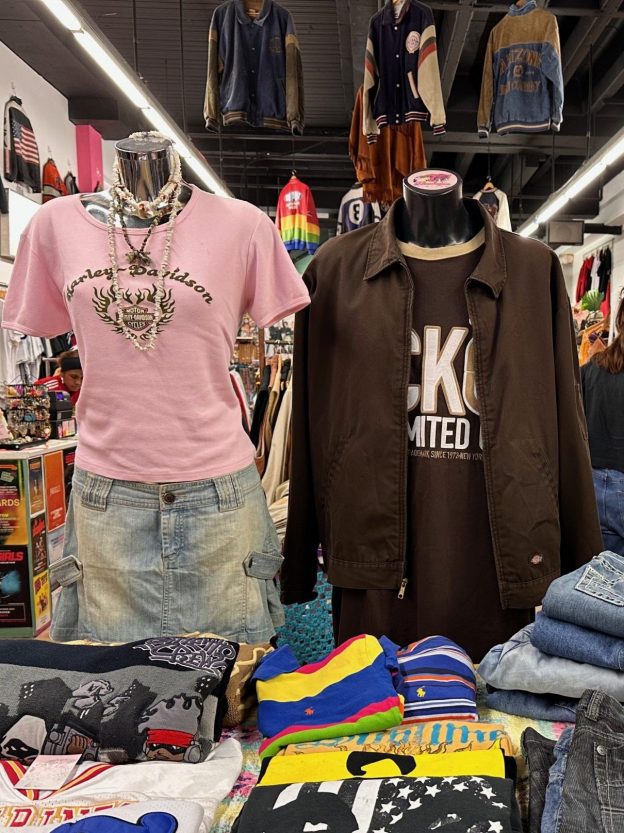
IAA funding supported the team to build relationships, share research and turn learning from secondhand organisations into practical resources. With the funding, we could go to the sites where this important work was happening and talk directly to the people making it all happen. The funding helped early career researchers connect their work with public and practitioner audiences, creating materials that can support more thoughtful, accessible and socially connected secondhand economies. Finally, IAA funding enabled us to renumerate contributors fairly for their time.
Further information
The project has produced new toolkits on accessibility and social repair, which will be published through the Secondhand Cultures blog.
The team will continue to monitor feedback, track downloads and work with partners to understand how the resources are used in practice.
A related article in The Conversation, written by project team member Violet Broadhead, explored the pressures placed on charity shops by unwanted clothing donations and was read more than 134,000 times.
- AHRC
- BBSRC
- Cardiff Business School
- Case studies
- EPSRC
- ESRC
- Institutional Collaboration
- MRC
- Public Engagement
- School of Biosciences
- School of Dentistry
- School of Engineering
- School of English, Communication and Philosophy
- School of Geography and Planning
- School of History, Archaeology and Religion
- School of Journalism, Media and Culture
- School of Law and Politics
- School of Medicine
- School of Psychology
- Welsh School of Architecture
- What does it take to make secondhand economies more sustainable, accessible and socially connected?
- What happens when retailers cannot trust their stock records?
- How can research become more inclusive for people who have difficulty giving informed consent?
- Extending the Impact of ACT-PNMH: Psychological Interventions for Perinatal Mental Health
- Making neighbourhood parks inclusive for teenage girls and young women in Cardiff