Biobanks Reimagined: The Rise of Bioresources in Modern Research
28 September 2026
By Lisa Spary the Operations Manager at Wales Cancer Biobank
For decades, biobanks have played a vital role in advancing medical research, providing scientists with access to biological samples and associated data that underpin discoveries in disease biology, diagnostics, and treatment. From blood and tissue samples to DNA and health records, biobanks have become indispensable resources that support research across a wide range of disciplines. Biobanks can exist as many forms from population biobanks whose focus cohort consists of the general population to disease-orientated biobanks that collect samples from a specific cohort of patients to data-only biobanks that do not have physical samples to release.
Yet the term “biobank” is often used broadly, raising an important question: when does a collection of samples become a biobank? What is involved in the evolution from a simple collection of samples held in a freezer to an infrastructure that facilitates sample collection for multiple researchers? The answer lies in far more than storage alone. A biobank is not simply a freezer containing specimens gathered for a single study. It is a structured research infrastructure supported by governance, ethical oversight, quality management systems, data stewardship, and procedures that enable samples and associated information to be used responsibly for future research.
As a research scientist that has worked on human biosamples for more than 20 years, I have experienced the transition from a simple collection of samples for my own research to running a biobank facility that collects large numbers of samples for researchers worldwide at the Wales Cancer Biobank (WCB). When I started working in Oncology research, individual project ethics was required but the Human Tissue Authority (HTA) did not exist. Regulations surrounding sample collection, monitoring and tracking was not as stringent as it is now. As researchers, we often found that samples were collected with minimal pathological or clinical data available unless we were working within a registered clinical trial.
With the introduction of the Human Tissue Act in 2004, biobanks emerged as an invaluable resource to researchers that want to undertake research projects using human samples. Not only were biobanks integrated into clinical establishments that enabled access to high-quality samples and are linked to clinical, demographic and/or research data but they were also able to provide the regulatory governance required to collect and store human samples.
In addition, biobanks are required to follow standard operating procedures for collection, processing, storage and distribution ensuring reproducibility which has become a critical issue in science. Well-managed bioresources help address this challenge by providing standardised, high-quality samples allowing access to comparable materials, improving consistency and reliability across studies. A fundamental element of biobanking is securing consent for the future use of collected samples and associated data. This means that samples can be distributed to other researchers and that the resource is maintained for multiple future studies rather than a single project with a specific question. The future use, retention of associated-data and the continued follow up of patients is what makes biobanks invaluable to researchers.
From Storage Facilities to Research Networks
More Than a Freezer Full of Samples
Traditionally, biobanks were viewed as secure storage facility for blood, tissue, DNA, and associated health data. However, in recent years biobanks have undergone a profound transformation. Advances in digital technology, genomics, artificial intelligence (AI), and data integration are redefining the role of biobanks, turning them into dynamic engines of scientific discovery and healthcare innovation.
The first generation of biobanks was largely focused on collecting and preserving samples for future research. When the Wales Cancer Biobank (WCB) began consenting patients in 2005, the focus was on the collection of samples from patients diagnosed with a solid cancer ideally before they received any treatment or curative surgery. Working with the NHS, we collected pathology data for the tumour such as type of tumour and grade or stage along with the associated healthcare data such as diagnosis and planned treatment. Our aim has always been to gather information regarding a patients cancer pathway that will help researchers with their studies and enhance the field of knowledge for future patients.
Over the years, as research developed and sample requests advanced, we have evolved from just collecting samples at the time of diagnosis or before surgical intervention. We now offer bespoke collections and longitudinal sampling, actively following a patient through their cancer journey, collecting samples during treatment, recording their response to treatment and their outcomes. We actively follow most patients up to 10 years after their diagnosis and then every couple of years for survival data. If a patient attends clinic for a relapse, our enduring consent allows us to obtain samples from any future procedures without having to reconsent the patient.
And while our sample collection remains essential, WCB and other modern biobanks are increasingly becoming interconnected research networks that combine biological samples with rich clinical, genetic, environmental, and lifestyle data.
The Data Revolution
Over the years, we have experienced the increase in recordable healthcare data. Electronic health records, wearable devices, genome sequencing, proteomics, metabolomics and imaging technologies all contribute valuable insights into human health and disease. This evolution of healthcare data enables researchers to move beyond studying diseases in isolation. Instead, they can explore the complex interactions between genetics, behaviour, environment, and health outcomes. Reimagined biobanks are uniquely positioned to integrate these diverse data sources by linking biological samples to longitudinal health information. The advantage to researchers is a plethora of data that help study disease progression over time, identify risk factors earlier, and predict treatment responses more accurately.
Artificial intelligence is rapidly becoming one of the most powerful tools in biobank-enabled research. Machine learning algorithms can analyse vast datasets that would be impossible for humans to interpret manually. By identifying hidden patterns and associations, AI can help researchers to discover novel biomarkers for early disease detection, predict responses to treatments and improve disease risk stratification. As biobank datasets continue to grow, AI-driven analysis will play an increasingly important role in translating data into meaningful clinical insights. At WCB, we have begun creating pathology imaging datasets that can be used for machine-learning validation of digital pathology systems for diagnosis and risk stratification.
However, collecting this data for research is a time-consuming process that requires experience of clinic notes and treatment pathways. The NHS is an aging system that must develop whilst still trying to perform the day-to-day tasks. In Wales, there are 7 different health boards and each one has their own nuances. In cancer, we are quite fortunate that a cancer registry has been in place for 20+ Years that manages cancer data, waiting times, and patient records across NHS Wales. But the pitfalls, not all health boards use it to its full potential and even within health boards different hospitals will engage differently with it. There is no consistency and data is sporadic. Hospitals keep their own records and databases to record this data and it is not always updated or released to the registry. Therefore, obtaining clinical data is a manual and laborious task that involves accessing multiple databases to sift out the relevant clinical information. The development of the new Wales Clinical Portal system has made searching a patients record easier as all records are now held together but still has its limitations. Working with the Welsh NHS data custodians is key to enhancing clinical data collections and to progress automated data downloads to the biobanks.
Keeping Participants at the Centre
The future of biobanking is also about people and those that consent to the research. Modern biobanks are embracing a participant-centred approach that prioritises transparency, trust, and engagement. Participants increasingly want to understand how their samples and data are being used and the impact their contributions have on research outcomes. Dynamic consent models, digital engagement platforms, and regular communication initiatives enable participants to remain actively involved throughout the research journey. This shift strengthens public trust and encourages broader participation, helping biobanks build more representative collections that reflect diverse populations and communities.
Bioresources hold a magnitude of sensitive personal and genetic information about an individual that could potentially be exploited. Bioresources need to ensure that informed consent is obtained for both samples and medical record access and that the participants understand what data is being accessed. They must protect participant privacy ensuring that patients cannot be de-identified and that the information cannot be traced back to the participants. Maintaining public trust is an essential responsibility for the biobanks and the researchers that access the bioresources. At WCB, we have an active patient and public liaison group that over the years has helped guide us to understand what is acceptable to the patient in regard to additional sample collections and also what clinical data is shared. Our members are also involved in our application review process and therefore are able to feedback on new applications requesting samples and data.
Building More Inclusive Research
Reimagined biobanks are also focussing on healthcare data to identify underrepresented certain ethnic, socioeconomic, and geographic groups. By prioritising inclusive recruitment strategies and community partnerships, an increase in diverse collections ensure that research findings benefit a wider range of populations and support the development of equitable healthcare solutions. By capturing broader demographic representation, biobanks can help ensure that precision medicine truly serves everyone.
WCB has ethics and consent from the patients to access their medical records and our policy states that we will only collect and store information that is relevant to their cancer. However, with advances in clinical research we are finding more links between standard clinical issues and cancer risk/diagnosis. At present, we do not record this information but it is becoming increasing requested from researchers. Socioeconomic and demographic data is becoming increasing prevalent when looking at risk factors for developing cancer or response to treatment.
Precision Medicine and the Growing Value of Bioresources
The advancement in precision medicine over the years has also helped to reimagine biobanks and is one the most significant drivers behind the rise of bioresources. Researchers are increasingly recognising that diseases affect individuals differently due to variations in genetics, lifestyle, and environment. The aim of healthcare to deliver personalised treatment to patients has been made achievable by biobank collections. For example, the Cancer Research UK Stratified Medicine Project (CRUK SMP). This was a national trial looking at the genetic changes of tumour tissues from various cancers and linking that with specific targeted treatments based on the aberrations. WCB played a major role in helping to facilitate the study and the subsequent research projects that were developed. As technologies continue to advance, biobanks will play an increasingly critical role in enabling preventative, predictive, and personalised healthcare.
The Future of Reimagined Bioresources
Despite their immense value, bioresources face several important challenges for the future and their continued existence. Establishing and maintaining high-quality bioresource infrastructures requires significant long-term investment. Storage facilities, data management systems, and quality-control processes must be continuously supported. Many biorepositories undertake a cost recovery model to try to help fund some of the processes but full cost recovery and sustainability are rarely achievable without becoming too expensive for the researcher.
Bioresources have evolved into indispensable assets for modern research. By providing access to high-quality biological materials and valuable associated data, they enable discoveries that improve healthcare, drive innovation, and deepen our understanding of the natural world. Their future is closely tied to emerging technologies and global research priorities. As science becomes more collaborative, data-driven, and personalised, the importance of bioresources will only continue to increase creating multidimensional resources. Investing in their development, sustainability, and ethical governance is essential to unlocking the next generation of scientific breakthroughs and ensuring that research delivers meaningful benefits for society.
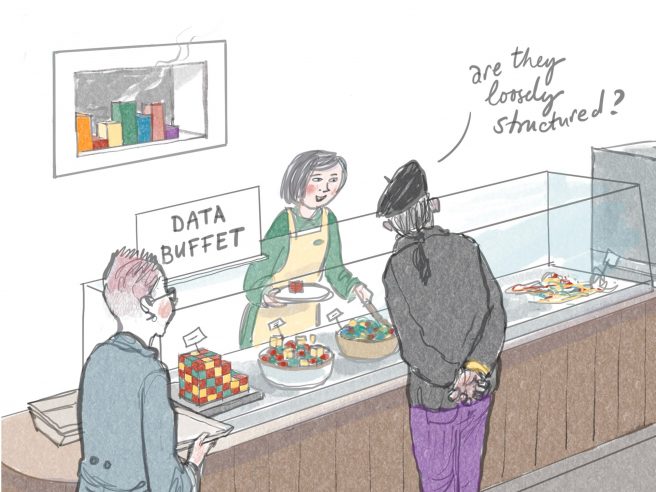
Note: Header image imagined from the text by artist Chris Glynn