More Than Data: Lessons From My Daughter’s Rare Disease Journey
28 September 2026
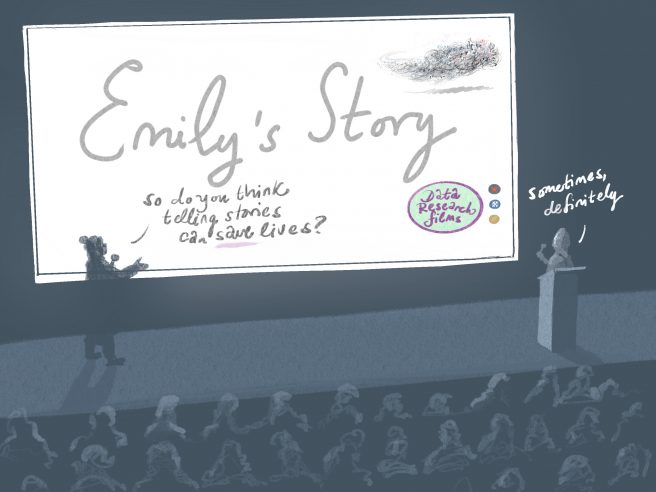
By Emily Taylor
The initial “diagnosis”
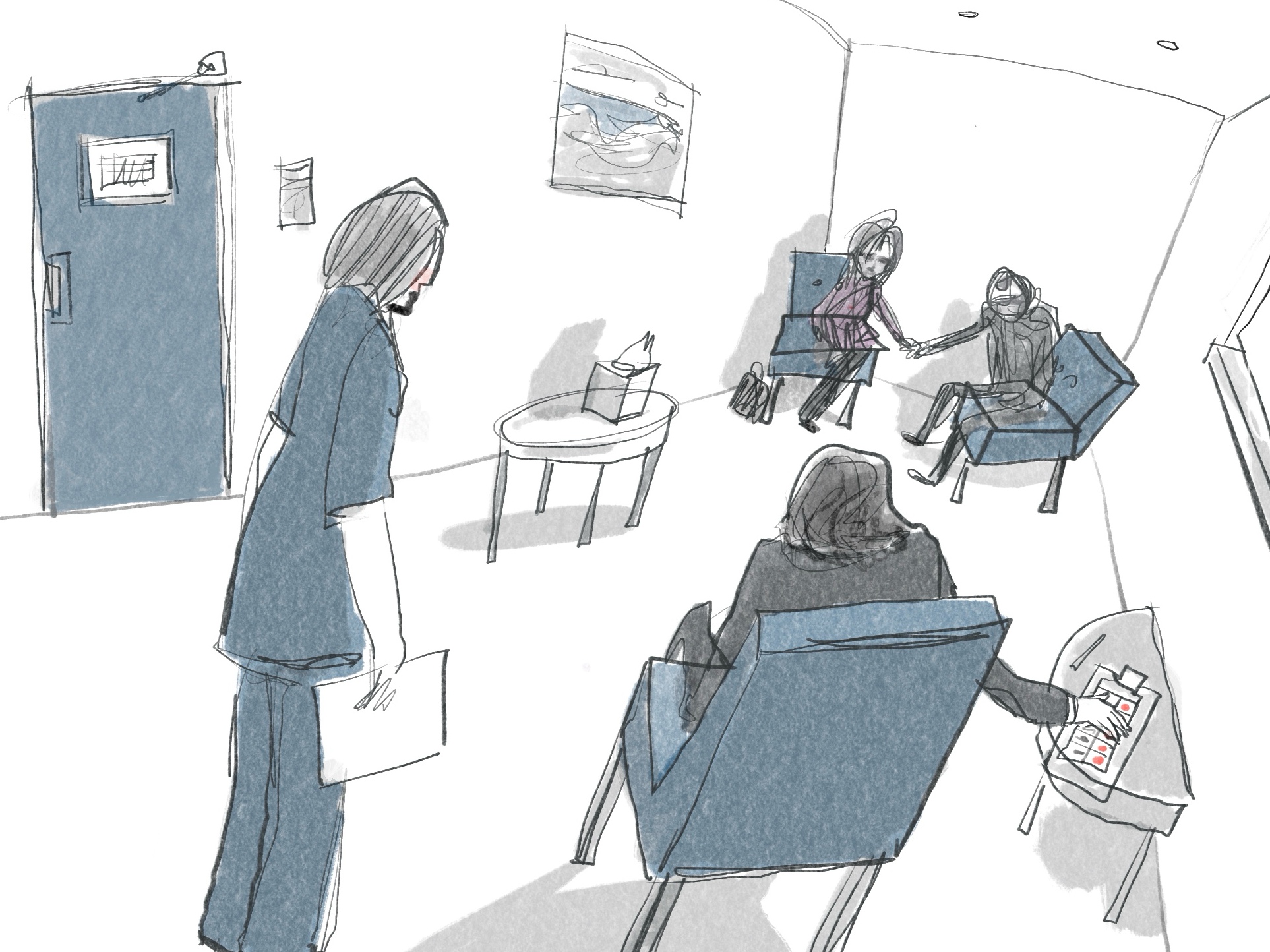
My story begins in May 2022. I was already a mother to two boys – a 4 year old and a 2 year old – and was expecting my first little girl. At my 12 week scan, everything was as expected. Heading into my 20 week scan, I felt relaxed and content. However, those feelings quickly changed when, during the scan, we were told they had found ‘something’ and we were asked to wait in a small room by ourselves. The room had only 3 chairs, a table and a box of tissues.
“This is the room they put people in when there is bad news” I thought to myself.
10 minutes turned to 20, then 20 to 30, before finally a midwife walked in. She handed us some pieces of paper that were still warm – fresh from the printer.
‘Ventriculomegaly’ the word glared up at me.
A quick glance through them and I saw words like ‘chromosome abnormalities’, ‘termination’, ‘your choice’ as well as a flurry of percentages and statistics.
“What does this actually mean?” We asked. I could tell that this midwife really didn’t know, this was way out of her remit and she was scared to say anything wrong. She was simply the unfortunate member of staff who had been asked to speak to us.
They had the sonographer there who was able to find these ‘abnormalities’ but no doctors there to actually explain things to families like ours when they are found.
I remember thinking ‘what use is all of this information if it can’t be explained, and therefore understood, by the very families that are impacted by it?’
A journey of more data but less understanding
Looking back, this was our first experience of being handed ‘data’ without any meaningful communication to go alongside it. Information, statistics, terminology… none of it explaining what it meant for our daughter.
So, we had these papers and were sent on our way.
I commenced a deep dive google search as soon as we got in the car. Ventriculomegaly meant our little girl had more fluid within her brain than what was deemed as ‘normal’.
We had to wait an agonising week to have a phone call with a consultant, who was able to explain it more but still couldn’t give any definite answers as to the implications for our daughter specifically.
From that point on, my pregnancy was filled with anxiety, stress, a sick feeling in my stomach that never went away.. I hated the not knowing. They had this ‘finding’ but couldn’t tell me anything about what it actually meant. They offered me a termination, without telling me why. At 26 weeks pregnant I travelled to Bristol for an MRI of our baby. That found that she had ‘under rotation of the hippocampus’. Yet another finding but, yet again, no one could tell us the significance. We had a meeting with a neurologist who said he had ‘never seen this before’. What on earth am I supposed to do with all of this information, but absolutely none of it giving me concrete answers? As families, we don’t just need access to all of this data but we need help to actually interpret it.
Meeting Violet
With all of the unknown, I opted to have a planned c-section. Our little girl was born September 23rd 2022, weighing 7lbs 11oz. She was absolutely perfect and I was able to feed her within minutes of her being born, she was seeming all fit and healthy.
We took her home after 2 days, but there was still excess fluid in her brain. The plan was for our health visitor to measure her head circumference every time they saw her. I remember thinking, if my daughter has brain abnormalities, then why on earth are we relying on a health visitor armed with a tape measure? But I took this as meaning they weren’t overly concerned and Violet was doing everything a newborn baby should be doing, so I tried to put the worries to the back of my mind. I remember looking at her as she lay on our bed one evening and I had a rush of guilt for all of the times I had cried over her. For all the worrying I had done, all the anxiety I had felt.. for absolutely no reason because she was here and she was perfectly fine.
We had around one perfect month with Violet – one month of believing that everything actually was ok. At 3 weeks old, Violet had been admitted to hospital with a swollen infected gland in her cheek. Just a couple of weeks later, she was back in hospital after I became concerned about her breathing. She was diagnosed with bronchiolitis and spent a night in hospital. We were discharged and told by Doctors that she was ok to go home.
That was when the voice in the back of my head started saying:
‘no, she is not ok. Something is not right’
and that little, nagging voice never left me.
More appointments, more data, few answers
Over the course of the following months, Violet was in and out of hospital for various reasons – I was concerned about her erratic eye movements, then she lost the ability to feed, then she was losing weight, then there were concerns about her breathing. She had an MRI and CT scan. She had outpatient appointments for a whole host of symptoms. She was still being seen by our health visitor, having contact with our GP, she was under the care of SCAN (services for children with additional needs), all by the time she was 6 months old.
She had a genetic test done, that, after months of waiting, came back clear. She was seen by a vast amount of health care clinicians, different specialists, nurses, doctors and still… we were left without answers.
Jigsaw pieces without a final picture
During this time, it felt like we were just being passed around – back and forth, back and forth. Everyone holding a piece of the puzzle but no one to put it all together. I knew Violet, I was so in tune with her and every emotion that she felt even though she never said a word. And it felt like everyone was trying to learn a different part of her, each professional held the information/data that they cared about but no one connected the dots.
Genetics had one piece. Neurology had another. Community teams held another. We, as her parents, held pieces no one else could. But too often those pieces were never assembled into one complete picture. If only we had all come together and listened and shared what we knew.
We were going round and round in circles, referred to this person, then referred to this person. One step forward, two steps back.
I think I cried every single day.
The worry completely plagued my mind and became all that I could think about.
I didn’t want more specialists, I didn’t want more tests, I didn’t want more information, I didn’t want more data, I didn’t want more statistics.
I just wanted real-life help for my little girl.
Whole Exome genetic tests for the whole family
Violet was waiting for a 2nd genetic test when, in May 2023, during our 10th hospital stay, she had a severe obstructive sleep apnoea and stopped breathing. Violet was stabilised and transferred to the hospital’s high dependency unit. After one night, with her CO2 levels continuing to rise, she was transferred to our local children’s hospital for more specialist treatment.
When we arrived, within days she underwent whole exome genetic testing. That involved taking blood from her, myself and my husband.
The wait took 10 days. During which time Violet’s condition deteriorated and she was put on a ventilator.
Finally, a diagnosis
The results came back and we were told that Violet had TBCK syndrome. An incredibly rare genetic condition caused by a mutation on the TBCK gene.
The geneticist told us that Violet was the first person in Wales to be diagnosed with this condition.
Initially, there was relief. Finally – a diagnosis, we know what we are dealing with so Violet can now get the help she needs.
They explained to us that this mutation was caused by Violet inheriting a ‘faulty’ TBCK gene from both myself and my husband. The relief suddenly turned to overwhelming guilt – after all of these months and months of searching, turns out Violet’s struggles were all a result of ME? Me and my husband? the two people who loved her most in the whole wide world, we had done this to her? I’d always felt so blessed and grateful to my body for creating and birthing my children and now I felt disgusted, I felt ashamed, I felt hatred towards myself.
This result was not just information to us. It came with enormous emotional turmoil. Not just a diagnosis but a devastating blow that both myself and my husband will carry forever. It also means that our other children are also potential carriers – which has implications for the future generations of our family.
This information that we were being presented with swirled around and around in my head and my thoughts raced at 100 miles per hour. I was overwhelmed, confused, angry until finally I had some clarity and refocused.
Back to being relieved.
It’s ok.
We have an answer now, everything will be ok.
It doesn’t matter what came before or how we even ended up here – everything is ok now that we know what condition she has. They will know how to treat it. They will know what to do.
Except, there isn’t anything to do.
Consultants from different disciplinaries call us into a meeting.
TBCK syndrome is a spectrum and Violet’s condition implies she is on the severe end.
They tell us Violet is going to have a short life.
They tell us they have done all that they can.
They tell us there are no more tests left.
No surgeries, no investigations, no treatment plan.
Their words burn into my brain, the impact of hearing this brings me to my knees.
And yet I am almost too stunned to believe a word they are saying.
Not me
Not my little girl
Please
Not Violet
I have fought for too long, she has fought too hard.. you can’t tell me she is going to leave me.
Violet remained in ICU and for the following few weeks we tried to make memories together and spend as much time with her as we could. She was 11 months old when we transferred her to a children’s hospice for end of life care. After 2 weeks, I held Violet in my arms – studying her perfect cheeks, her long eyelashes, her eyelids covering those big blue eyes of hers – and I watched as she peacefully took her final breath and left this world for the next.
It is just over three years since we said goodbye to our little girl and we are still reeling from the impact of all that we went through. I’ve shared Violet’s story on social media, through charity campaigns and other events , it’s important me to me use my voice to speak about her and all that she endured during her short life. Sadly, our story isn’t unique and there are many families like ours out there.
These are the things that I have learnt over the years
The importance of support
Even way back at our 20 week scan with Violet, we learned that information is not enough. Statistics, data, results and findings are important and yet they are meaningless without support to understand them. I had all of the information but I couldn’t translate that in a way that explained to me what it meant for me, for my daughter, for our family. Information is only useful when it can be understood by the people it impacts.
The importance of patient and families voices
Medical professionals would tell me what Violet could do and what she couldn’t, they’d take bloods, send her for scans, do measurements, observations.
Violet was poked and prodded, discussed and examined, while we sat at the centre of it all, desperately trying to make all of the pieces fit into a larger picture.
Whilst they were the experts and they had all of the knowledge, information and expertise, no one knew Violet better than me. My lived experience and my voice was critical in getting her the care she needed.
The importance of understanding that data is not just data
Behind every data collection there is a patient and behind that patient there is a family whose entire world is impacted by that information.
All of her hospital notes, results, records.. they not only represent a clinical picture of Violet but they represent our little girl, our agonising waits, our hopes, our anxiety and ultimately our grief.
There are devastating emotional impacts to these datasets that should never be underestimated.
Whilst our time with Violet was brief, her impact is long lasting. I hope by sharing her story that professionals can better understand the people behind the data and the journey that they go through. Violet’s life has already helped so many others families like ours and I hope sharing her story will continue to just that.
If I could ask one thing of those who use healthcare data, it would be this: never lose sight of the person behind the record.
Violet’s mammy, Emily
Note: Images imagined from the text by artist Chris Glynn