Reimagining Alcohol Free, Night-Time Economy Social Activities in Cathays
26 March 2026
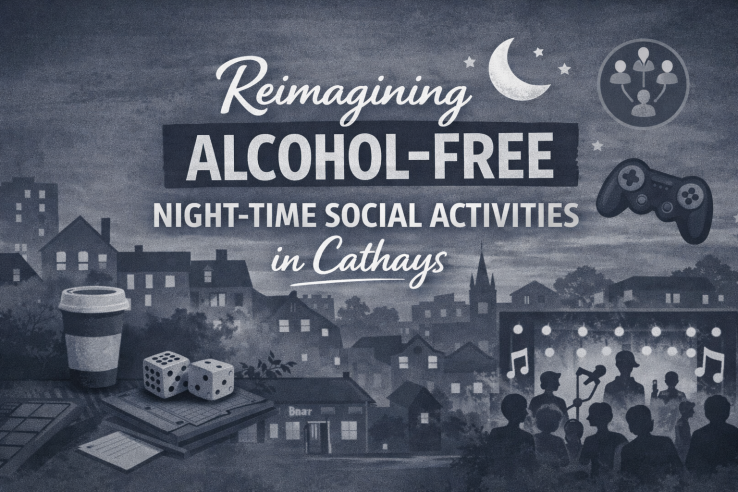
Across the UK, alcohol remains central to the social currency of the night‑time economy. Despite some indicators of shifts in attitudes towards alcohol in younger demographics, evening-based activities for young people – particularly students – still centre alcohol. As part of our Cathays Futures initiative, SPARK has partnered with young people, Cardiff Council, local policing teams, community organisations, small businesses and healthcare professionals to explore what meaningful alternatives could look like.
This work foregrounded relational, design‑led engagement. Design Labs (i.e., group co-creation workshops), dispersed dialogue activities (i.e.,1:1 engagements) and existing evidence (i.e., surveys, academic research etc.) brought together stakeholders and their ideas, who may not otherwise interact and collaborate. This collaborative approach recognised that meaningful solutions emerge from diverse forms of expertise, including academic knowledge, lived experience, and tacit community and professional insight. It also highlighted that a one‑size‑fits‑all model of engagement does not work when working across different demographics and expertise. Different groups feel comfortable in different spaces, at different times, and through different forms of interaction. To meaningfully understand and respond to the complexity of community priorities, we must create multiple, accessible pathways for participation.
This process enabled participants to explore young people’s appetite for alcohol‑free options, the social norms that shape behaviour, and the economic and practical barriers faced by venues. One critical insight was the importance of exposure: what is visible becomes possible. When alcohol‑based venues and activities dominate the landscape, they shape expectations and behaviour. By contrast, offering culturally relevant, fun, well‑designed alternatives such as late‑night cafés, creative workshops, themed events, sports or gaming nights, can shift norms and reduce harm. Throughout the work, young people repeatedly emphasised that the “vibe” mattered as much as the activity. This signalled an opportunity: to normalise alcohol-free events that match the energy and appeal of traditional nightlife.
To test these ideas in practice, SPARK designed a Micro Grants Programme, funded by the Community Alcohol Partnership. This programme offered £500–£1000 to local groups and businesses. A deliberately light‑touch funding model (i.e., simple and short application and evaluation forms) enabled small organisations – those often excluded by bureaucratic processes – to experiment. Crucially, the programme treated practice as a form of inquiry and was open to failure. We were genuinely interested in what didn’t work, as much as what did.
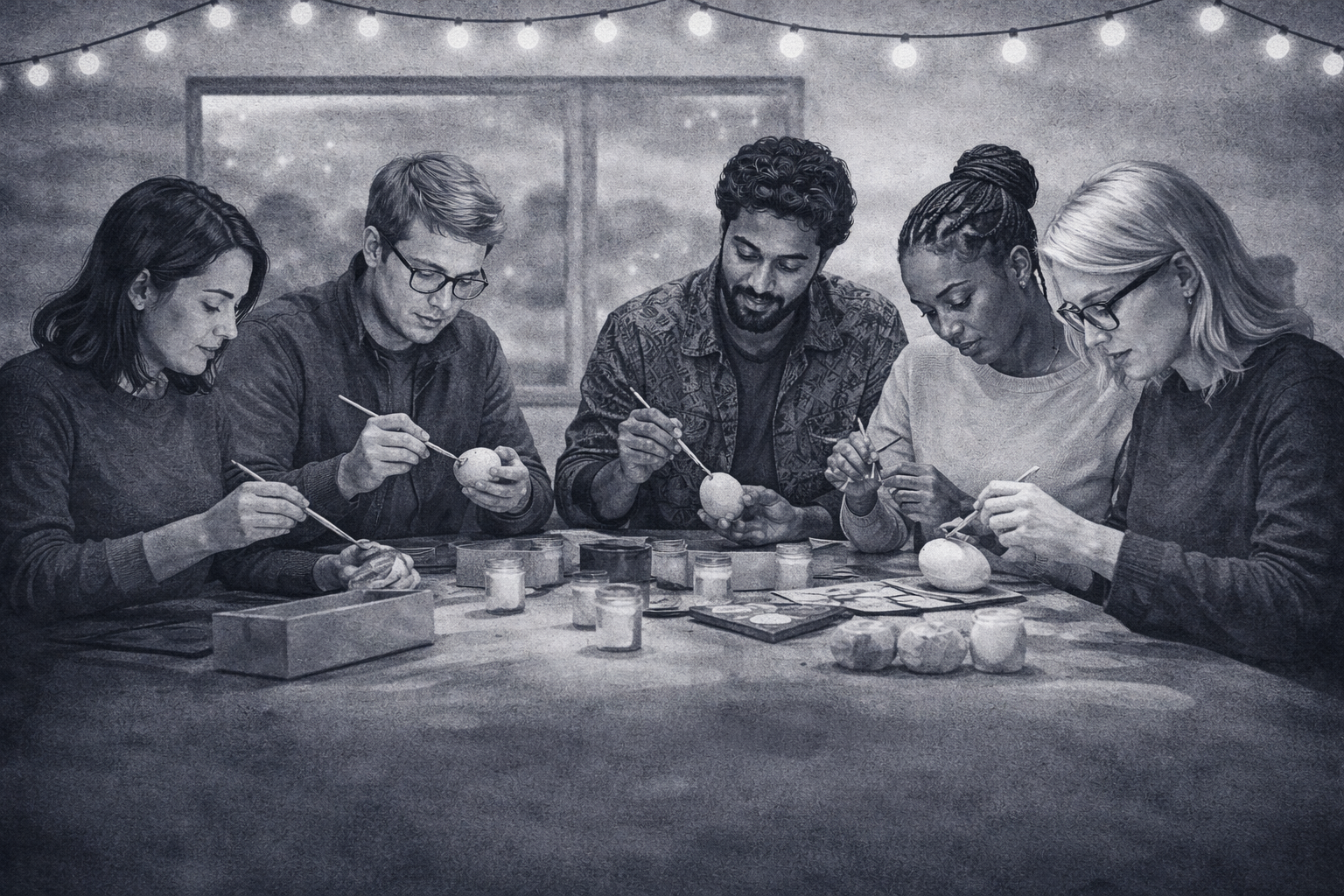
Five projects were funded in Cathays: board‑game and painting nights in an independent coffee shop; craft workshops co‑designed with young people; youth evenings using play and gaming; intergenerational Radical Rest Parties; and alternative gig nights that transformed community spaces into immersive, alcohol‑free venues.
“This was so much fun and better than being down the pub.”
“…refreshing to be at a student night not centred around alcohol.”
Young people reported increased confidence, creative skill‑building, and a stronger sense of belonging. Local businesses discovered viable new models: the coffee shop, for example, now plans monthly alcohol‑free evenings. The alternative gig events attracted large crowds – demonstrating that alcohol is not required to draw young people into vibrant night‑time spaces. In total, 385 young people aged 18–25 participated directly in the five pilot activities, with many more outside this age-range benefiting from the work.
“I am new to Cardiff and this is my first event… It was great to be in a beautiful, nurturing space with such a diverse group.”
The standout lesson from this work is that co-production, grounded in relational working and iterative, practice-based experimentation, can generate viable, culturally relevant solutions to social challenges. Our next challenge is how we build on, support and mainstream both this way of working and the activities that emerged from it in a context of limited resource and capacity.
- Play in the Academy: What if we took play seriously at work?
- From Evidence to Action: SPARK’s Public Sector Partnerships
- From Research to Action: Why Social Science Needs Design
- Reimagining Alcohol Free, Night-Time Economy Social Activities in Cathays
- Doing Research Differently: Principles for equity in creative and participatory research settings