New Project: Socially connected SmartCare at home
10 May 2026
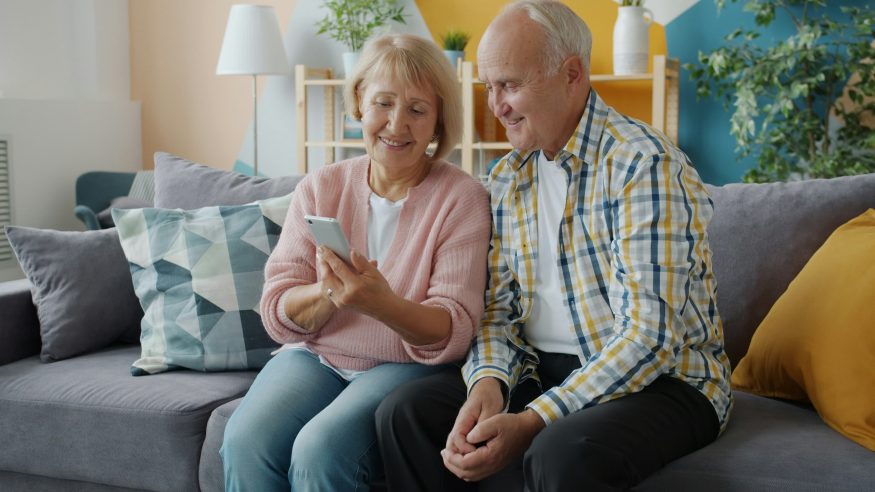
Most people living with dementia in the UK live in their own homes. Most want to live in their own homes for as long as possible, and Government policy has focused on supporting this. Increasingly, technology is seen as central to achieving this aim. However, our concern is that relying on technology to support people with dementia to live independently at home can lead to negative experiences of independence, with more people finding themselves experiencing loneliness and isolation.
This research focusses on affordable mainstream technologies. These are technologies that are already available to the general consumer. This can include things like smart doorbells, lighting systems or camera technology. Despite the availability of affordable mainstream technologies, there is limited understanding of how these can be combined to meet both practical and social needs in dementia care. This includes balancing the priorities of carers and people living with dementia, because we know that they might value different things from a technology.
Our aim is to develop our understanding of the benefits that technologies can provide to produce knowledge about the potential value of technology in dementia care. We plan to add insights on how technologies can supports people to maintain quality of life, sustains independent living, and improve their wellbeing and social connectedness. In turn, this could help to integrate helpful technologies into the lives of people living with dementia which will have knock on benefits for social care intervention.
Study methods and activities:
The project takes place over three stages:
First, we identify and explore the technologies people with dementia currently use at home. For this stage, two researchers will visit people living with dementia in their own homes to identify the technologies people are using at home, and to learn more about how people came to use these technologies, and how they are using them.
Second, we will run workshops to share examples of technology and discuss how people feel about using them. Through these workshops, we will share good ideas about using technology with wider groups.
Third, we will work with a small number of participants to choose technologies that will suit their needs and are willing to try them in their own home for around three months. We will then visit these participants in their own home over the three months to learn how the technology is being used.
Our broad objective is to generate evidence on affordable smart-home technologies that people living with dementia find helpful and to create accessible resources (videos, comics, vignettes, an infographic) to help people looking for technological solutions to select and adopt these in socially and ethically sensitive ways. We will also create this guidance in a way that respects people’s choice and ability.
CARE affiliation:
Supported by CARE.
Research Leads
Dr Roser Beneito-Montagut, Reader in Sociology, Cardiff University, Co Principal Investigator
Dr Sofia Vougioukalou, Research Fellow CARE, Cardiff University, Co Principal Investigator
Research team
Dr Rebecca Oatley, Lecturer Social Work, Cardiff University, Co-Investigator
Mrs Joy Findlay, Public and Patient Involvement and Engagement (PPIE), Co-Investigator
Dr Alex Hillman, Assistant Professor Sociology, University of Exeter. Co-Investigator
Dr Andrew Woodhead, Public and Patient Involvement and Engagement (PPIE), Co-Investigator
Dr Shane Doheny, Research Associate
Collaborations:
Down’s Syndrome Association
British Deaf Association
Wales Council for Deaf People
Nubian Life Resource Centre
Social Care Wales
Alzheimer’s Society