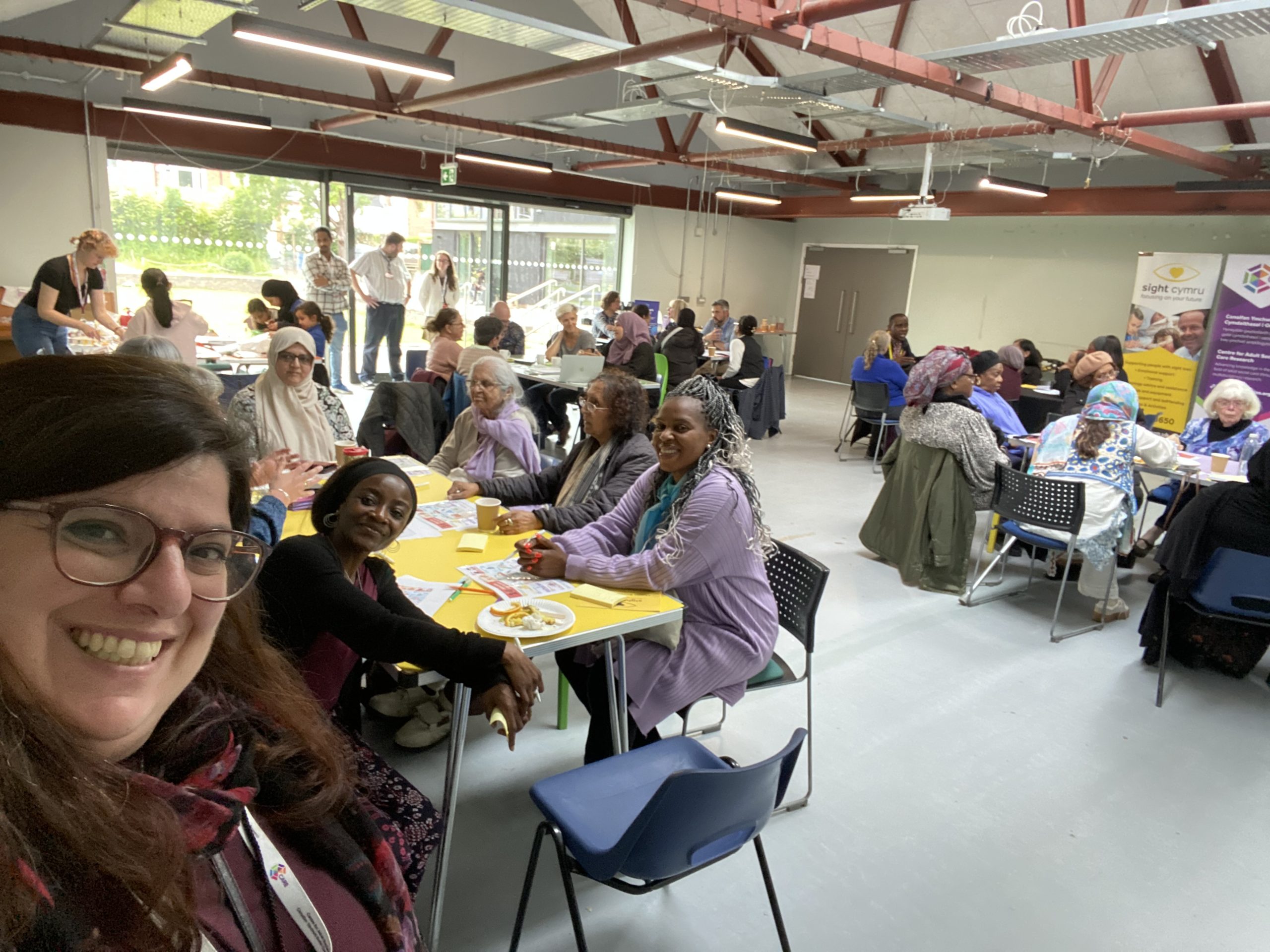
Dementia Action Week public engagement event
30 May 2026
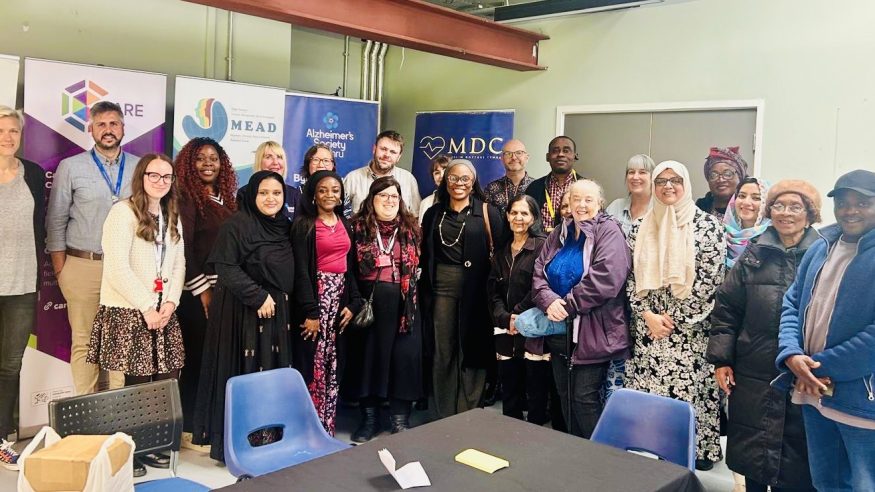
On Wednesday 20th of May, Dr Sofia Vougioukalou, brought together the Alzheimer’s Society, the Cardiff University Centre for Adult Social Care Research (CARE), the Centre for Vision Services Research (CVSR), the Migration, Ethnicity, Race and Diversity (MEAD) research group with special guests from Muslim Doctors Cymru and Sight Cymru in a community engagement for Dementia Action Week at the Grange Gardens Pavilion. This very popular event, running for four years in a row in the Grange Pavillion was aimed for local residents in this very diverse area who want to know more about dementia.
In order to maximise interaction with the audience the event was organised as a World cafe style where members of the public could have tailored 30-min discussions with a smaller audience over a specific topic.
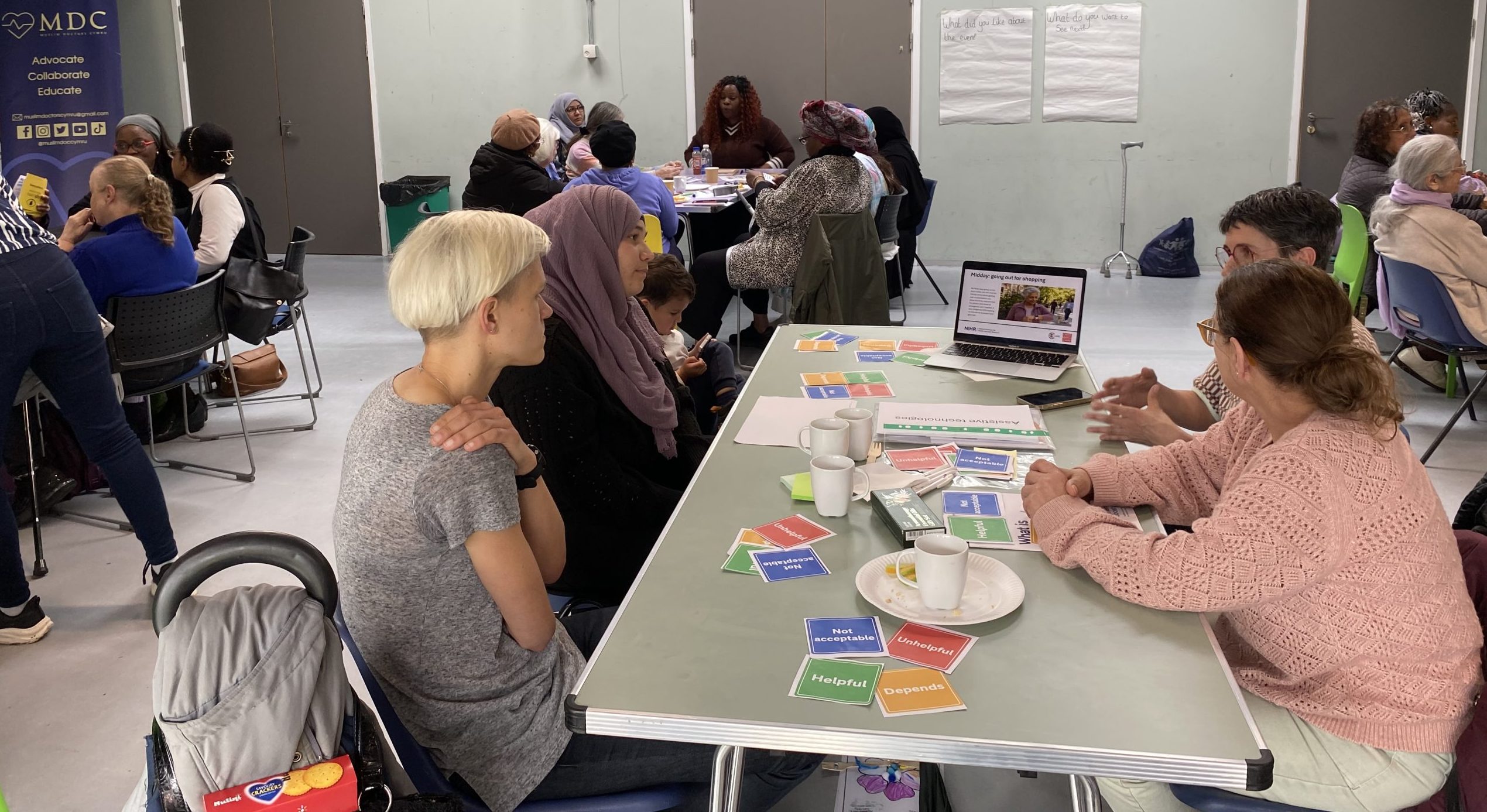
Members of the DemTechConnect team (Roser Beneito-Montagut, Rebecca Oatley & Sofia Vougioukalou) discussed the different ways technologies can support the independence and social connectedness of people living with dementia who live in their homes. Participants played an interactive card game to express their preferences around different technologies.
The Alzheimer’s Society Cardiff and Vale team introduced the early signs and the different types of dementia to help people be able recognise the symptoms and get early support. They also introduced the 14 modifiable risk factors for dementia and discussed how everyone can play their role in dementia prevention.
Dr Amara Naseem from Muslims Doctors Cymru & Cardiff Bay Surgery led a women’s only session with the support of Janine Lane who is a PhD student and dementia nurse consultant.
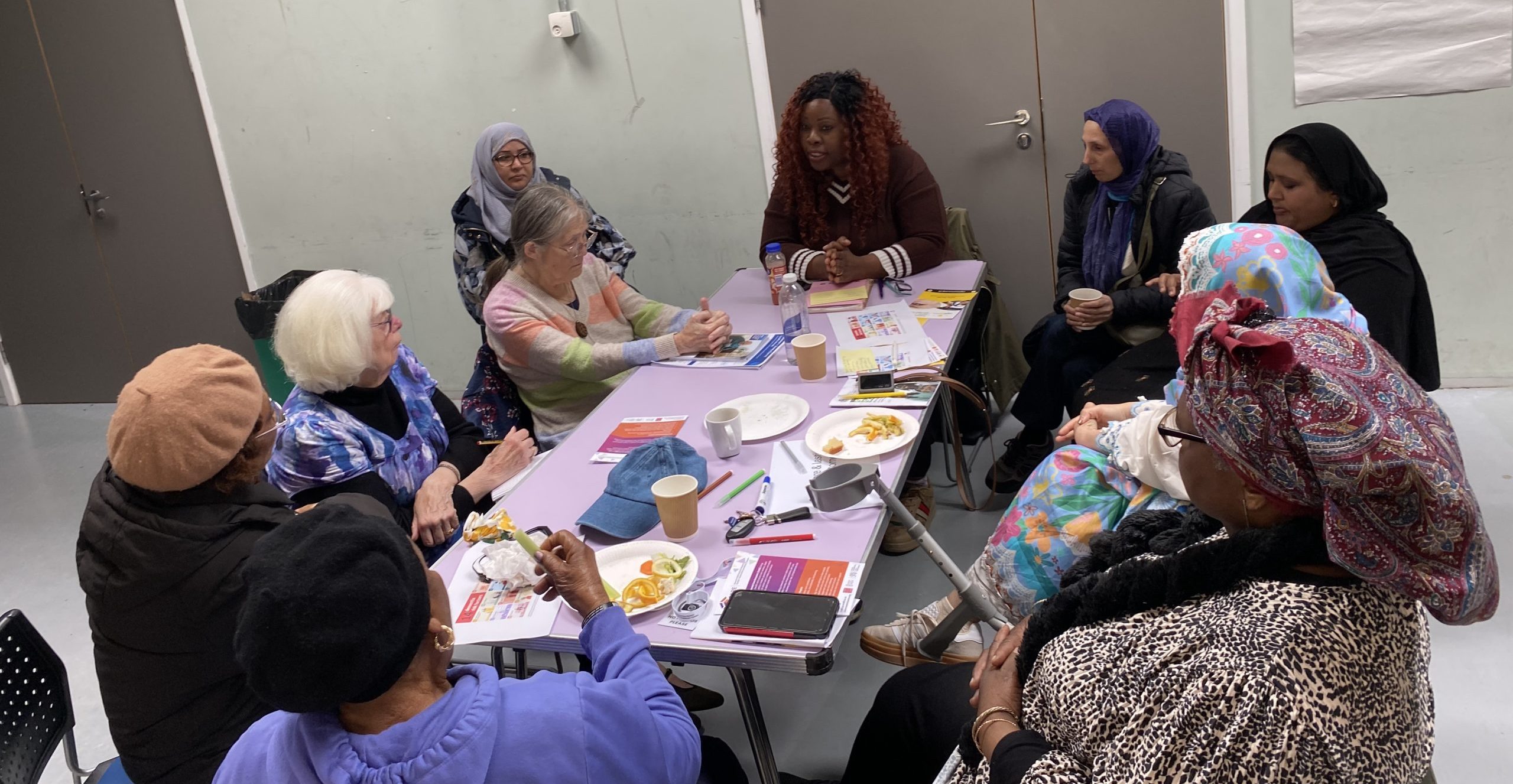
Kemba Hadaway-Morgan, a recent graduate at the School of Social Sciences, Cardiff University and qualified social worker provided information about how people caring for people with dementia can get a lasting power of attorney and how that can help them as their loved ones’ dementia progresses. A Lasting power of attorney (LPA) is a legal tool that lets people choose someone they trust to make decisions for them.
Tosin Adeleke from Sight Cymru, the public involvement partner of the Centre for Vision Services Research, discussed the way dementia impacts vision, rhe correlation between cataracts and dementia, and the availability of digital support applications that can aid accessibility for individuals living with dementia and sight loss
A creative engagement table facilitated by Beth Woolley, Nina Jacob, Alex Robertson and Aimee Grimstead engaged younger members of the audience in creative activities exploring memory, identity and culture.