From Health Research to National Policy Dialogue
20 May 2026
-By Kim Smallman
Earlier this year, I had the opportunity to contribute a case study on VR‑Melody to national discussions on digital creative health (referred to as CreaTech), and to attend a UK All‑Party Parliamentary Group (APPG) for Creative Health roundtable at the House of Lords on the 21st April.
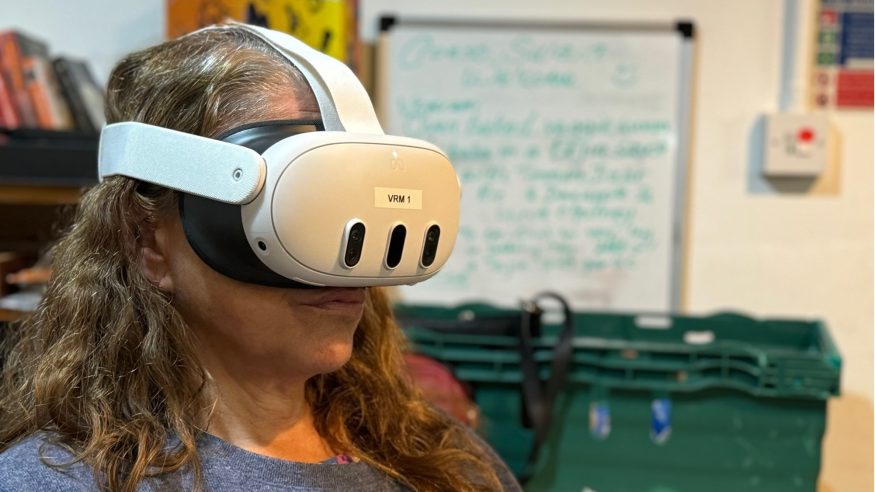
VR‑Melody is a research project exploring how virtual reality (VR), music and artificial intelligence (AI) can be brought together to support emotional regulation, reduce symptoms of anxiety and build mental resilience in adults. The project focused on developing a personalised immersive intervention shaped by lived experience and evidence-based therapeutic practice, leveraging AI and music to create immersive, home-based therapeutic experiences, with a focus on self-management and preventive mental health care. The research adopted a phased co‑production approach, involving people who have experienced symptoms of anxiety alongside voluntary sector professionals, focusing on acceptability, feasibility and user experience. The case study is available via the National Centre for Creative Health (NCCH) and demonstrates how creative digital approaches can be developed and evaluated and the potential of co-produced, technology-driven interventions to support mental wellbeing and anxiety self-management.
The VR‑Melody case study was invited by the NCCH as part of a wider evidence base informing discussions on digital health and CreaTech. Case studies such as this play a vital role in bridging research, innovation and policy by providing concrete examples of what is being developed, tested and learned in real‑world contexts. The NCCH were instrumental in translating VR‑Melody into a policy‑facing case study, distilling design, co‑production and evaluation work into a clear narrative that speaks to relevance, feasibility and future potential.
I thoroughly enjoyed attending the APPG Creative Health roundtable on Digital Health and CreaTech, which brought together parliamentarians, researchers, clinicians, creatives, funders and sector organisations. The meeting began with selected speakers from different backgrounds sharing their experiences of creative approaches delivered through digital tools. This was followed by an invigorating Q&A and discussion on the opportunities and challenges within CreaTech. Reflections from the event are summarised by NCCH and in the subsequent policy briefing document.
Many of the themes raised resonated strongly with our experience of VR‑Melody, including the importance of co‑production, concerns around digital exclusion and access, and the need for evaluation approaches that can capture creative and relational value, not just clinical endpoints. There was also a strong emphasis on the practical challenges of working within CreaTech navigating regulatory pathways and the need for clear guidance and roadmap for NHS adoption and implementation of digital creative health solutions.
Contributing to the APPG process has provided me with the opportunity to engage with national conversations about creative health, digital innovation and mental health policy. It has also highlighted how centres like CTR can play a part in supporting responsible innovation in health. As creative and digital technologies continue to develop, there is increasing demand for evaluation approaches that are both robust and flexible, and that can inform real‑world decision‑making. VR‑Melody provides an example of how expertise in research design, co‑production and early‑phase evaluation can support the development of novel interventions, while ensuring that enthusiasm for new technologies is matched with high‑quality evidence and critical reflection.

- June 2026
- May 2026
- April 2026
- February 2026
- December 2025
- October 2025
- June 2025
- May 2025
- April 2025
- March 2025
- February 2025
- December 2024
- November 2024
- October 2024
- September 2024
- July 2024
- June 2024
- May 2024
- April 2024
- March 2024
- December 2023
- November 2023
- September 2023
- July 2023
- June 2023
- April 2023
- March 2023
- February 2023
- December 2022
- November 2022
- October 2022
- September 2022
- August 2022
- July 2022
- June 2022
- May 2022
- April 2022
- March 2022
- February 2022
- January 2022
- November 2021
- September 2021
- July 2021
- June 2021
- May 2021
- March 2021
- February 2021
- December 2020
- November 2020
- September 2020
- August 2020
- July 2020
- January 2020
- December 2019
- October 2019
- September 2019
- July 2019
- June 2019
- May 2019
- April 2019
- February 2019
- December 2018
- November 2018
- October 2018
- September 2018
- August 2018
- July 2018
- June 2018
- May 2018
- April 2018
- March 2018
- December 2017
- October 2017
- August 2017
- July 2017
- June 2017
- May 2017
- April 2017
- March 2017
- February 2017
- January 2017
- December 2016
- October 2016
- August 2016
- June 2016
- April 2016
- March 2016
- February 2016