‘Invisible glue’: Inside our first experience with the Wolfson YAG
6 August 2026
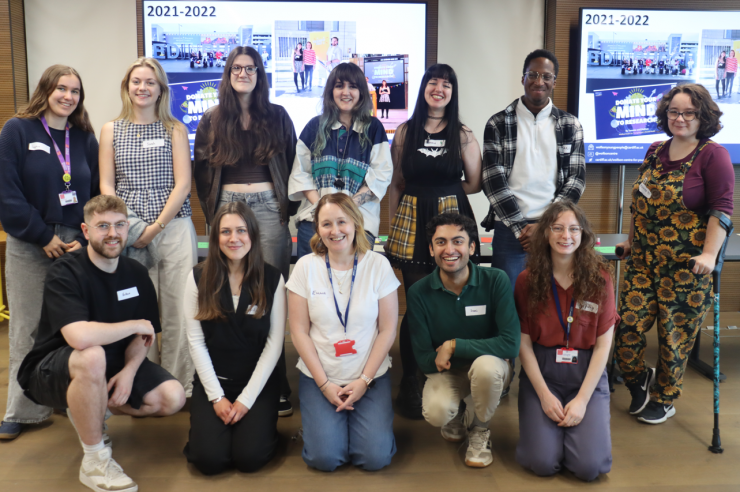
In this blog, Sarah and Sophie, placement students from the Wolfson Centre’s flagship study in Skills for Adolescent Wellbeing (SWELL), reflect on attending an in-person event with Wolfson Centre’s Youth Advisory Group (YAG).
On April 18, we had the opportunity to attend a celebration event for the Wolfson Centre’s YAG, something we had been looking forward to since hearing about it at the start of our placement.
Before this, our understanding of public involvement was fairly basic: the active participation of the public in the research process. At the Wolfson Centre, this takes the form of the YAG – a group of young people with lived experience of mental health difficulties who advise on research, from shaping terminology to guiding research aims. Whilst we understood its importance in theory, our in-person experience with the YAG completely brought it to life.
Expectations vs reality
Going into the session, we weren’t entirely sure what to expect. We had previously received a brief introduction to the YAG during training and had heard about a session discussing language around the risk of developing depression. Nevertheless, neither of us had previous public involvement experience, so attending this session was going to be a first for us both.
One of our expectations was that we imagined something relatively formal – with clear topic guides and set questions. In hindsight, this expectation may have been naïve, shaped by our experience on placement where we conduct structured interviews with families following set questions. We also assumed the group might be quiet and nervous to share/talk. Due to experience co-facilitating CBT groups for adolescents on our placement, there is quite a range of how much young people contribute, with some choosing to keep their camera off. The reality of the Wolfson YAG couldn’t have been more different.
Unique group dynamic
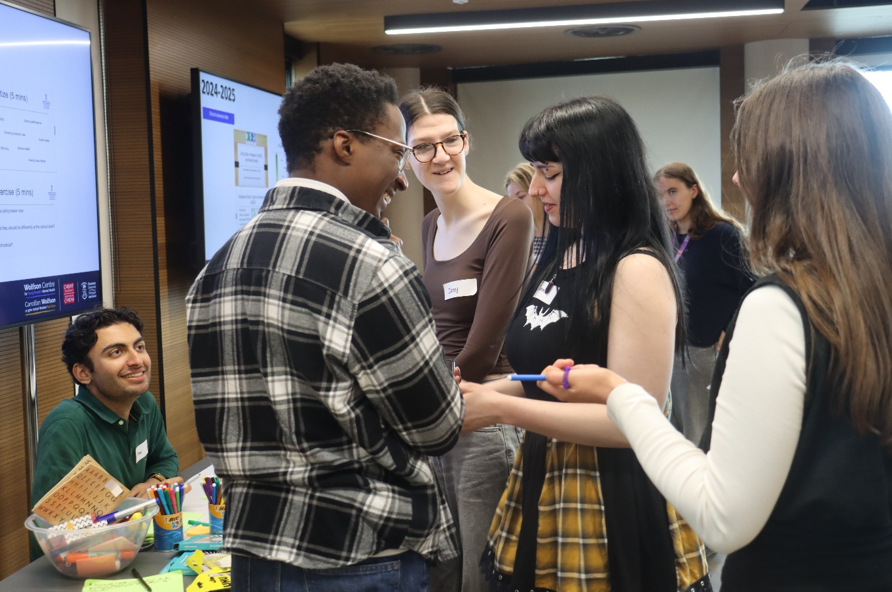
One of the first things that struck us was the standout group dynamic. It’s difficult to fully put into words just how cohesive the group were. Members showed immense kindness and respect for one another, creating space for each other to blossom. Also, the YAG seemed to push each other to develop their lives and careers by encouraging and celebrating each other and their achievements. The natural rhythm to the way the group interacted was undeniable – almost like there was an ‘invisible glue’ holding them together. The group went on to identify their core values, including kindness, curiosity and teamwork, and it was clear that these are woven into every conversation. Additionally, it was also clear that the young people felt genuinely valued by the researchers. It was wonderful to see how they knew their contributions were actively built into the research, and this sense of being taken seriously seemed to underpin some of the confidence seen in the room. Furthermore, through YAG being paid for their time, it is symbolic of how the Wolfson Centre deeply values lived experience in shaping research.
Challenging misconceptions
A misconception about public involvement may include how it’s simply something nice to have or a tick box. What we saw made it clear that it is far more than that. It’s essential. Young people provide unique perspectives you can only get from them. Life is changing at a fast pace currently, so young people’s experiences are constantly changing and are different to what the researchers might have experienced. For example, the YAG spoke about the digital revolution, not only about its impacts on young people but also in how they can help researchers include it in their work.
What surprised us most
We expected the group to be very useful for research, but what we hadn’t anticipated was the depth of impact the group would have on the young people themselves. Many members spoke about how being part of the YPAG had shaped their identity in a positive way, helping to change their view on mental illness. Some described not feeling like the “odd one out” anymore, which was really powerful to hear. Others mentioned that the YAG had facilitated better conversations about mental health within their families, that they previously felt they could not have. It was also clear that we were just seeing one snapshot of the YAG, and that throughout the years, these young people’s confidence had grown and grown – largely thanks to the group.
Another assumption may also be that the singular aim of the Wolfson YAG is to inform and co-produce research. It was amazing to see how Emma – the Wolfson Public Involvement Lead – goes above and beyond to make the group beneficial for its members in return. For instance, the Wolfson Centre provides incredible career opportunities to the group, including public speaking and event trips to Edinburgh! Furthermore, the YAG spoke about how Emma made them feel so comfortable within the group and was a big reason why their dynamic works so well. Also, those that were in other Youth Advisory Groups said that the Wolfson YAG is unique, and Emma creating a safe space and comfortable environment was a big influence on this.
One particularly interesting moment was how carefully the group discussed language. Conversations went beyond simple word choices, exploring the difference between terms like “determined”, “curious” and “open-mindedness”. It highlighted just how significant different language can be when discussing youth mental health – and how nuanced these discussions need to be. It also highlighted another moment where the YAG are not just a ‘nice’ addition, but essential to informing the best implementation of research to practice.
What we learned
This experience taught us a lot, reshaping our view of public involvement and reinforcing a passion to work in the field in the future. Our main takeaways were:
- Public involvement is essential, not optional. It improves the quality and relevance of research.
- Language matters deeply. The way we talk about mental health can shape how people understand and experience it.
- The impact goes both ways. While the research benefits, so do the young people – through increased confidence, connection and a stronger sense of positive identity.
A different perspective
In our placement, we often speak to young people who are currently struggling with their mental health. Whilst this work is incredibly important, it can sometimes feel heavy. Observing the Wolfson YAG was different. It was uplifting. It showed us what can happen when young people are not just participants in research but active collaborators. The group creates a space where lived experience is not a negative but rather valued – and where the experience could be transformed into something meaningful and impactful.
Author bios:
Sarah – My name is Sarah, and I’m currently on placement with the Skills for Adolescent Wellbeing Study (SWELL). My interests are deeply rooted in youth mental health, promoting wellbeing and reducing inequalities.
Sophie – My name is Sophie, and I am a placement student on the Skills for Adolescent Wellbeing study in the Wolfson Centre. I am interested in Clinical Psychology, particularly in disorders like schizophrenia and psychosis.
Thank you to Sarah and Sophie for writing this piece.
- August 2026
- May 2026
- March 2026
- October 2025
- August 2025
- May 2025
- April 2025
- March 2025
- February 2025
- November 2024
- October 2024
- September 2024
- July 2024
- March 2024
- September 2023
- August 2023
- July 2023
- April 2023
- October 2022
- September 2022
- August 2022
- July 2022
- June 2022
- May 2022
- April 2022
- March 2022
- February 2022
- January 2022
- December 2021
- November 2021
- October 2021
- September 2021
- August 2021
- February 2021