The Welsh Government-Plaid Cymru Budget Agreement – an immediate reaction
10 December 2025
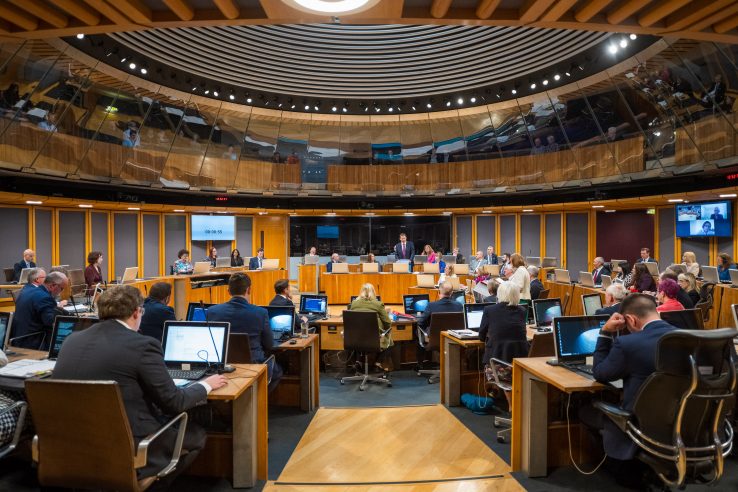
On Tuesday 9 December, the Welsh Government and Plaid Cymru reached an agreement on the Budget for 2026-27, which will facilitate its passing through the Senedd in the new year.
This deal appears to prioritise frontline public services and meeting existing spending pressures, rather than funding new spending commitments or policy ‘wins’ usually associated with budget agreements.
This mainly reflects the fact that the ‘inflationary uplifts’ provided in the Draft Budget plans would have been insufficient to meet the spending pressures faced by public services, especially considering the latest forecasts from the Office for Budget Responsibility suggested inflation and pay growth next year would be higher than previously thought.
The deal provides greater certainty for public services next year and crucially avoids the doomsday scenario of massive cuts if the budget didn’t pass.
The local government settlement is the big winner from the budget deal and now looks set to increase by 4.5% in cash terms (2.3% in real terms) next year. That provides greater certainty and a more realistic prospect of meeting uncertain spending pressures next year without excessive Council Tax increases.
To put it in perspective, the additional £113 million is roughly equivalent to what a 5% increase in Council Tax bills would raise for local authority budgets.
As we anticipated, health spending gets the largest part of the unallocated funding. Depending on how the additional funding for the Health and Social Care budget is distributed, core NHS spending looks set to increase by approximately 1.7%-1.8% next year in real terms.[1] This compares with the 0.3% real terms increase implied by the Draft Budget plans and latest inflation forecasts.
From an historical perspective, this is still somewhat lower than recent trends (of 3.3% per year since 2018-19) and the long run historical average growth rate (of 3.6% per year since the 1950s). Further top-ups to may be necessary.
Based on our analysis of improved devolved tax forecasts and consequentials from the Autumn Budget, there is still some further day-to-day spending to be allocated at the Final Budget outside of this deal (perhaps worth some £160 million).
A large part of this funding will go towards the Non-Domestic Rates measures announced on 3 December (worth £112 million over the next two years). It could also be used to avoid real terms cuts in funding to some other areas of spending. However, it may also be needed to bolster funding for public sector pay deals, which are likely to be significantly above the 2.2% assumed in Draft Budget plans.
The Final Budget published in January will provide the full details of this budget deal, as well as the additional allocations made by the Welsh Government.
[1] The eventual change in health spending from this year to next year may actually be lower than this, since additional funding of £100 million to address waiting lists was not included in the ‘baseline’ for 2025-26.
- March 2026
- December 2025
- November 2025
- October 2025
- September 2025
- June 2025
- May 2025
- March 2025
- February 2025
- December 2024
- October 2024
- September 2024
- July 2024
- June 2024
- December 2023
- November 2023
- August 2023
- February 2023
- December 2022
- November 2022
- September 2022
- July 2022
- April 2022
- March 2022
- January 2022
- October 2021
- July 2021
- May 2021
- March 2021
- January 2021
- November 2020
- October 2020
- August 2020
- July 2020
- June 2020
- May 2020
- April 2020
- March 2020
- October 2019
- September 2019
- June 2019
- April 2019
- March 2019
- February 2019
- December 2018
- October 2018
- July 2018
- June 2018
- April 2018
- December 2017
- October 2017
- July 2017
- June 2017
- May 2017
- April 2017
- March 2017
- February 2017
- January 2017
- December 2016
- November 2016
- October 2016
- September 2016
- Bevan and Wales
- Big Data
- Brexit
- British Politics
- Constitution
- Covid-19
- Devolution
- Elections
- EU
- Finance
- Gender
- History
- Housing
- Introduction
- Justice
- Labour Party
- Law
- Local Government
- Media
- National Assembly
- Plaid Cymru
- Prisons
- Reform UK
- Rugby
- Senedd
- Theory
- Uncategorized
- Welsh Conservatives
- Welsh Election 2016
- Welsh Elections