Reaching an ACCORD? Addressing consent-based challenges to improve inclusivity in research
29 April 2026
Consent as a barrier to inclusion in research
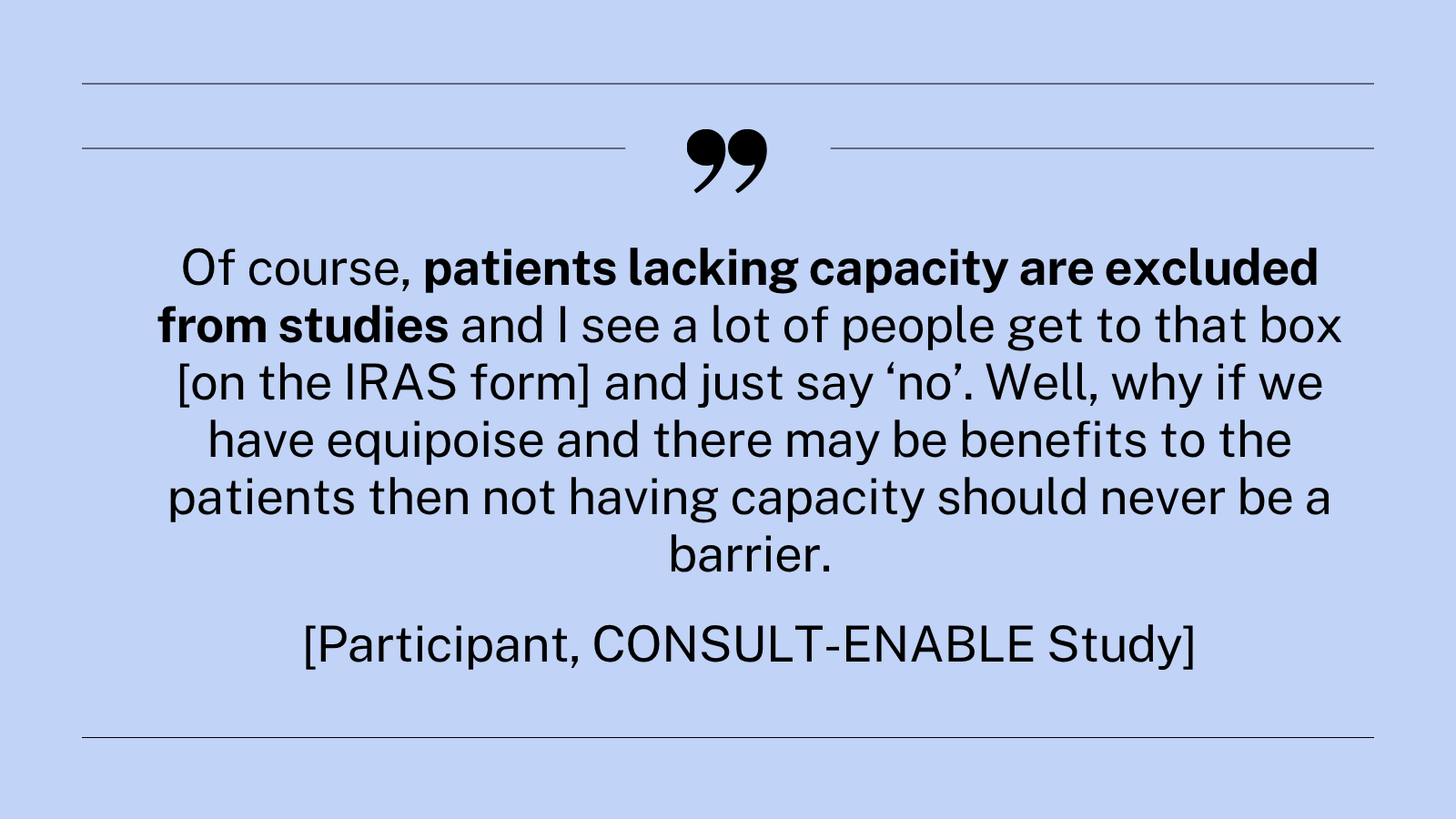
A global ageing population brings a rise in the number of people living with conditions and disabilities that can affect their ability to make decisions, including the ability to consent to research. Research is key to improving the health and well-being of future populations, yet people who lack capacity to consent are frequently excluded from research due to the complex ethical and legal issues involved. These issues mean it can be challenging to conduct studies which include people lacking capacity to consent as there needs to be different governance and practical arrangements in place. This can mean these studies take longer to receive the necessary approvals, can struggle to recruit, and may end up recruiting people who are more able to provide their own consent. This consent-based exclusion affects the generalisability of results and leads to inequalities in care.
Need to address consent-based exclusion
All populations should have the opportunity to be included in research that is relevant to them. There is a growing recognition of the impact that the lack of inclusivity in health and care research has on health inequalities and evidence-based care. As a result, improving inclusion of under-served groups in research is a priority topic for research funders, regulators, and policymakers. Questions about exclusion are commonly considered with respect to gender and ethnicity, but this must be extended to consider communication disabilities and cognitive impairment where the issues encountered are ethically complex.
Complexity of navigating the ethical and legal frameworks
Regulation of research involving adults lacking capacity sits in the intersection between mental capacity legislation, which is intended to empower people and protect their interests, and regulatory frameworks designed to harmonise research processes. With differing frameworks depending on the type of research and where in the UK it is being conducted, it is no surprise that they are widely misunderstood.
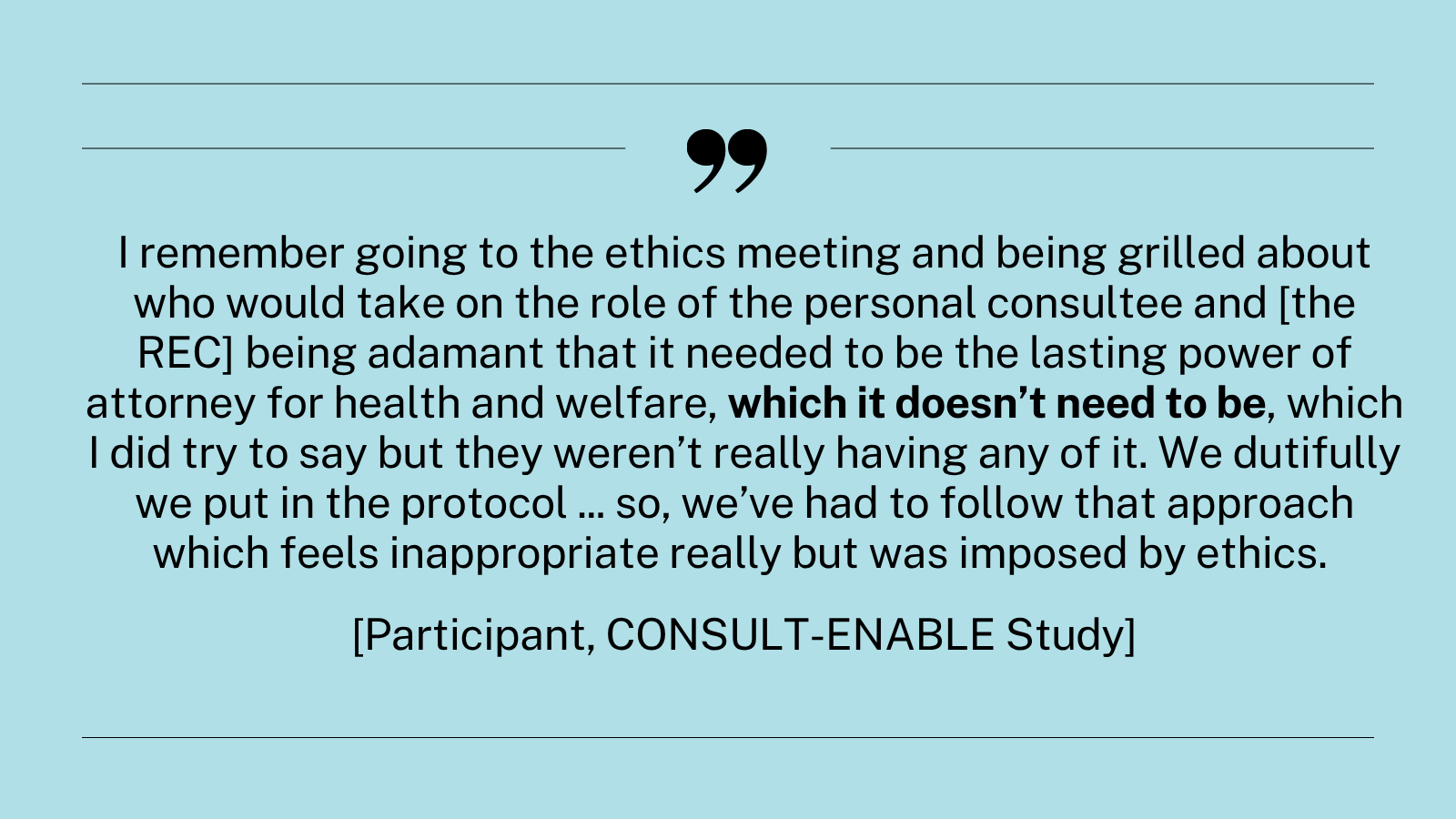
Our previous research, CONSULT, funded by Health and Care Research Wales, showed that this gap in understanding directly impacts researchers, practitioners, and research governance members’ beliefs and behaviours, with some avoiding the ‘black box of horrendousness’ entirely and others adopting a more rigid approach than the law permits. Both of which can limit inclusion. We need to improve our understanding in order to ensure research is better able to meet tomorrow’s health and care needs.
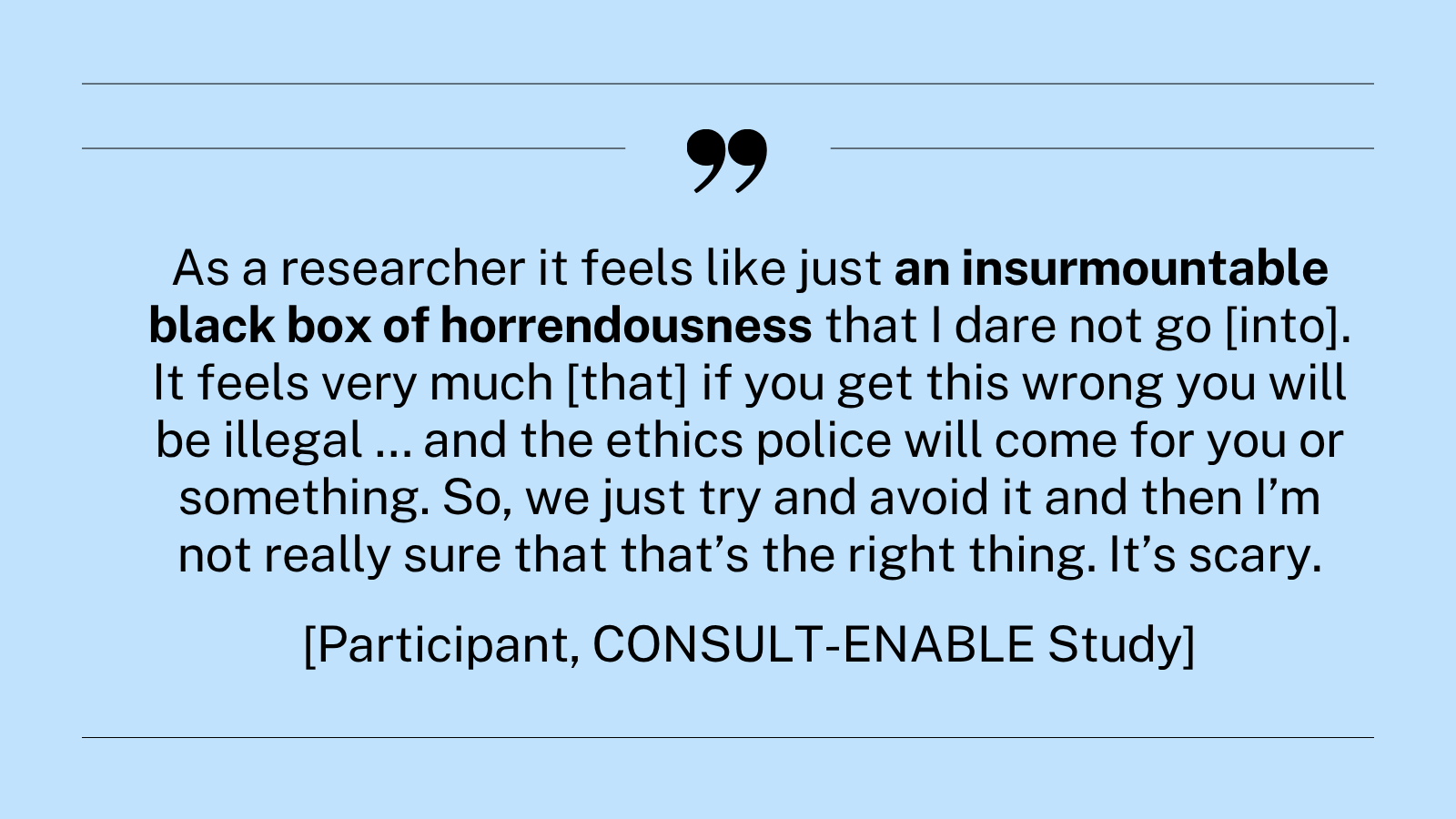
Opening up the ‘black box of horrendousness’
A new 8-year project ACCORD, funded by the Wellcome Trust, will continue the work of CONSULT through opening up the ‘black box of horrendousness’ by exploring how the ethical and legal frameworks for research involving adults lacking capacity to consent are currently being implemented, and developing behavioural-informed interventions to improve inclusion. In the first work package we will identify the ethico-legal issues that limit inclusion and how they are navigated by those involved in designing, approving, and conducting research. We will then co-design interventions in collaboration with public and professional stakeholders to target individual-level and system-wide barriers. Inclusivity, and involvement of diverse communities, is embedded throughout the project. Engagement with policymakers and focusing on implementation will help ensure national and international impact.

- June 2026
- May 2026
- April 2026
- February 2026
- December 2025
- October 2025
- June 2025
- May 2025
- April 2025
- March 2025
- February 2025
- December 2024
- November 2024
- October 2024
- September 2024
- July 2024
- June 2024
- May 2024
- April 2024
- March 2024
- December 2023
- November 2023
- September 2023
- July 2023
- June 2023
- April 2023
- March 2023
- February 2023
- December 2022
- November 2022
- October 2022
- September 2022
- August 2022
- July 2022
- June 2022
- May 2022
- April 2022
- March 2022
- February 2022
- January 2022
- November 2021
- September 2021
- July 2021
- June 2021
- May 2021
- March 2021
- February 2021
- December 2020
- November 2020
- September 2020
- August 2020
- July 2020
- January 2020
- December 2019
- October 2019
- September 2019
- July 2019
- June 2019
- May 2019
- April 2019
- February 2019
- December 2018
- November 2018
- October 2018
- September 2018
- August 2018
- July 2018
- June 2018
- May 2018
- April 2018
- March 2018
- December 2017
- October 2017
- August 2017
- July 2017
- June 2017
- May 2017
- April 2017
- March 2017
- February 2017
- January 2017
- December 2016
- October 2016
- August 2016
- June 2016
- April 2016
- March 2016
- February 2016