Understanding children’s mental health in low- and middle-income countries
28 September 2026
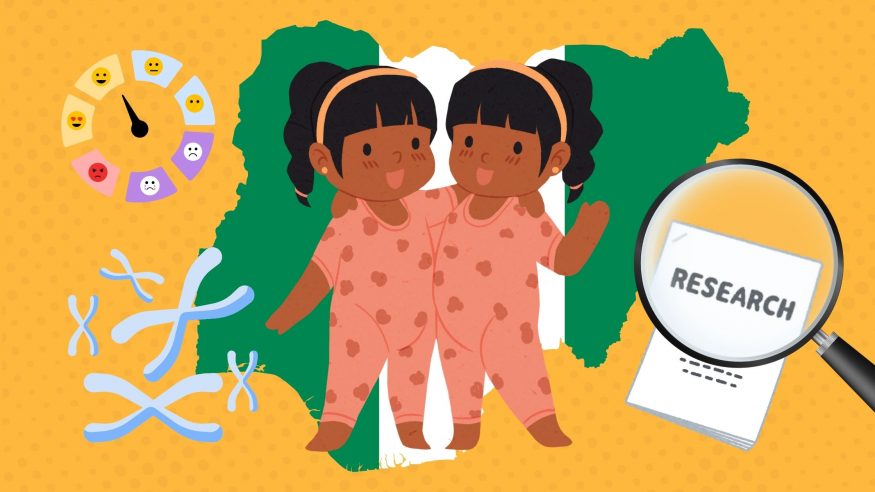
Most of the young people in the world live in low- and middle-income countries (LMICs) and they may be most affected by mental health problems because knowledge and research into child and adolescent mental health problems in these regions are very low.
This means researchers and clinicians do not know how children and young people in these regions develop mental health problems. In this blog, Dr Olakunle Oginni from the Wolfson Centre for Young People’s Mental Health explains how he is trying to change that.
Better knowledge leads to more effective interventions
Understanding why young people develop mental health problems can help us design better interventions to improve the mental health of children and adolescents in LMICs.
These interventions can be as simple as educating parents about how they can support their children’s mental health. However, to be able to do this, we need to carry out rigorous research among children in LMICs.
Getting more data
An example of such research designs involves collecting information from children and adult twins and their parents or children, respectively. This design can tell us whether parents transmit genetic risk for mental health problems to their children, and whether a parent’s mental health problem also makes the environment difficult for the children.
Because such a study had not previously been done in a LMIC, we tested whether it was feasible in south-western Nigeria. In addition, we explored the associations between parents’ and children’s mental health problems among our participants.
Speaking to study participants
We invited parents and young twin children from 320 families to tell us about their own and their children’s mental health.
They also told us about other things that impact a child’s wellbeing like physical health, domestic violence and disorganisation at home, harsh treatment of the children, the family’s religious beliefs, warm relationships with children and the children’s tendency to have positive relationships (also known as prosociality).
“A key component of this study was getting feedback from parents of twins, and the tips they gave us helped make the project successful.”
What did we find out?
After analysing the data, we found that when parents in south-western Nigeria had mental health problems, their twin children were also more likely to have mental health problems.
We also found that non-genetic factors played important roles in these relationships and these included harsh treatment of the children, children’s poor physical health, low parental warmth and low prosociality in the children.
Giving back to the community
We went further to share these findings with the parents who participated in the study, and they told us that this made them feel better able to support their children.
They also told us that they and their children enjoyed taking part in the study.
Some important considerations include not being able to test whether children’s mental health problems also impact parents’ mental health.
Next steps
We could test this in the future by additionally involving adult twins and their children.
Ultimately, we look forward to translating our findings into public education activities to increase the correct knowledge of children’s mental health problems in Nigeria and other LMICs.
Learn more
To help make the research findings accessible to the families who took part, we created three short videos explaining the study and its findings. The videos were originally developed as part of an activity to share the results directly with participating families and are now available to watch on YouTube:
- Dissemination activity and feedback from parents of twins
- Research assistant’s experience working on the project
- Brief overview of the research project
If you enjoyed the videos and would like to learn more about twin research in Nigeria, follow the project on Facebook or LinkedIn.
If you are a twin, or have twin children or siblings, live in Osun State, Nigeria, and may be interested in taking part in future twin research, please feel free to get in touch.
- September 2026
- August 2026
- May 2026
- March 2026
- October 2025
- August 2025
- May 2025
- April 2025
- March 2025
- February 2025
- November 2024
- October 2024
- September 2024
- July 2024
- March 2024
- September 2023
- August 2023
- July 2023
- April 2023
- October 2022
- September 2022
- August 2022
- July 2022
- June 2022
- May 2022
- April 2022
- March 2022
- February 2022
- January 2022
- December 2021
- November 2021
- October 2021
- September 2021
- August 2021
- February 2021