Moving Closer Towards Humanising Supply Chains? The Business and Modern Slavery Conference 2025
3 October 2025
On 9 and 10 September 2025, after a year-long process of planning, organisation and preparations, our Modern Slavery and Social Sustainability (MSSS) Research Group successfully hosted the fourth Business and Modern Slavery Conference at Cardiff University.
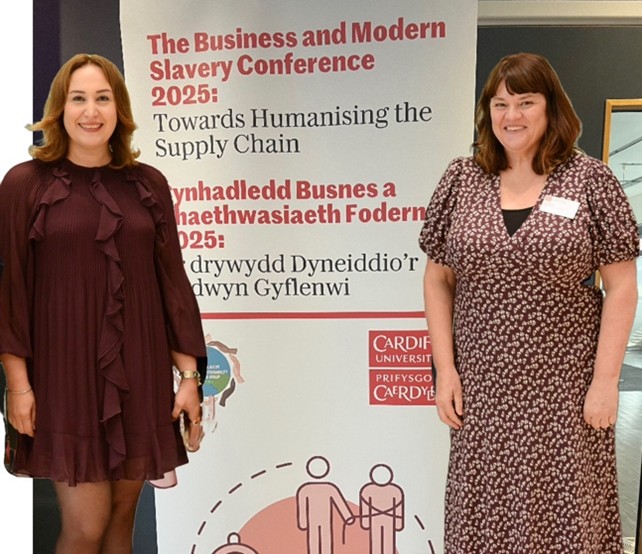
The theme selected for this year’s Conference – ‘Towards Humanising Supply Chains’ – reflected both the purpose of our Group as well as a widely identified gap in the Operations and Supply Chain Management (OSCM) field of research.
Maryam Lotfi and I established the MSSS Research Group in 2023 with the aim of better integrating our own two relatively ‘siloed’ areas of study – Modern Slavery supply chain risk management and survivor-centred research, situating this within a broader social sustainability and Welsh ‘Future Generations’ focus. Since then, we have brought together a growing group membership of academics, practitioners, industry representatives, NGOs and policymakers from across Wales, the UK and internationally – both in person and online – to meet, communicate, share research and learn together from across this divide.
In our handover meeting in 2024 with conveners and hosts of previous years’ Business and Modern Slavery Conferences, including Professor Andrew Crane. Professor Jo Meehan and Dr Mike Rogerson, it was clear that there was shared appetite for exploring the more humane side of supply chains at the 2025 event and for connecting operations management to ‘victims’, ‘survivors’ and human rights.
Prompted by our ‘humanising supply chains’ theme, we were excited to receive a diverse and engaging range of presentation proposals for the Conference, ranging from a focus on activism, agency and worker voice to data, technology and AI; from legislation, regulation and policy to SMEs and MNCs; from organisational culture, relationships and consumers to colonialism, resistance and resilience and from driving a human rights approach to sector-specific inputs from across health, fisheries, agriculture and social care.
But the Conference was more than just sets of diverse inputs sitting side-by-side. It was an opportunity to interrogate research on OSCM and to explore disciplinary boundaries, methods, concepts and ideas, putting humans and their rights more towards the centre.
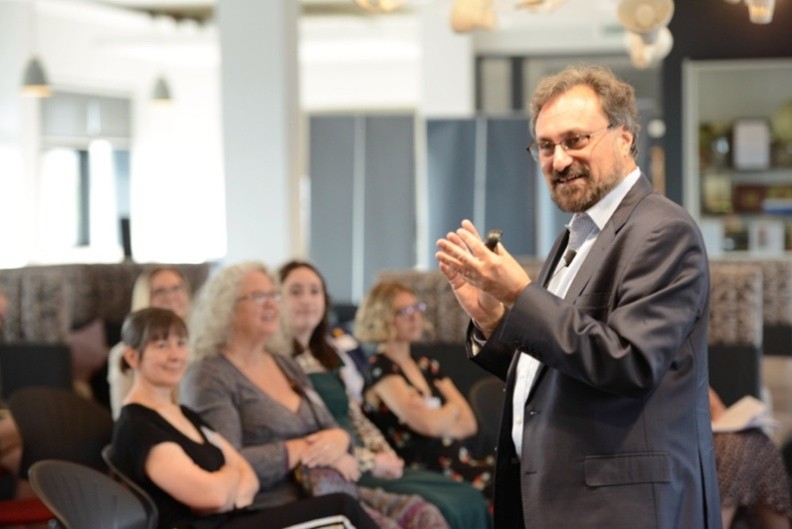
The keynote address by Professor Mohan Sodhi, Professor of Operations Management at Bayes Business School, City St George’s, University of London, reflected on the ‘business model’ of Modern Slavery, the limited progress in tackling Modern Slavery in practice and the evolution of OSCM research as a ‘field’:
‘The topic is whether we need to rethink the way we have been doing research on modern slavery in the supply chain and…do we need to come up with a new research agenda? …Do we need new theoretical approaches?… and can we reduce modern slavery in practice?’ [Professor Mohan Sodhi]
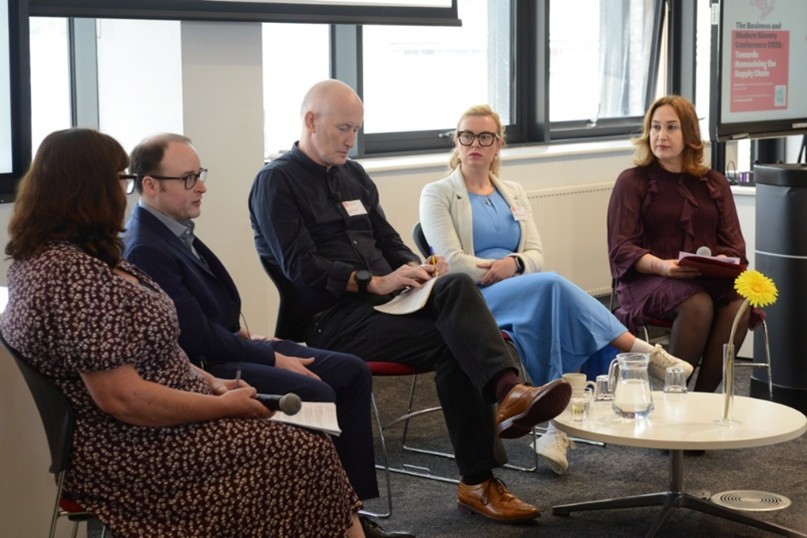
Day One also featured a high-level plenary panel including non-academic partners from our MSSS Research Group:
- Joshua Vuglar, Head of Modern Slavery and Workers’ Rights, Welsh Government
- Andrew Wallis OBE, CEO and Founder of Unseen
- Eleanor Harry, CEO of HACE
One consideration was how Modern Slavery legislation might better champion human rights:
‘…it’s been 10 years now since the Modern Slavery Act was first passed into law in 2015 and I think there’s quite wide recognition within the modern slavery sector that while that legislation was groundbreaking at its time, there is a need to go further. Certainly, internationally, there’s a strong move towards mandatory human rights…’ [Joshua Vuglar]
On Day Two, a second plenary panel brought together leading journal editors and senior academics from OSCM:
- Professor Joanne Meehan, Professor of Responsible Procurement, University of Liverpool and Associate Editor, Journal of Purchasing and Supply Management.
- Professor Alexander Trautrims, Professor of Supply Chain Management, University of Nottingham, co-chair of the British Standards Committee on Organisational Responses to Modern Slavery (BS25700);
- Professor Reza Zanjirani Farahani, Professor of Supply Chain Management, Paris School of Business; Co-Editor-in-Chief, Transportation Research Part E; Senior Editor, Production and Operations Management and Decision Sciences; Editorial Board member across multiple leading journals.
- Professor Andrew Crane, Professor of Management, Marketing, Business & Society, University of Bath, a widely cited researcher in responsible business, modern slavery, and CSR.
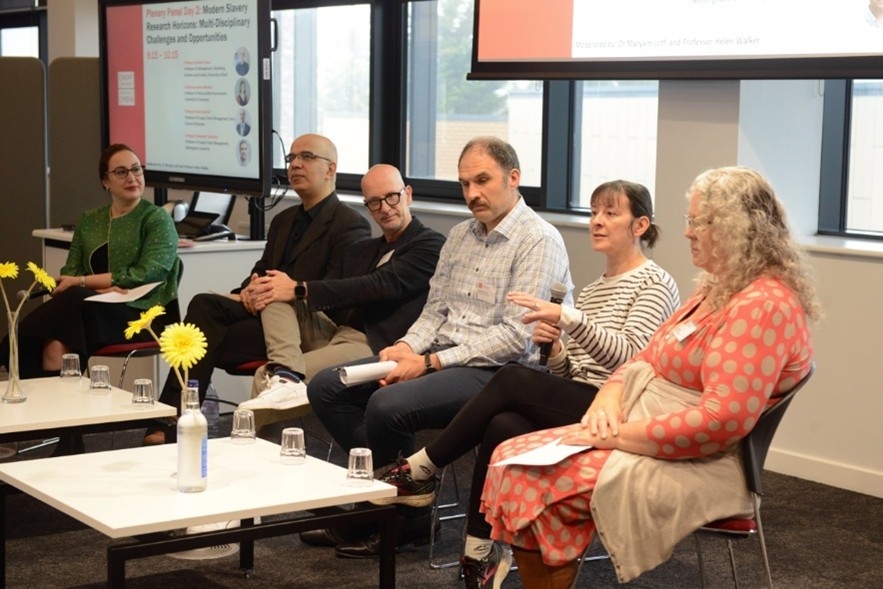
The panel discussion included theoretical frameworks employed in OSCM research, room for further conceptual and methodological innovation and the importance of advancing research impact in this critical field.
These themes were echoed in the PhD Workshop led by Professor Helen Walker where students presented and received feedback on burning questions associated with their research.
Parallel presentation sessions during the Conference also echoed this exploratory refrain. For example, Professor Joanne Meehan’s input on ‘thought experiments’ and challenging the dominance of empiricism in supply chain management studies captured this spirit completely: where, she asked, do notions of harm, care, rights, power, agency and vulnerability enter in? English literature, she suggested, might provide us with a way of thinking about how we represent and empathise with humans caught up in exploitation amidst supply chains, allowing us to see not just parts but their ‘whole lives’.
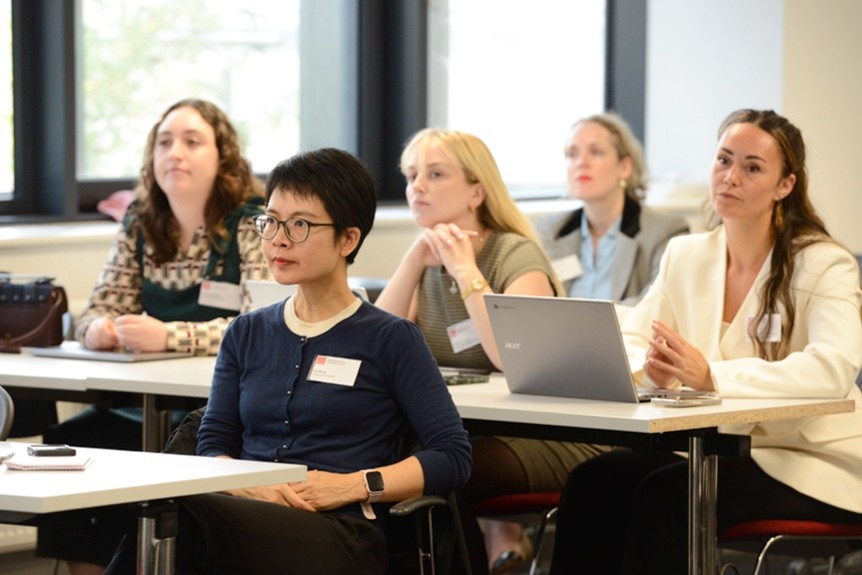
Another example was Dr Ariba Abasi’s presentation on debt bondage and the Peshgi system brought together cultural, social, ethnographic, historical, economic and post-colonial research perspectives to explain the present-day complex configurations of exploitation and agency experienced by male, female and child brick kiln workers in Pakistan.
The success of the conference was made possible by the incredible dedication of the organising team. It marked the culmination of a year of planning and collaboration led by the MSSS RG co-chairs, Dr Lotfi and Dr Skeels, together with Professor Helen Walker. They were joined by the group’s PhD researchers – Amir Salimi Babamiri, Amy Boote, and Zhe Li – and Beverly Francis from the Executive Suite at Cardiff Business School. Their combined efforts and commitment brought the event to life.
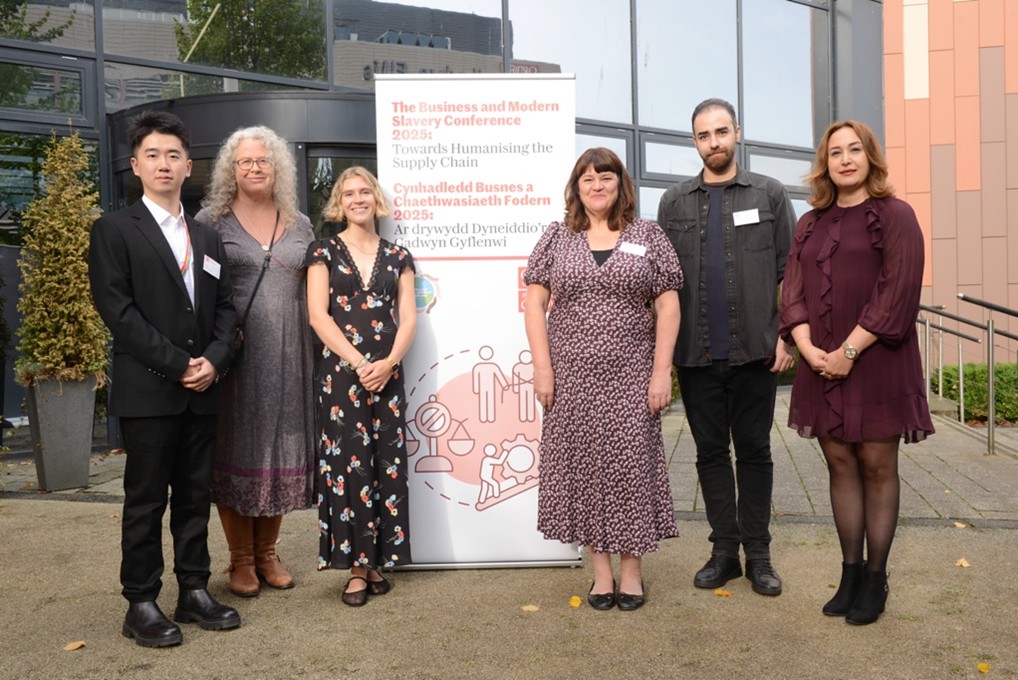
The success of the Conference reinforces Cardiff University’s position as a hub for world-leading research on modern slavery and social sustainability and confirms the MSSS Research Group’s role at the forefront of this critical global agenda.
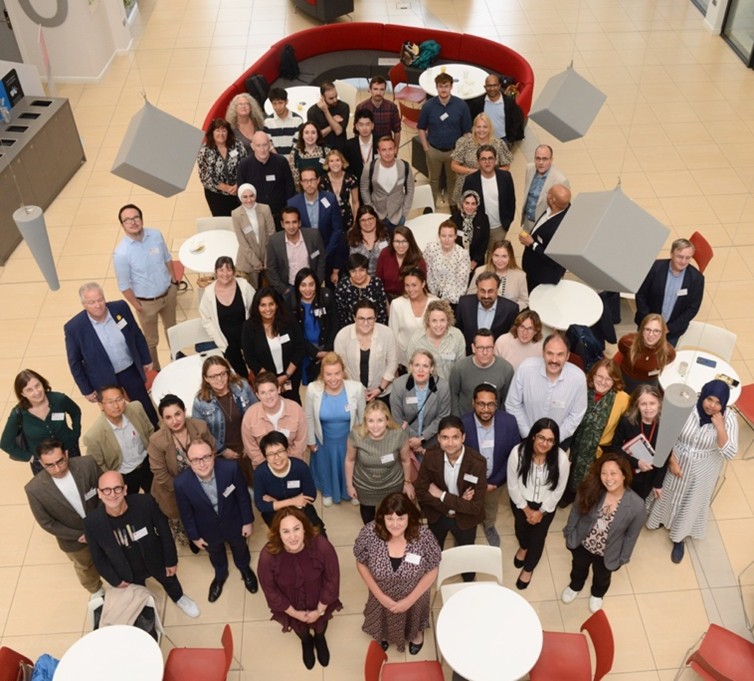
We received awesome feedback from our participants:
“I had a truly enriching learning experience at the Humanising Supply Chains conference at Cardiff Business School. Grateful to our keynote speakers, presenters, panelists, and every participant who shared their insights, passion, and commitment. Together, we went beyond exchanging research on Humanising Supply Chains. We engaged in meaningful conversations, questioned established views, and strengthened a community dedicated to addressing modern slavery and advancing social sustainability”.
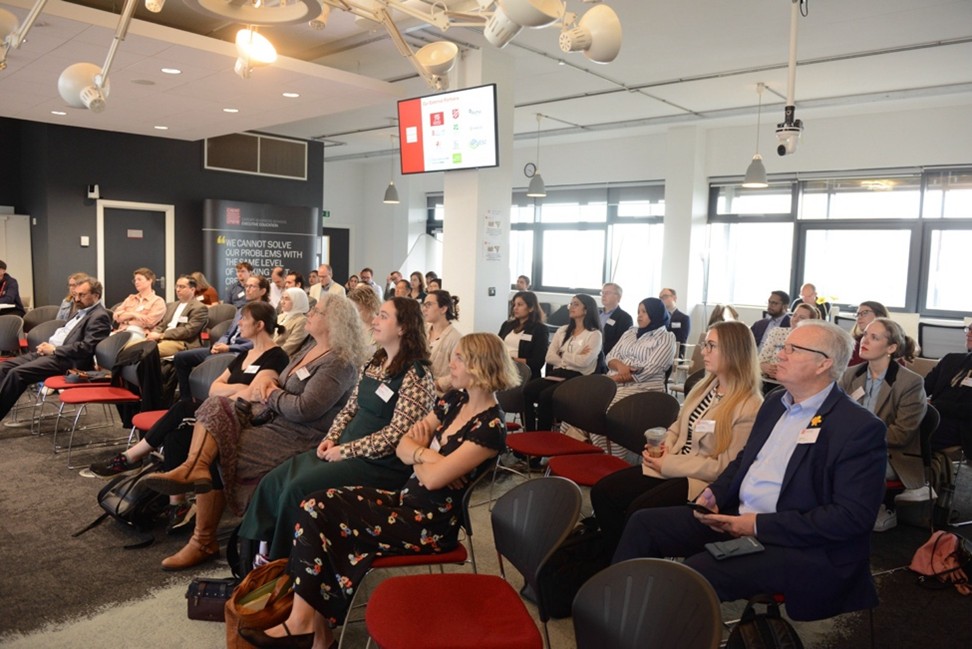
Finally, modern slavery in business is sometimes described as fragmented or underdeveloped, yet its openness and permeability may in fact be its strength. The Conference discussions – drawing on English literature, critical race theory, critical discourse analysis, ethnography, behavioural studies and other disciplines – highlighted the value of such cross-disciplinary engagement. With human rights at its core, modern slavery research represents an open, exploratory, and vital field that we can all contribute to and support – and this is very much part of our mission in the MSSS Research Group.