From Pipe Cleaners to Pixels: Welsh History PGRs Craft Digital Humanities Research Posters
24 July 2025
The following post is written by Rhianedd Collins (Postgraduate Researcher in History and Computer Science, Cardiff University) and Emily Adams (Postgraduate Researcher in History, Swansea University).
What digital humanities-themed activity do you do with £500 funding and a group of Welsh historians – crafting, of course!
Supported by Cardiff University’s Research Culture Fund, the Centre for Digital Humanities and Cultures Research awarded us a grant to organise a cross-university collaboration showcasing digital humanities at the Welsh History Postgraduate Conference, 3-4 June 2025, Cardiff University. The conference, organised through the Cardiff Centre for Welsh History, brought together PGR students from across the country – and beyond – to share their exciting research within the field of Welsh History.
Our concept was to stimulate conversation about opportunities and challenges associated with digital humanities, while upskilling fellow PGRs to use digital methodologies in their own research. We wanted our contributions to embed creativity, imagination, and fun alongside their digital humanities focus. The grant allowed us to contribute multiple sessions to the conference, including a guest speaker, research poster crafting activity, and an introduction to digitisation in Cardiff University’s Special Collections and Archives.
We wanted delegates thinking creatively about how digital tools can enhance historical research, what challenges exist, and how these benefits and challenges could be communicated to a wider audience. To pack these big ideas into a 60-minute session in a fun and collaborative manner, we developed a research poster crafting activity: split into groups and equipped with pre-prepared Welsh history research topics, delegates would design a research poster using nostalgic craft materials. These would capture their ideas about how to implement digital methods within their allocated topic. The posters would then be used as samples for the following day’s digitisation session.
We sourced visually interesting craft materials – pipe cleaners, foil, feathers, and much more – and created research summaries and primary source packs for each group using secondary literature and websites, including The British Newspaper Archive and Mass Observation. Topics were broadly informed by the papers submitted by attendees, which neatly split between the nineteenth and twentieth centuries. Together with available sources, we developed two research concepts:
-
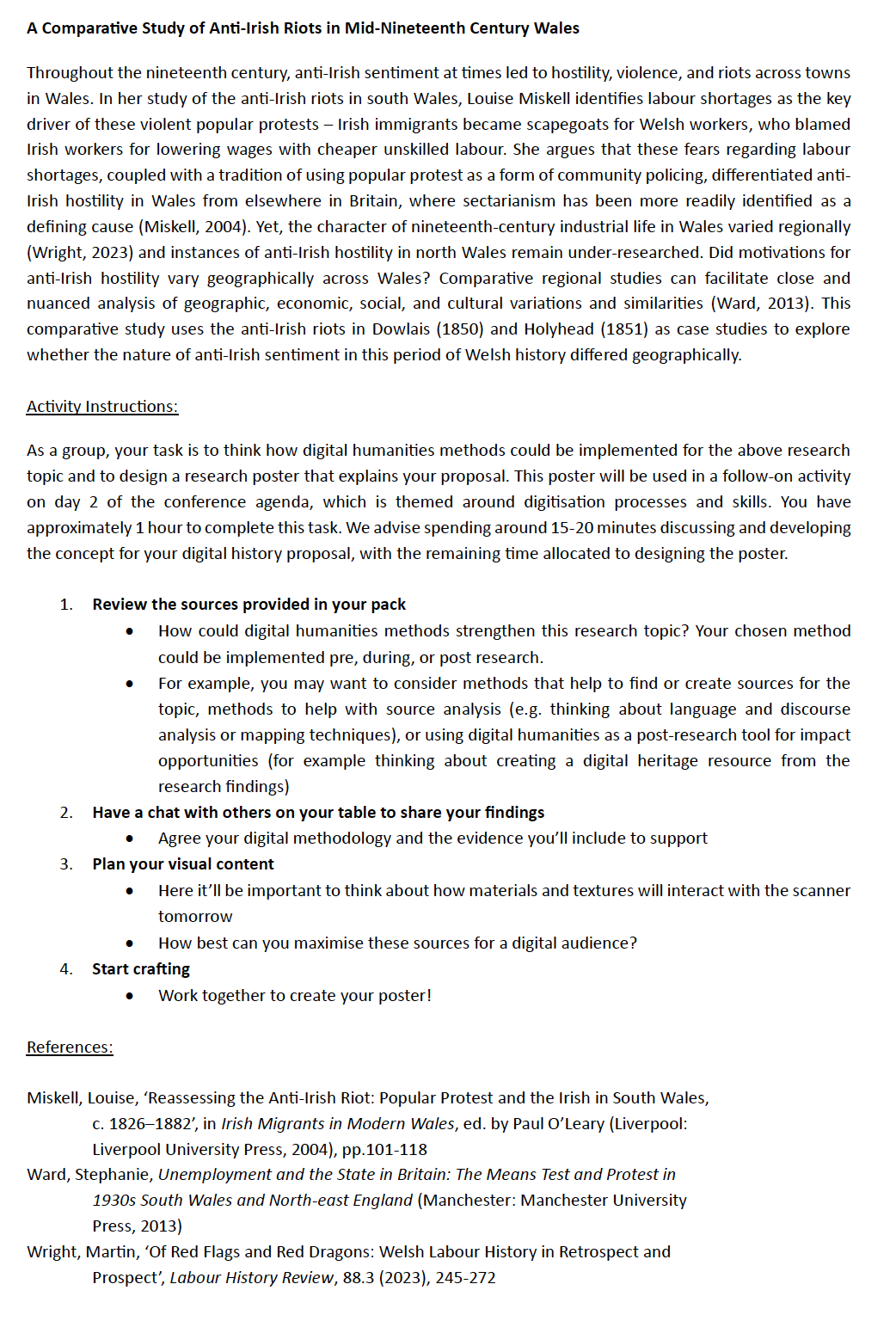
A Comparative Study of Anti-Irish Riots in Mid-Nineteenth Century Wales
2) Gender Roles versus War: A Study of Women’s Experiences in South Wales

Concept: *check*
Planning: *check*
Now to put plans into action…
Day One.
Morning Session: Guest Speaker.
Dr Leighton Evans (Swansea University) spoke about his collaborative involvement on the M[AR]gam project, which created a virtual time machine for visitors to explore the Victorian interior of Margam Castle. Leighton’s talk highlighted the value of collaborative digital humanities projects and the exciting scope for public engagement with Welsh history research when using imaginative digital methods. The talk was thought-provoking and well-received.
Afternoon Session: Research Poster Activity.
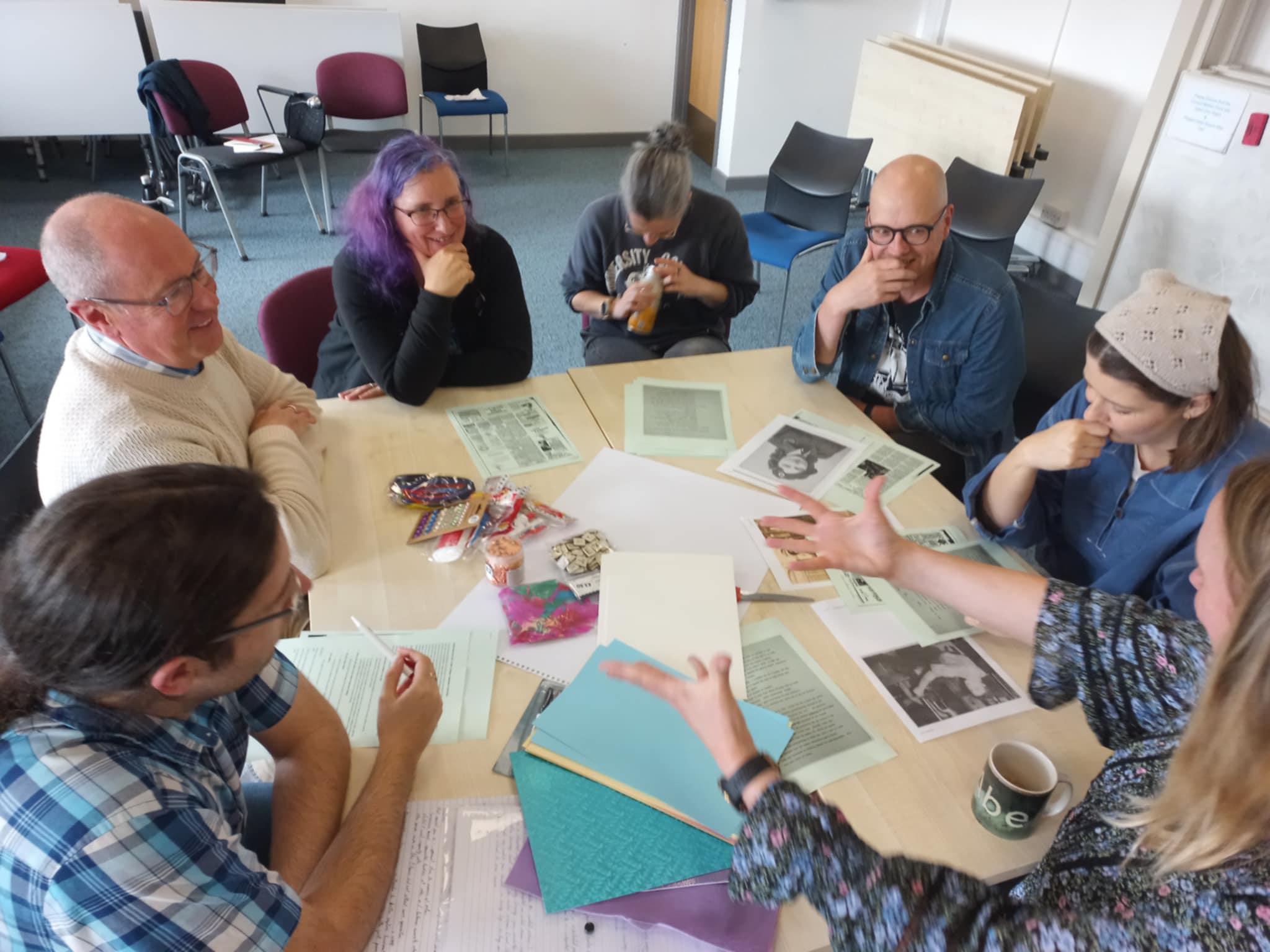
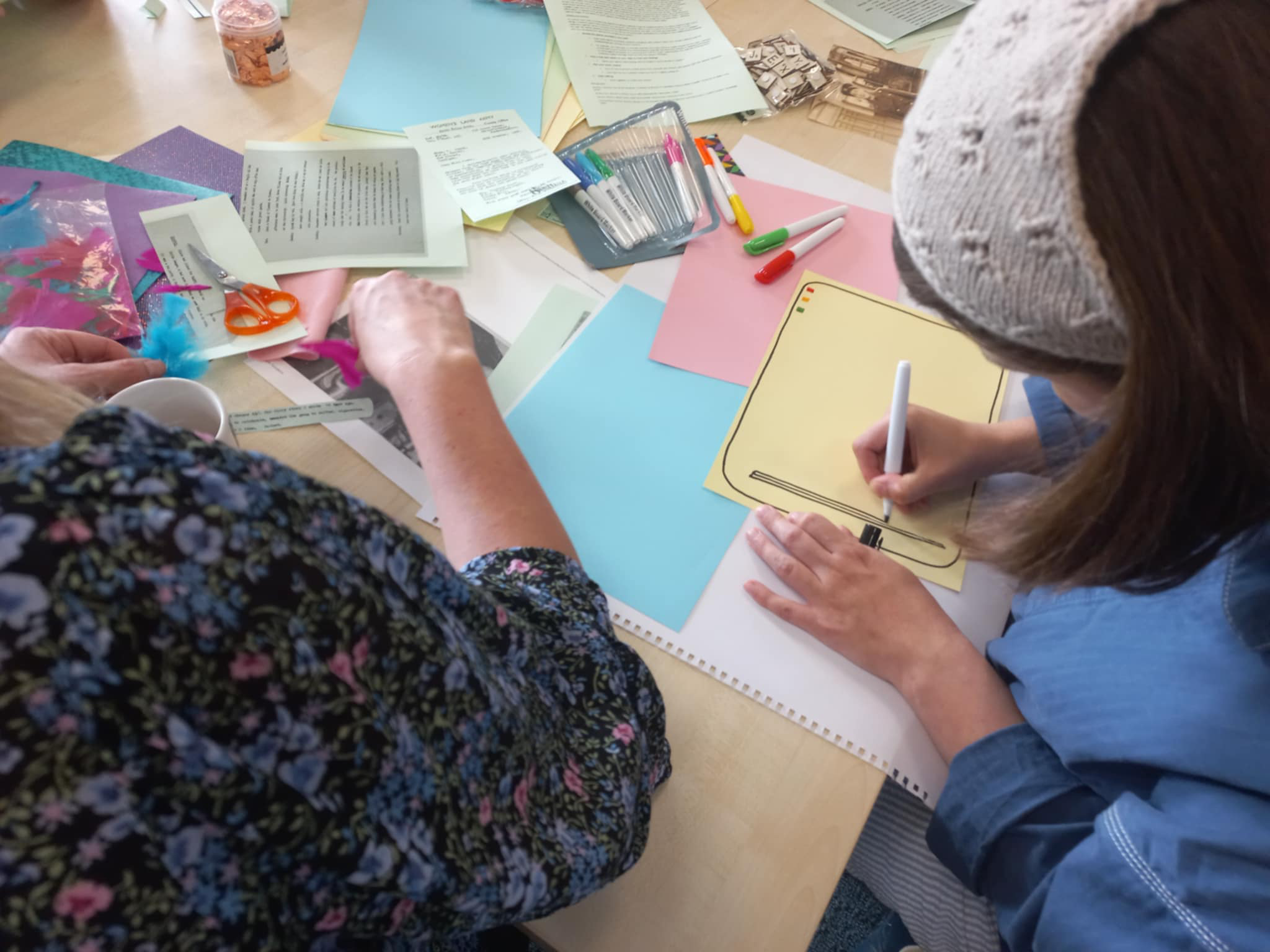
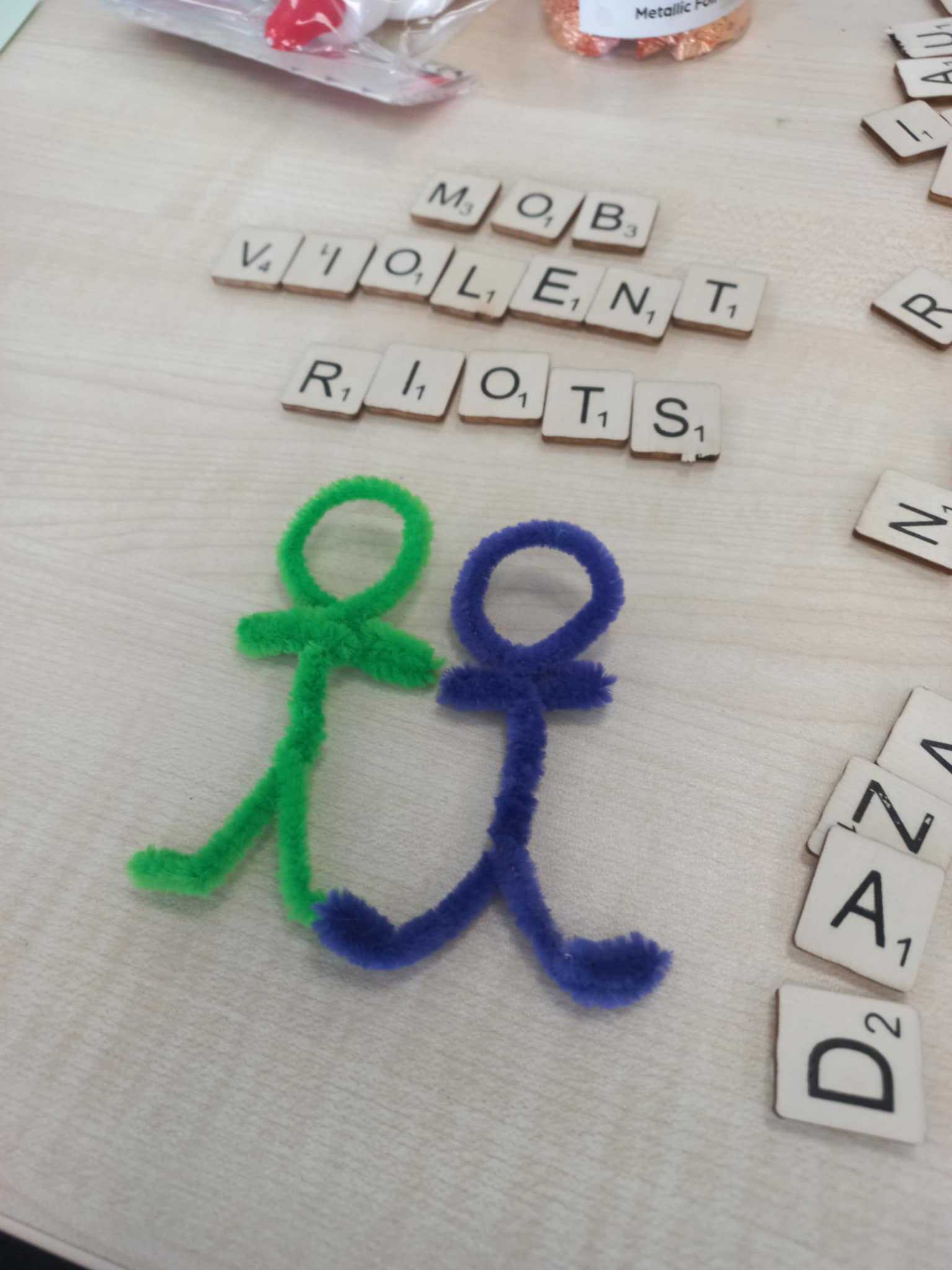
Delegates were grouped and provided activity briefs (figures 2 & 3) and craft materials. After some serious deliberation about how to design and communicate their ideas, each group threw themselves wholeheartedly into the crafting process. If we had any fears that crafting would be ill-suited to rigorous Welsh historians, these were soon allayed after spotting delegates gleefully peeling PVA glue from their fingers and carefully making stick figures out of pipe cleaners!
And the results…
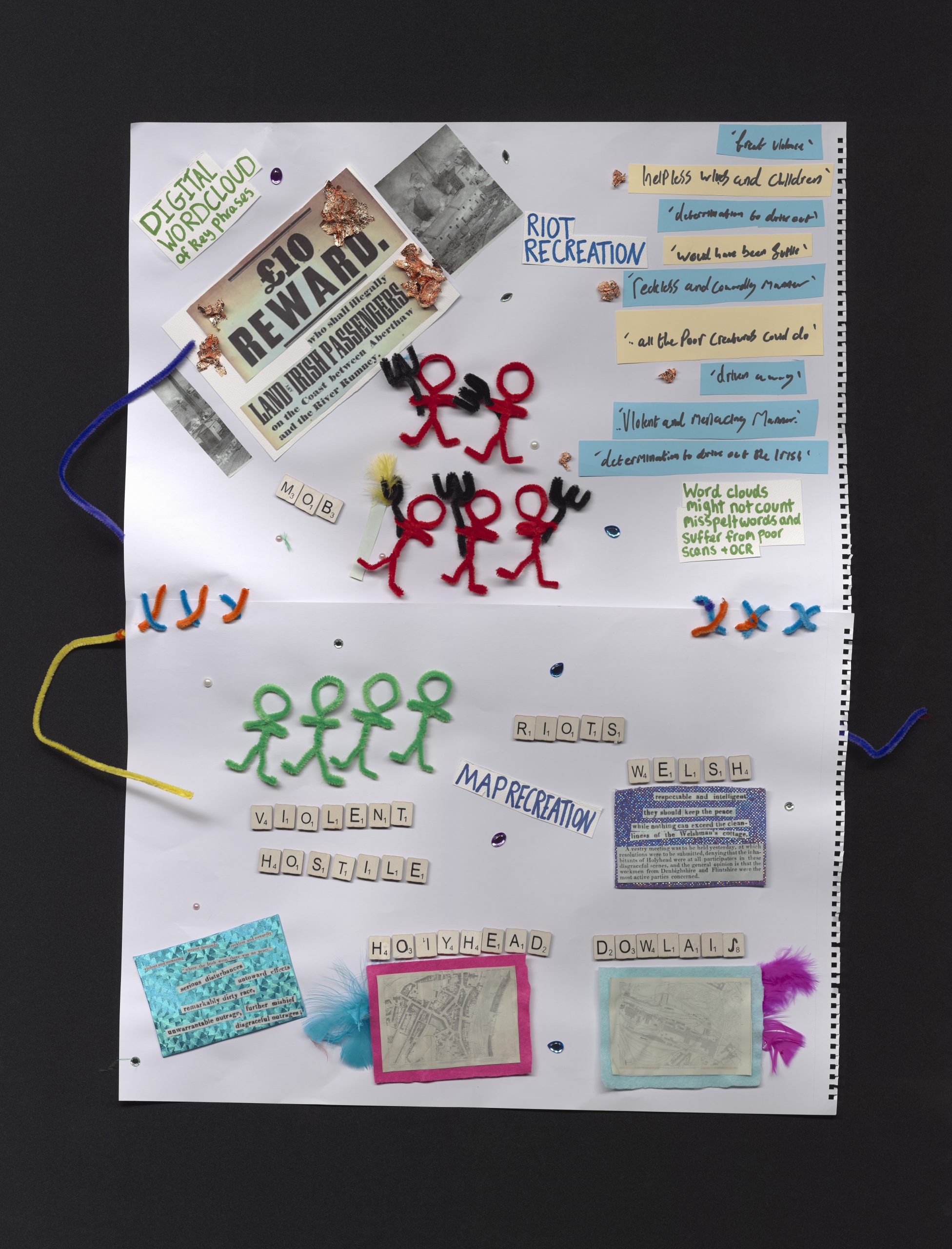
Group 1: ‘A Comparative Study of Anti-Irish Riots in Mid-Nineteenth Century Wales Analysing Historic Media Discourse Using OCR’
This group focused on how digital methods could enhance the initial research process. They explored how optical character recognition (OCR) software could be used to scrape contents of 19thC Welsh newspapers reporting on contemporary anti-Irish riots to draw out patterns and comparisons in the discourse of regional reporting. The group gave particular thought to which materials they used in the poster, keen to emphasise textures and depth in their final digitised copy. The pipe cleaners and rose-gold foil certainly achieve this aim!
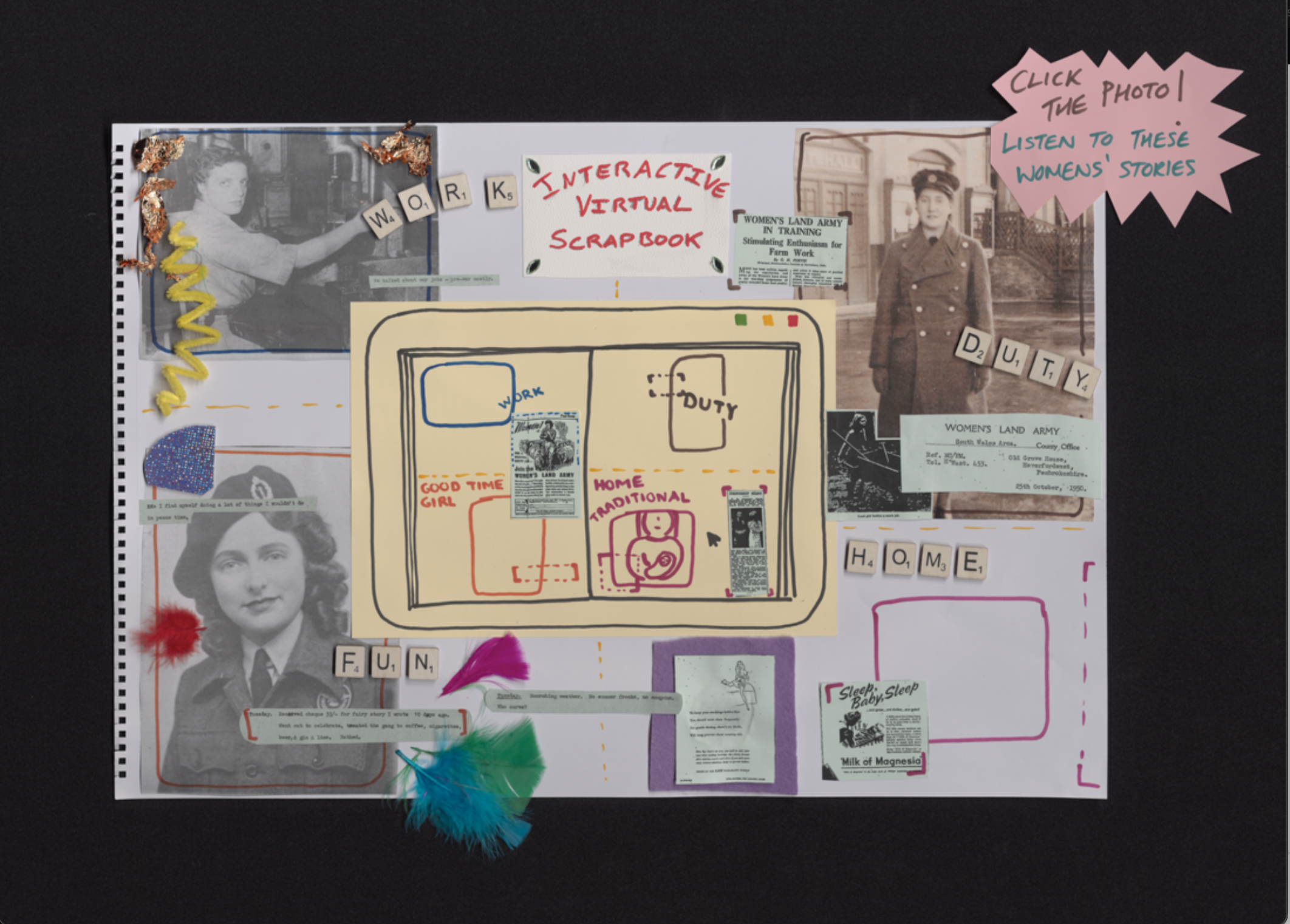
Group 2: ‘A Digital Scrapbook of Women’s Wartime Roles in South Wales’
This group explored how digital methods could help communicate historical research to public audiences. They identified school children as their target audience and imagined how the development of an interactive digital scrapbook could be used to teach children about women’s wartime roles in south Wales. The group decided that the scrapbook be designed in a way that critically demonstrated the value and challenges of digital historical storytelling to its audience. This involved the use of generative AI within the scrapbook to ‘reanimate’ historical photographs and ‘give voice’ to diary extracts, whilst posing questions to its young users about historical authenticity and ethical implications.
‘The creative poster-making was definitely a highlight and was a great way to use arts and crafts to engage people […] I had a lovely time expressing myself and brainstorming ways to present history through the lens of the digital humanities.’ – Charles Johnston, MA student, Cardiff University.
Day Two.
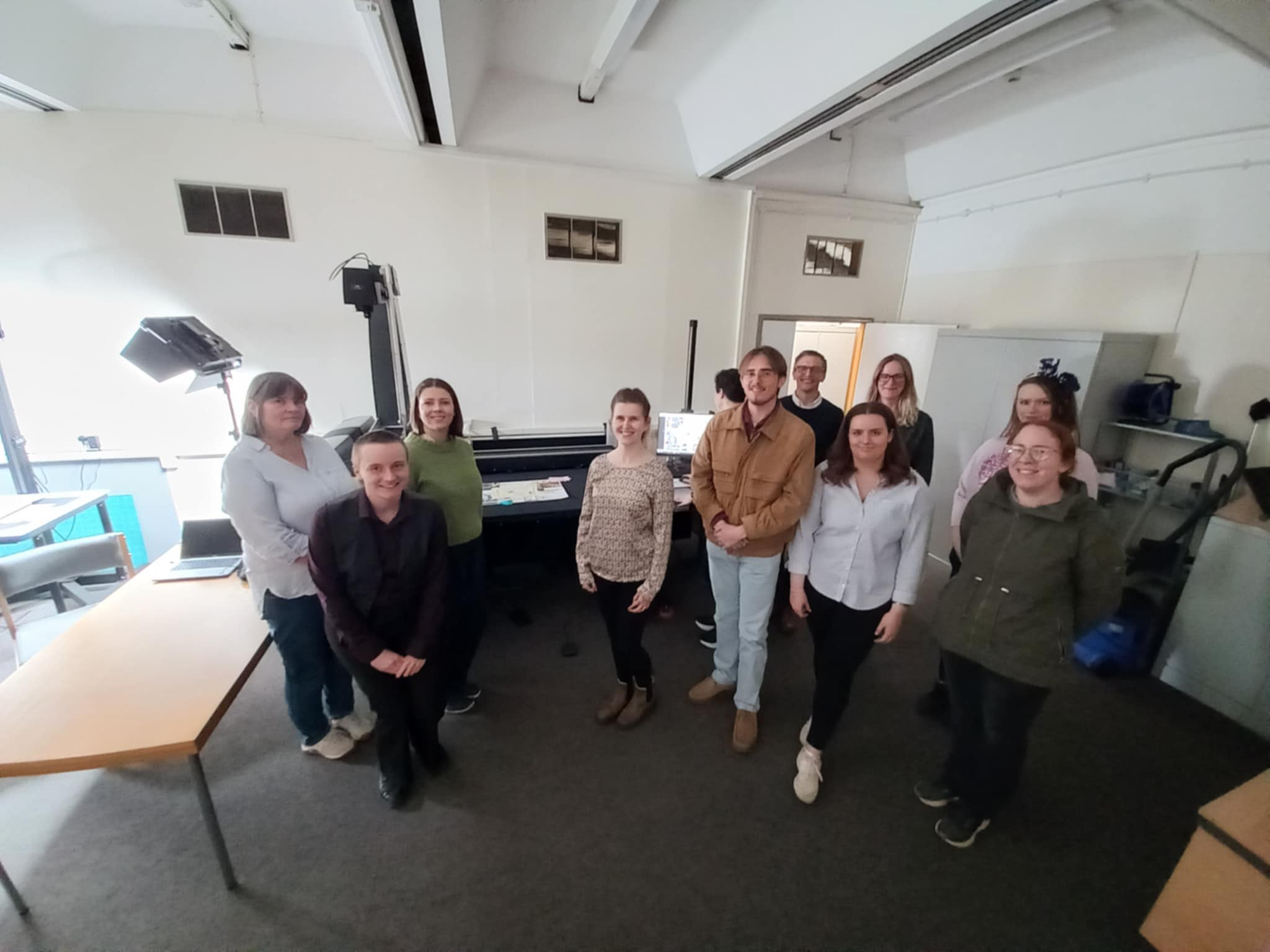
The following day, at Special Collections, both groups were given detailed and informative demonstrations of the digitisation process by digital archivist specialists, Alison Harvey and Sarah Hayton. Each poster was scanned using Special Collection’s 3D digital scanner. The resulting images were used to demonstrate the quality of the equipment and the art of digitisation – the skill of capturing the materiality and ‘aura’ of the original physical object for digital audiences to appreciate and enjoy.
You can check out high resolution versions of the poster scans here: Group 1 & Group 2.
The conference ended, and delegates went away wowed by the digitisation equipment available at Special Collections, and hopefully, pondering how their research might be enriched by digital humanities methods and frameworks. Hobbycraft probably had a little extra footfall, too…
Overall, the conference was a success. Our digital humanities sessions sparked creativity and conversation. By way of conclusion – and in hope of sparking additional collaborations in this space – we would like to share questions that emerged during our planning and at the conference:
- Do digital humanities methods bring new perspectives to Welsh history, and visa versa?
- How might a Welsh history PGR research culture engaged both practically and theoretically with digital humanities be developed?
If you would like to explore digital humanities and Welsh History informally with a PGR network, we are eager to hear from you!