Exploring Health Data Through Puzzles and Play: My Internship with the Centre for Trials Research
11 December 2025
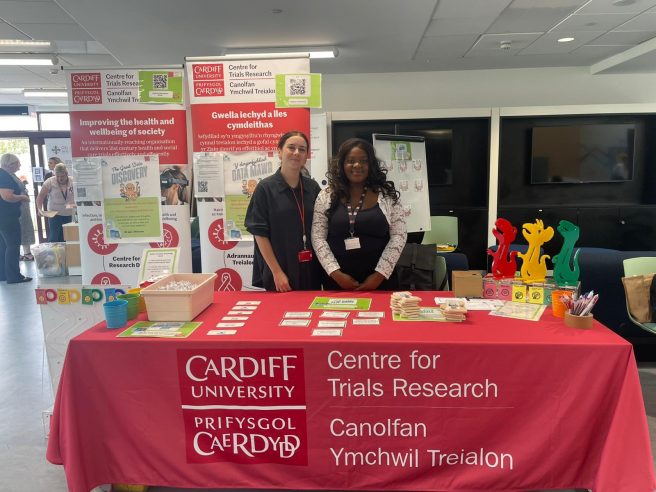
by Christabel Gono, Final Year Medical Pharmacology Student and Summer Intern
Bringing Routine Maternity Data into Conversation
I’m a final-year Medical Pharmacology student, and I joined the Centre for Trials Research (CTR) TOP-CAT study team through the on-campus summer internship scheme, drawn to the opportunity to learn how research connects with real people. With interests in health equity, science communication, and community-centred research, this internship was a perfect fit and gave me the chance to explore how public engagement can bring routine health data into more open and accessible conversations.
Throughout the internship, I learned to think differently about how we communicate research. Instead of focusing solely on scientific rigour or data systems, I began to understand how co-design, inclusion, and public trust are central to meaningful engagement. Through puzzles, conversation prompts, and collaborative feedback, I saw how involving communities in the design process makes data feel relevant, empowering, and grounded in lived experience.
My project focused on exploring how routine health data, particularly data collected during maternity care, can be shared in ways that feel approachable and inclusive, especially for communities who are often underrepresented in research conversations. Working closely with the CTR colleagues and CU Public Involvement and Engagement experts, I developed activities and resources for an interactive public stand, which we later piloted at the Healthy Lives event at Cardiff West Community High School.
This experience positioned me at the intersection between research and real people. It challenged me to design tools that do not just inform but also listen, entertain, and build trust, bringing routine maternity data into conversation in ways that feel human, collaborative, and accessible.
Why Routine Data and Why Maternity?
Routine health data refers to information collected during everyday healthcare, for example GP visits, blood tests, scans or check-ups. In maternity care, this could include weight measurements, antenatal appointments, birth outcomes, or mental health assessments. Although this data isn’t collected for research, it can be used to improve the quality of care, track trends, and even help prevent future harm. Despite its value, many people don’t know that their health data is used in this way, or that they have the right to opt out. Even fewer understand how this data can be used to address health inequalities.
This is particularly relevant in maternity care, where Black and other ethnic minority women continue to face disproportionate risks. Yet, these same groups are often underrepresented in research datasets and engagement activities. If we want to build trust and equity in health systems, the conversation must start earlier and in ways that feel meaningful.
Planning with the Public: PAG Testing and Co-design
Before delivering the stall publicly, I facilitated a session with the Health Data Research (HDR) UK Transforming Data for Trials Public Advisory Group (PAG), a group of UK public members who advise on how to involve patients and the public in research, particularly for routine health data trials. I presented the materials, walked through each activity, and gathered feedback on design, language, accessibility, and cultural sensitivity.
Their insights were crucial. We adjusted the wording of the myth/fact statements to be more neutral, refined the layout of the puzzle for better flow, and discussed how to frame data conversations in a way that avoided triggering fears around surveillance or control.
This co-creation process helped ensure the activities were inclusive, culturally aware, and respectful, as well as informative. It was also a valuable opportunity for me to practise facilitation, receive constructive feedback, and learn how to iterate quickly. These are skills I will take with me long after this internship ends and into my future career.
Designing for Curiosity, Conversation and Co-creation
I set out to create something hands-on and visual that families could engage with together, working across language barriers, with the aim of sparking questions rather than just deliver answers.
Here’s what I developed for the stand:
- Two Wooden Puzzles: I designed two versions of a wooden jigsaw puzzle, one for adults and one for children, to make the exploration of routine health data accessible to families attending the event. Each puzzle illustrated the journey of routine data, from the point of care to national databases and eventually into research. These were designed to be intuitive and visually engaging. As participants pieced them together, we discussed each stage and how data contributes to real-world health improvements.
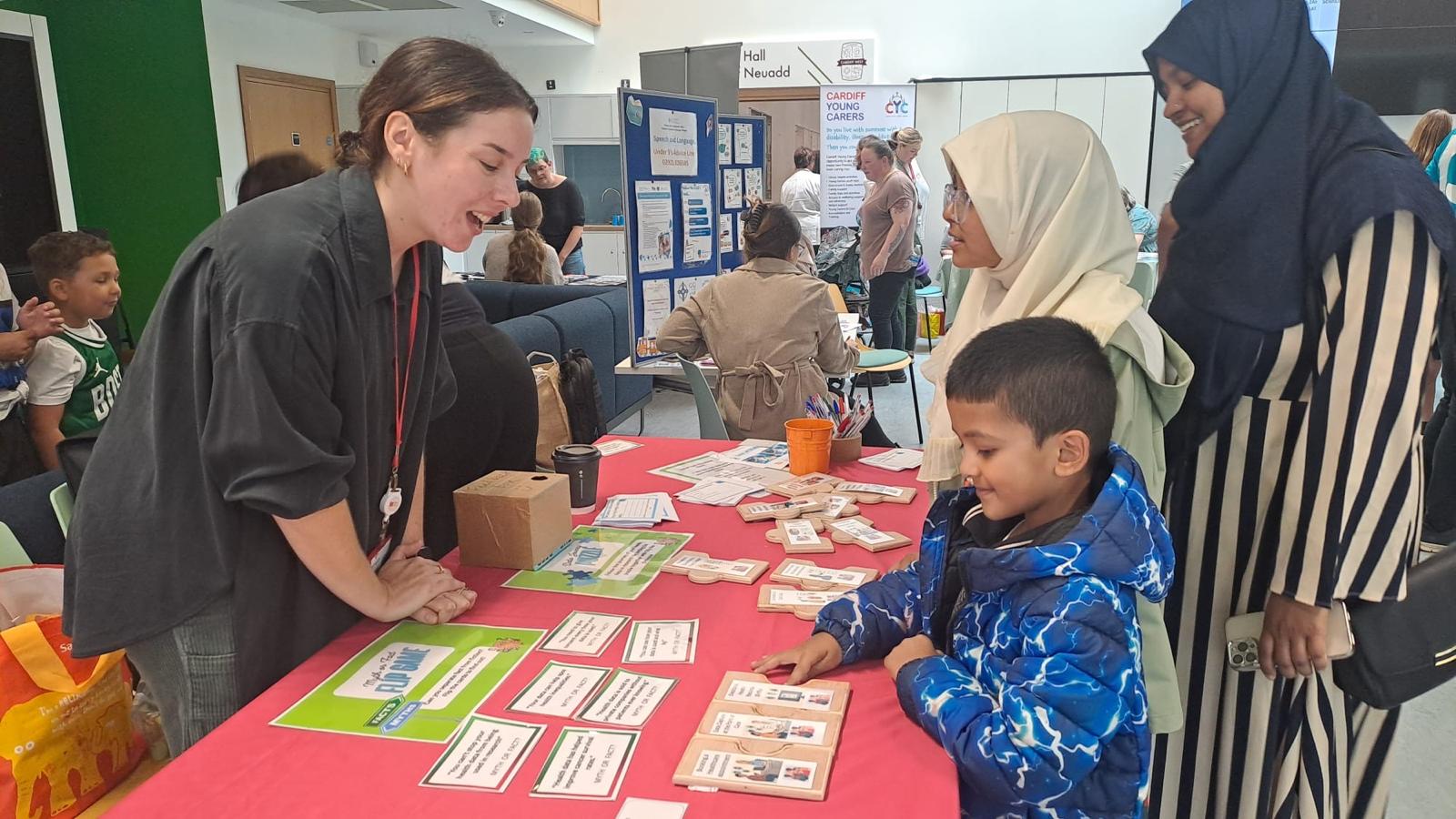
- Myth vs Fact Flip Cards: This activity challenged common misconceptions about routine data, such as “data is sold for profit” or “you don’t have a choice about how your data is used.” Each card revealed the correct information on the back and included follow-up questions to encourage deeper discussion.
- Token Voting Station: I created two token voting stations, one asking, “Do you know what routine health data is?” and another asking the same question after visiting the stall. Participants placed coloured tokens in the slots before and after engaging with the materials. This offered a simple yet powerful way to measure shifts in awareness. Before engagement, 22 participants selected “Nothing yet,” compared to none afterwards, while 15 and 25 tokens were placed in “Sort of” and “Get it” respectively after visiting the stall, showing a clear improvement in understanding of routine data.
- Language Wall: This bilingual station (English and Welsh) invited attendees to share what words or phrases they associate with health and data. It became a colourful collage of personal insight, from “trust” and “fear” to “future” and “my NHS.” It opened a space for people to reflect on how language shapes understanding.
- Evaluation Tokens and Comment Cards: To gather feedback, I provided smiley-face tokens and optional comment slips. Children especially enjoyed voting with the faces, while adults left thoughtful reflections about what they learned and how their perceptions changed.
They received a spot-the-difference and crossword activity to take home, helping to extend the engagement beyond the stall. Every visitor received a small prize or Centre for Trials Research token gift as a thank you for taking part.
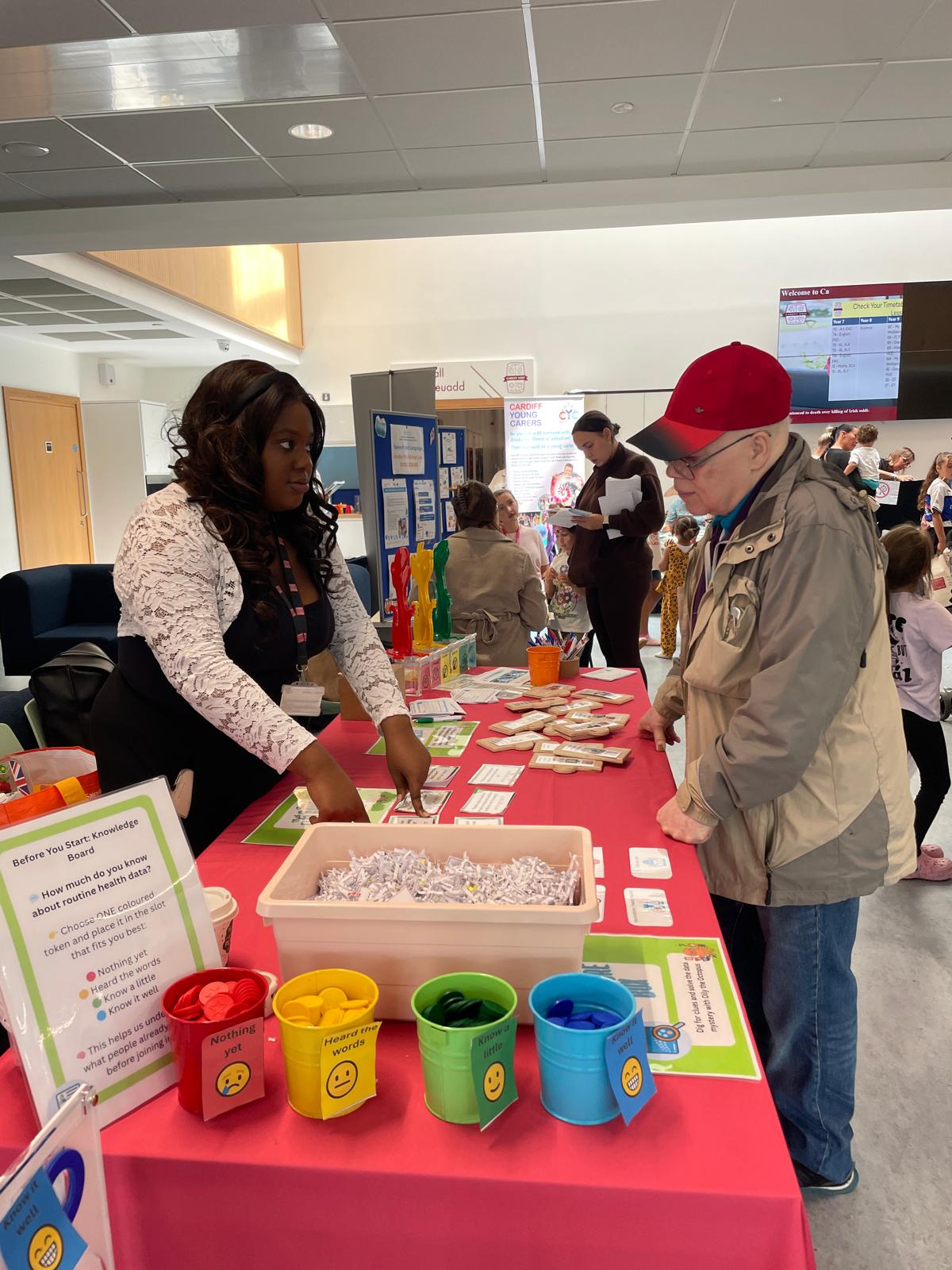
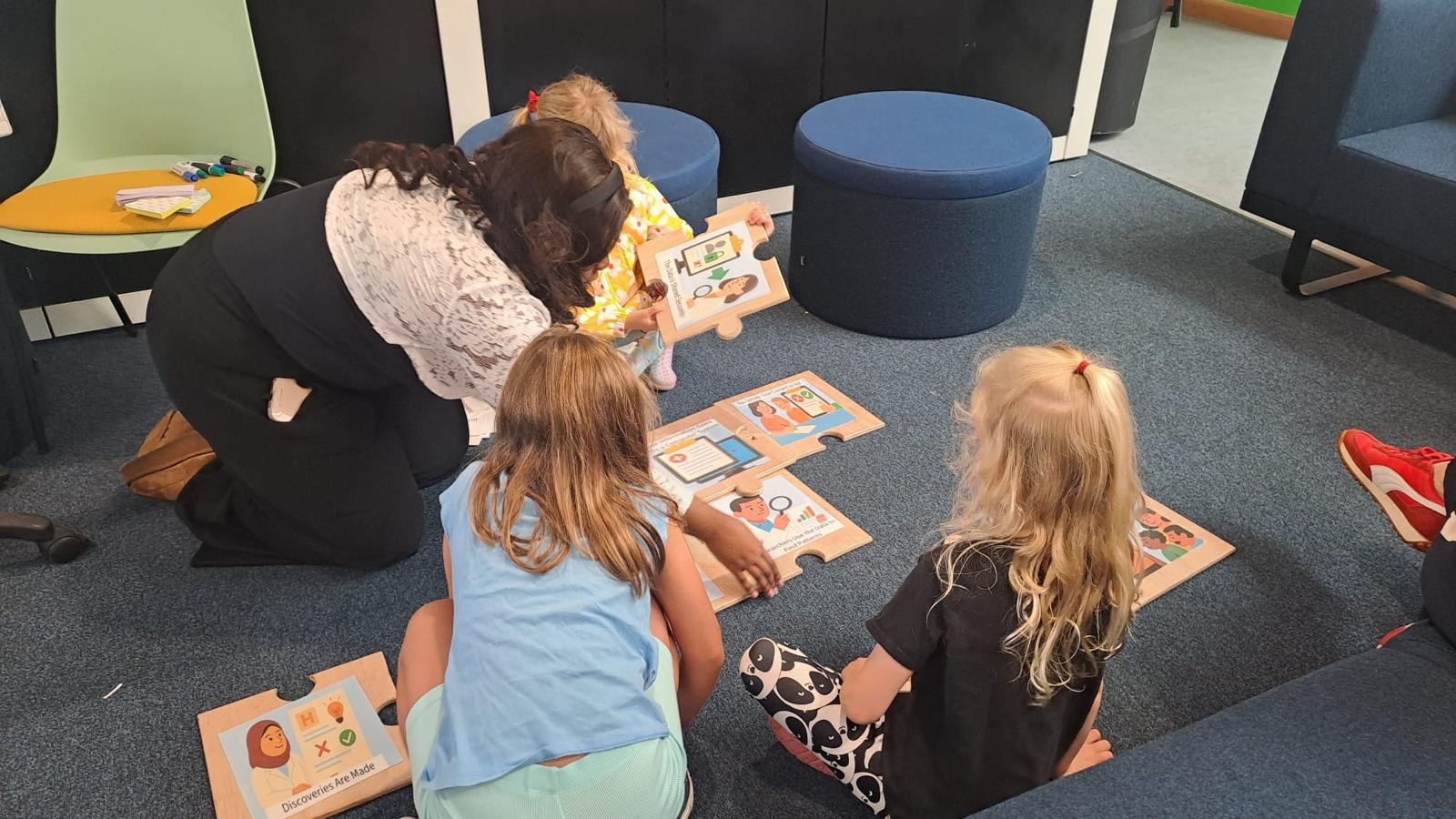
Delivering the Stand at Healthy Lives
The Healthy Lives Event, hosted at Cardiff West Community High School, brought together families, community organisations, health researchers, and local leaders for a day of open dialogue and celebration around health and wellbeing.
Running the stand was an incredibly rewarding experience. With Kim’s support in preparing and developing the materials, we co-delivered the activities throughout the day and engaged with dozens of visitors, from young children and parents to NHS staff and university researchers. Some stayed for just a few minutes, while others circled back to rejoin the activities later in the day.
One visitor commented:
“I learnt that while Routine data is used, it’s not sold. I loved how interactive it was.” — Former Trial Manager
Another told me:
“Learning that health data has improved cancer survival rates was eye-opening.” — Health Worker
Visitors were also invited to reflect on what they had learned or found interesting. Some of the feedback we received included:
“How routine data is stored.” — Parent
“Wonderful to see CTR coming to our Healthy Lives event.” — Parent
“It was really fun playing with puzzle” — 7-year-old Boy
For me, these reactions were a reminder that effective engagement isn’t about simplifying information. It’s about connecting it to people’s values and lived experience.
What I Learned: Beyond the Stand
This internship provided hands-on experience in public involvement, health equity, design thinking, and science communication, extending far beyond event delivery.
Some of my biggest takeaways:
- Start with people, not data. The most meaningful conversations happened when we began with personal experiences, like pregnancy, care, or navigating the NHS, and built outward toward the role of data.
- Play can be powerful. Children were some of the most engaged participants. Their curiosity helped draw adults into conversations they might otherwise have avoided.
- Trust is a two-way street. Public engagement isn’t just about giving information. It’s about listening, responding, and adapting. It also means being transparent when we don’t have all the answers.
I also gained practical skills in graphic design, public speaking, stakeholder engagement, and project planning. More importantly, I developed a deeper appreciation for the invisible labour that goes into organising meaningful engagement.
What’s Next?I recently had the opportunity to present this work at the Cardiff University Summer Internship Showcase Poster Exhibition, where I shared my project with researchers, staff, and fellow interns. Presenting the poster allowed me to reflect on the journey from initial ideas to a fully developed public engagement activity. It also opened thoughtful conversations about equity, trust, and the role of routine maternity data in shaping better research. Hearing people engage with the work, ask questions, and offer feedback reinforced the importance of bringing communities into these discussions from the very beginning.
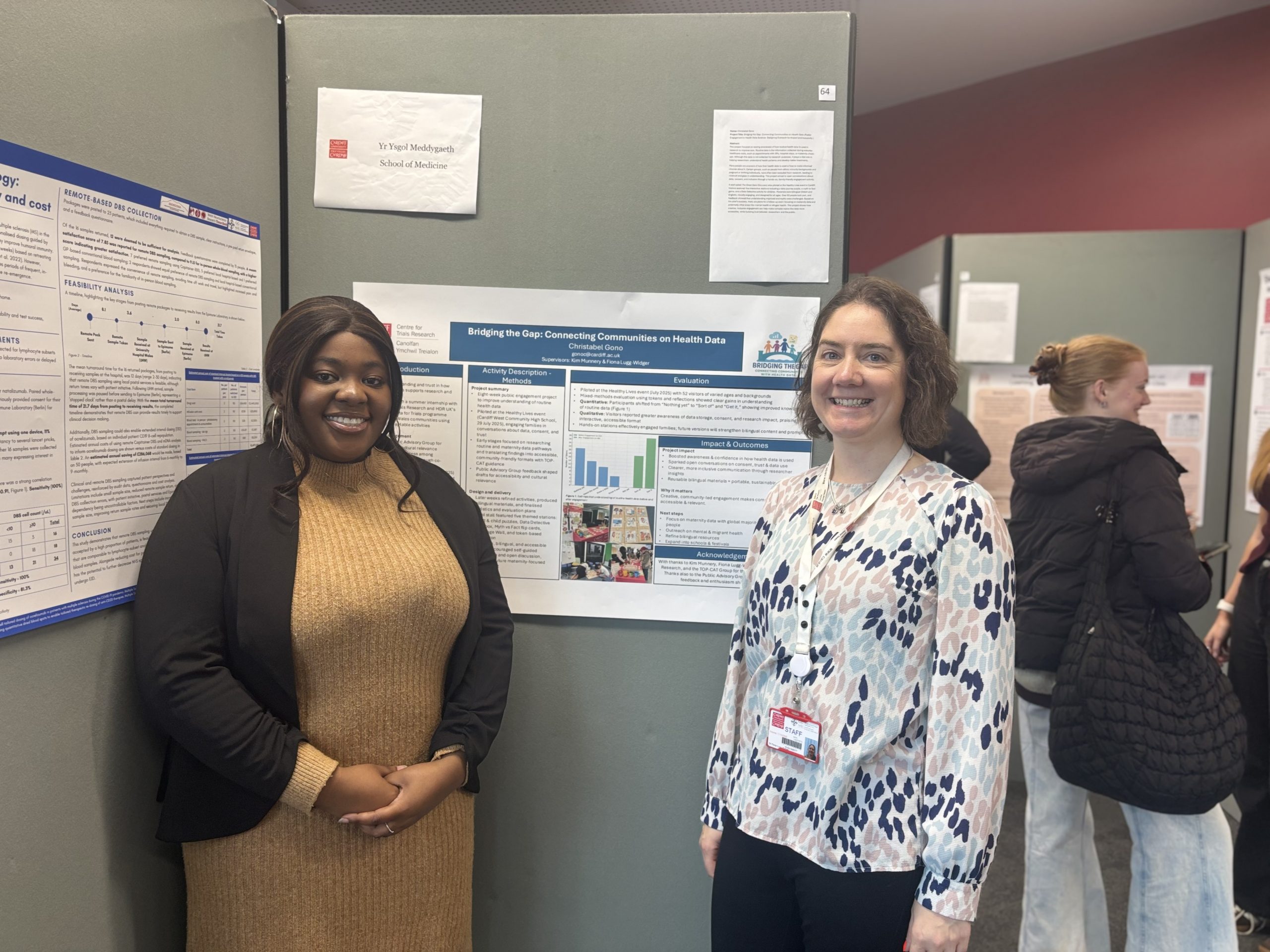
The success of the pilot has now led to exciting next steps. The TOP-CAT team is adapting the stand materials for a future maternity-focused event, with a stronger emphasis on communities experiencing health inequalities, including refugees, global majority women, and those navigating perinatal mental health challenges.
There are also plans to share the puzzle and token toolkit with other researchers who want to improve how they communicate routine data in trial design and recruitment.
Personally, I am committed to staying involved in this work. I plan to return to the Centre for Trials Research to support further public engagement activities, and this experience has inspired me to apply for international master’s programmes in public health and community health prevention research. My goal is to continue bridging the gap between science, equity, and society.
Final Reflections
Before this summer, I saw routine data as something clinical, numbers in spreadsheets, anonymised and abstract. But this internship showed me that behind every dataset is a community, a story, and a potential opportunity to improve lives.
It also taught me that engagement is most impactful when it is grounded in curiosity, collaboration, and care. These are values I now carry with me not just as a student, but as a future researcher and advocate.
I’m incredibly grateful to Kim Munnery, Fiona Lugg-Widger, and the rest of the CTR team for welcoming me so warmly and supporting this project from start to finish. Thank you also to the Public Advisory Group, everyone who visited our stand, and to Linda Adara for helping with the stand on the day. Your words, feedback, and energy shaped everything we built.

- February 2026
- December 2025
- October 2025
- June 2025
- May 2025
- April 2025
- March 2025
- February 2025
- December 2024
- November 2024
- October 2024
- September 2024
- July 2024
- June 2024
- May 2024
- April 2024
- March 2024
- December 2023
- November 2023
- September 2023
- July 2023
- June 2023
- April 2023
- March 2023
- February 2023
- December 2022
- November 2022
- October 2022
- September 2022
- August 2022
- July 2022
- June 2022
- May 2022
- April 2022
- March 2022
- February 2022
- January 2022
- November 2021
- September 2021
- July 2021
- June 2021
- May 2021
- March 2021
- February 2021
- December 2020
- November 2020
- September 2020
- August 2020
- July 2020
- January 2020
- December 2019
- October 2019
- September 2019
- July 2019
- June 2019
- May 2019
- April 2019
- February 2019
- December 2018
- November 2018
- October 2018
- September 2018
- August 2018
- July 2018
- June 2018
- May 2018
- April 2018
- March 2018
- December 2017
- October 2017
- August 2017
- July 2017
- June 2017
- May 2017
- April 2017
- March 2017
- February 2017
- January 2017
- December 2016
- October 2016
- August 2016
- June 2016
- April 2016
- March 2016
- February 2016