Hex Marks the Spot: Mapping Witch Trials, Memory, and Meaning (Abigail Heneghan and Gabriel Hyde)
1 August 2025
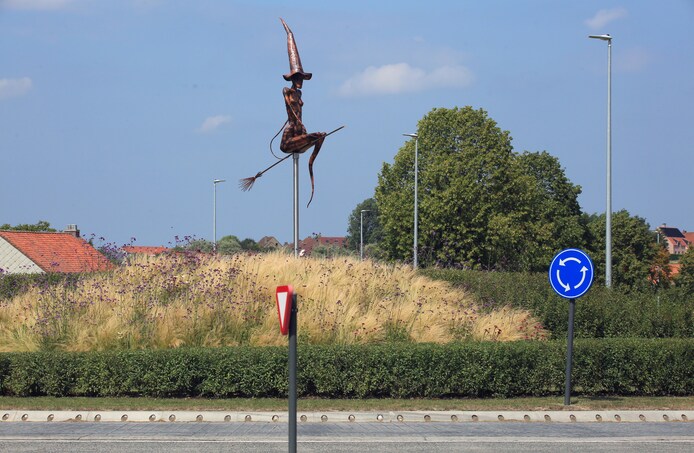
Despite the extensive research into witchcraft and witch-hunting, no comprehensive map of memorials dedicated to the witch trials has ever been created. The Witch Map Project, a student-led research project here at Cardiff University, supervised by Dr Jan Machielsen and Dr Paul Webster, aims to rectify this omission. Rather than focusing on one country or period, our goal is to build and expand upon an evolving map of witch-hunting memorials worldwide, regardless of era or location. In this first of two blog posts, we explain how we went about mapping witchcraft memorials and take you through some of the headline facts and figures.
Searching Strategically
Entries on the map fall under three broad umbrellas. The first is memorials. Many of these are plaques, but we also identified statues and stones. Second is museums or museum exhibits (providing they are permanent), and third is sites of significance. The other main criteria for entries are that they are permanent and publicly accessible, erected or created by local (or even national) communities, including public bodies and charities. We have excluded private memorials that people may have set up in their own homes or temporary museum exhibits.
We focused our search for memorials on one country at a time. Realising quickly that many of our sources wouldn’t be in English, we began to translate keywords like “witch”, “memorial”, and “museum” into our target languages to find information on smaller memorials that we would have otherwise overlooked. For example, when researching Spain, we used key phrases like “Basque witch memorial” or “Monumento de las brujas”. We also searched in Catalan, “Monument de bruixes”, which proved effective in finding memorials that Spanish-language sources hadn’t mentioned. This approach broadened our project’s scope, making it more inclusive and reflective of global witchcraft history, while ensuring thorough mapping through linguistic diversity in digital research.
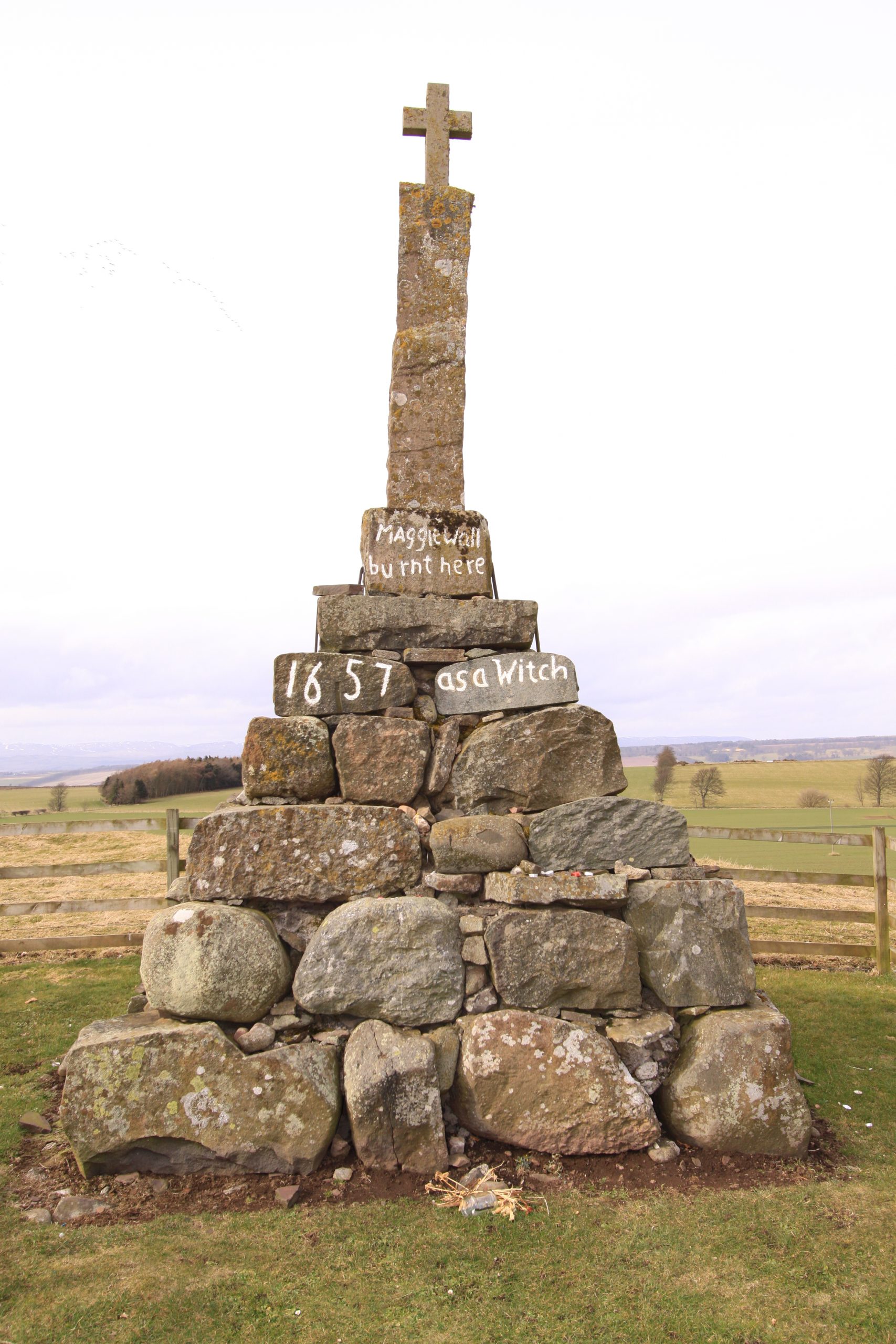
One of the main challenges we encountered was finding specific details on the memorials. While names and locations were usually simple to find, the year of creation was often unclear or undisclosed. This was especially difficult with some museums and sites of significance. A building might have been centuries old, but it was nearly impossible to tell when it began serving its current purpose. Despite our extensive research, we had to list the creation date as “Unknown” for many entries, such as the Maggie Wall monument in Dunning, Scotland.
We faced similar issues identifying the organisations behind memorials or who curated a museum exhibit. Therefore, some entries are sparser than others, not due to oversight but simply because the records weren’t publicly available. For example, Salem’s Witch History Museum offers very little information about its own history on its website, and no news reports appear to be aware of its background either. These gaps highlight areas where archival research and – in the case of museums – correspondence with curators, could enrich the dataset, making it more comprehensive and useful for scholars and public history.
Connecting Memory and Social Media
The next phase of information gathering was to make the project public. We created an account on Bluesky and, thanks to signal boosts from Jan and Paul, we were able to gather an ample following in only a few days. First, we posted a link to the map, asking people to contact us at the email we created for the project if they knew of anything we had missed that fit our criteria. We also started posting a Memorial of the Day (MOTD), choosing an entry from the map and providing a little more detail than on the map itself. This helped us maintain our following, keeping people interested in the project while we waited for more suggestions. If you are interested in keeping up with the project while it remains active, please follow us on Witch Map Project (@witchmapproject.bsky.social) — Bluesky.

Alongside Bluesky, we also made a Reddit account to connect with others. We posted the map on multiple subreddits, once again asking for any suggestions. While Reddit was overall less fruitful than Bluesky, we still received some good feedback from those who commented on our posts. We would like to thank those who contacted us with information – because of your help, we were able to add many more entries to the map, such as the Memorial to the Victims of the Witch Hunts in Oulu, Finland.
From Numbers to Narratives
After collecting a substantial number of memorials, we turned to Microsoft Excel to visualise emerging trends. While data collection is ongoing, and future findings may shift the picture, the current dataset of 134 witchcraft memorials already reveals some compelling patterns. The memorials span a broad geographical range, yet certain regions stand out. Scotland, for instance, accounts for the largest share with 29 memorials, followed by Germany with 24, the USA with 16, and England with 13. This suggests that these nations have placed significant emphasis on recognising and memorialising witchcraft-related histories, whether due to their own historical witch trials or evolving cultural interest in historical justice.
A clear trend emerges when we examine the years these memorials were established. The earliest dates to the 19th century, while the most recent is marked as 2025. The median year is around 2012, with the mean approximately 2000, reflecting a notable rise in commemorative activity over the past two decades. This reflects a broader societal reckoning with historical injustices and a renewed interest in how we remember marginalised groups, including those persecuted for witchcraft. Activist groups like the Witches of Scotland and the Connecticut Witch Trial Exoneration Project have helped drive this momentum by campaigning for pardons and memorials for those convicted of witchcraft, efforts that led to Connecticut formally issuing a pardon in 2023 and the Scottish government apologising in 2022.
This structured data not only provides a foundation for mapping and visualisation projects but also supports comparative cultural studies. By analysing where and when these memorials have been erected, we can explore patterns of commemoration, public history, and collective memory. The uneven distribution of memorials highlights both areas of cultural focus and potential gaps. Regions with documented witch trials but few or no memorials could be prioritised for future research, memorialisation efforts, or public engagement projects, such as Liechtenstein and France. Is there scope, for example, for a display at the Arsenal (today, the Arsenal Library) in Paris, France? It was the site of the Chambre Ardente tribunal during the Affair of the Poisons (1677-1682), which led to the execution of 34 people in one of Europe’s largest witchcraft-related persecutions.
The Witch Map Project continues to uncover and connect various memorials dedicated to witch trials worldwide, a journey we will explore further in our second blog, delving into the meaning and significance behind these acts of remembrance. By combining thorough research with digital outreach, the project highlights how and where communities remember their histories, while revealing important patterns in memorialisation and identifying gaps that invite further exploration. As it evolves, the map remains a valuable resource for understanding and reflection on the ongoing impact of witch hunts worldwide.