When the Mask Won’t Come Off: Christian Demonology, Prophecy, and Apocalypse in Scooby-Doo! Mystery Incorporated (by Abigail Heneghan)
19 February 2026
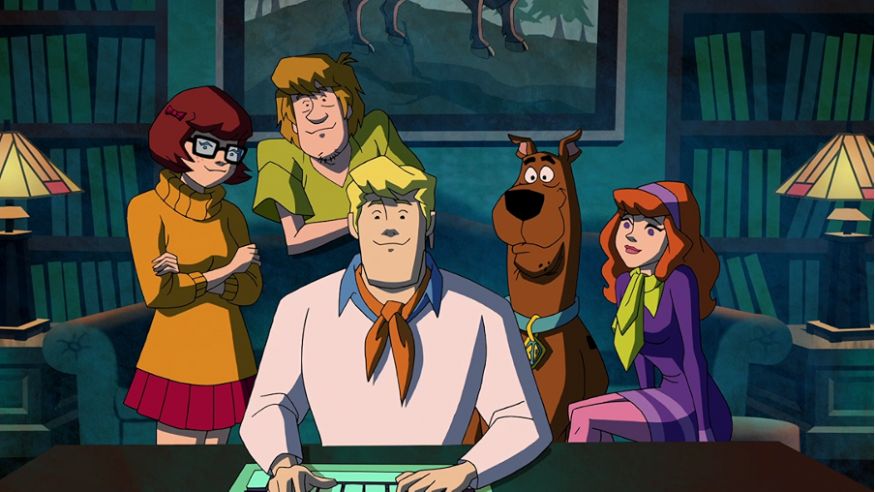
Scooby-Doo! Mystery Incorporated (2010-2013) revitalised the classic Scooby-Doo formula, moving beyond simple mysteries to supernatural secrets. Set in Crystal Cove, the ‘most haunted town in the world’, the series follows Scooby and his friends, Fred, Daphne, Velma, and Shaggy, as they uncover the town’s long-standing curse. For the first time, the monster is real: the sinister Evil Entity has manipulated people for centuries, causing them to commit crimes in costumes. The ‘meddling kids’ delve deeper into the mystery, confronting the danger. Beyond classic mystery-solving fun, the show raises questions about whether our paths are already set for us, exploring the concept and experience of predestination. Spiritual undertones deepen the characters’ journey into a battle between good and evil, with their town’s fate at stake.
The Devil
The Evil Entity is both a supernatural villain and a parallel to the Christian Devil; a tempter, corrupter, and deceiver whose influence has distorted Crystal Cove. Similar to the Devil’s portrayal in many religious traditions, the Entity deceives and manipulates people, slowly taking control without fully possessing them, and offers false promises of power.
Its actions mirror ideas from Christian demonology. In the conquistador’s diary, it’s described how the evil force ‘preyed upon our fears, driving us to commit horrible acts,’ which is similar to Pope Gregory the Great’s idea that evil corrupts through suggestion and weakness. In the episode Theater of Doom, an undead friar reveals that even a group of holy men were tempted: ‘We quickly became obsessed with the pieces… but the evil wouldn’t let us destroy them.’ This reflects how, in Revelation 12:9, Satan is said to have led the world astray, and it aligns with Christian ideas of demons being inherently evil.
The Entity similarly corrupts its victims without fully overtaking them, paralleling cases, as the historian Brian Levack articulates, of demonic influence where free will remains intact but is strained. In the episode Nightmare in Red, Fred Jones Sr. laments, ‘We’ve all been tainted… by that darn treasure’, highlighting the nature of the Entity’s evil, more spiritual temptation than traditional haunting.
The Entity’s attempt to escape its prison resembles the apocalyptic motif of Satan’s release at the end of days. Professor Pericles, his most devoted avian follower, proclaims, ‘I’m coming to set you free, master’, resembling Satanic followers deceived by flattering words and false promises. The Entity is portrayed not as mindless evil but as a rational force of corruption, matching the presentation by Thomas Aquinas and others of demons as fallen angels who retain intellect and agency yet are opposed to the divine and parasitically feed on goodness.
Prophecy
The series explores prophecy and fate as the gang uncovers a recurring cycle of mystery-solvers whose mascot eventually falls prey to corruption. They begin to question whether their actions are their own or if they are controlled by a larger force. This uncertainty echoes the Calvinist notion that destiny overrides free will; while the gang fears they are doomed to fall, they might also be chosen for something better.
In the episode Through the Curtain, a voice declares: ‘You have no choice. This is your destiny’, reinforcing the notion that the gang has been chosen for a specific role in a cosmic battle. This mirrors Jeremiah 20:9, where the prophet, compelled by an uncontrollable divine calling, parallels the gang’s inescapable role, bound by a higher purpose despite their fears. Scooby and his friends become reluctant champions, wrestling with doubt but pushing forward because of the stakes. The gang’s unity, expressed in their bond of ‘friendship’ and ‘love for one another’ during the final battle, echoes biblical teachings about the strength found in communal faith and support. As Jesus said in Matthew 18:20, ‘For where two or three gather in my name, there am I with them’, reinforcing the idea that their collective strength, rooted in support and shared purpose, protects them from the forces of evil.

Against this backdrop of visions and predestination, the series explores themes of doubt and belief. Velma’s discomfort with the unexplained reflects what philosopher Charles Taylor calls the ‘Disinherited Mind,’ where people feel cut off from deeper spiritual meaning. The gang wrestles with the idea of a larger cosmic purpose behind their struggles but fears this meaning might be an illusion. It captures the common struggle of wanting to believe in something greater while doubting its truth.
Saviour
Scooby’s moral resolve marks him as a – perhaps unexpectedly – Christ-like figure. Like Fred’s statement, ‘Good thing we’re not in this to be liked,’ Scooby remains committed to protecting his friends, undeterred by fear or lack of recognition, mirroring Christ’s devotion despite mockery (Isaiah 53:3-4). The gang’s conflict with the town highlights a bigger theme: doing what you believe is right, even when others don’t understand. The show draws on dramatic ideas like the battle between good and evil, but it also keeps things grounded with moral lessons about responsibility. Scooby’s loyalty to his friends reflects both Christian self-sacrifice and a broader lesson on standing by loved ones, no matter the cost.
As the stakes rise, Scooby takes on a prophetic role. After receiving a powerful vision through a possessed friend, he’s told: ‘Undo it all. Save yourself. Save your friends. Save the world.’ The personal burden echoes Christ’s mission to save humanity. Scooby’s recognition, unlike the previous mascots, that the cursed treasure is evil and must be destroyed parallels Matthew 4:10, where Jesus rejects the Devil’s offer of power: ‘Away from me, Satan!’. The gang’s refusal to release the Entity parallels theological resistance to evil, rejecting the easy path in favour of doing what is right.

Scooby’s visions and supernatural insight align with biblical accounts of divine messengers, such as the angelic visit to Mary in Luke 1. A light-hearted character gradually takes on a larger role imbued with a deeper meaning, guiding the group with surprising wisdom and a quiet sense of purpose. Just as Christ, as God’s ‘only Son’, was summoned, even created for a special mission, Scooby was called, perhaps even predestined to a higher purpose in the battle between good and evil. Scooby becomes an unlikely hero, chosen not because he is the toughest, but because he stays true to what matters most.
Apocalypse and Redemption
The series ends with clear references to apocalyptic imagery. In Nightmare in Red, a cursed soldier begs, ‘We should never be set free. We must pay for the terrible things we’ve done,’ echoing the idea of eternal punishment found in Revelation 14:10-11. In Through the Curtain, the Entity demands, ‘Set your master free so I may bathe this world in fire,’ evoking the destructive power of apocalyptic judgment, similar to the chaos unleashed in Milton’s Paradise Lost after Satan’s rebellion.

But hope soon follows. Nova, an Anunnaki reminiscent of angels, counters with: ‘All can be forgiven’. This idea of redemption, even in the darkest times, mirrors Christian beliefs that anyone, no matter their past, can find salvation through repentance (Luke 6:37). Grace is offered; a gift and promise present in countless biblical stories. In Mesopotamian tradition, the Anunnaki were beings of knowledge and power, much like Christian angels. Nova’s role in the story reflects these deeper spiritual and apocalyptic themes, where angels battle demons and bring hope and wisdom during times of crisis.
At the show’s end, the destruction of the Evil Entity creates a new, pure reality: as Daphne declares, ‘It’s come undone, all of it’. This mirrors the vision in Revelation 21:4, where, after Armageddon, pain and death fade away. Those who were once corrupted or harmed by the Entity, like Pericles and ‘Hot Dog Water’, are restored and redeemed. The show emphasises that evil is not overcome by brute force, but through moral strength, unity, and love. Theologian Jerry L. Walls notes that the apocalypse reveals truth and confronts injustice. Mystery Incorporated reflects this, urging viewers to face evil, reject complicity, and seek renewal.
Conclusion
For children, the Evil Entity may simply have been a cartoon villain; for adults, it reflects deeper themes like predestination and existential fear. Without explicitly using religious terms, the show nevertheless touches on questions of faith. Fred’s struggle with betrayal and Velma’s conflict between science and myth highlight challenges around sin, doubt, and redemption. The show replaces religious teachings with other mysteries – symbols, hidden knowledge, and secret traditions – to offer similar moral and perhaps even spiritual lessons..
Moving away from the franchise’s traditional formula of solving mysteries with masked villains and haunted houses, Mystery Incorporated weaves in complex narratives, blending elements of spiritual and moral struggles. The characters take on roles akin to reluctant heroes, battling a deceptive evil. The show reimagines spiritual conflicts, offering a modern, child-friendly take on the timeless battle between good and evil, ultimately reaffirming that redemption and hope are always possible, even in the darkest moments.