Persian Power Dressing – Lloyd Llewellyn-Jones
13 March 2025
This post by Lloyd Llewellyn-Jones reflects on the creation of a British Museum exhibition on Achaemenid court dress.
Early in 2022 I was invited by Dr James Fraser to meet with him at the British Museum to go through the ideas he had been developing as the curator for a forthcoming exhibition, Luxury and Power: From Persia to Greece. I was there on the recommendation of Dr St John Simpson, with whom I had a great longstanding working relationship. As James talked through his ideas for the exhibition and showed me a pin-board covered with images of Persian items which would be put on display, I noticed the lack of any artefacts made from textiles. Of course, this was not a surprise, since ancient textiles have rarely survived in Iran’s archaeology; yet to stage an exhibition on luxury in Persia without the appearance of textiles would be puzzling. After all, when we think ‘Persia’ at the very least we think ‘carpet.’
Given the impossibility of borrowing the fragile Achaemenid-era woven textiles (remarkable survivals!) which are housed in the Hermitage Museum, St Petersburg, it was decided, with the enthusiastic support of Jane Bennett, Senior Project Manager for the exhibition, to do something quite new in the long history of BM exhibitions: we would create replicas of Achaemenid courtly garments to put on display. I have been researching Persian dress (and other types of ancient clothing) for several years and realized at once that was the perfect opportunity to try out some ‘experimental archaeology.’ I hired the talents of a skilled costume-maker, Rebecca Southall, and together we set about looking at ancient construction techniques and purchasing fabrics that best resembled the weight, feel, and look of Achaemenid textiles. To recreate the clothes we were fortunate to receive funding from the British Museum and the British Institute of Persian Studies (BIPS).
Clothing was an important element of ancient Persian court culture. Its significance could be physical, economic, social, or symbolic and the function of clothing, moreover, was multiple. Clothing could protect, conceal, display, or represent a person’s office or state of being and the fact that garments could wear out or tear is also important. After all, in the ancient world handmade fabrics were costly, scarce, and valuable and dyes and decorations added to their worth, so their disintegration or loss was a serious blow to a household economy and personal wealth.
The Greeks, who were fixated by Persian clothing, generally regarded Achaemenid dress as beautiful – if strange. The exhibition team decided that the Greek relationship with the oddities of Persian dress could be explored as a theme too. And so, it was decided to create two types of Persian ‘looks’ – a court robe and a riding outfit.
We constructed the court robe from a huge double-square of yellow-gold patterned lamb’s wool (woven by Melyn Tregwynt in West Wales); it was lined in blue linen. The court robe was richly decorated with ornamented appliqué decorations in the shape of lion-heads. These were made from resin moulds and sprayed gold to look like the real surviving examples we have in New York’s Metropolitan Museum. This was the costume of the Great King par excellence and he is represented wearing it repeatedly, whether sitting on his throne or actively fighting in battle or killing an animal (mythic or otherwise). The court robe represented Achaemenid power.
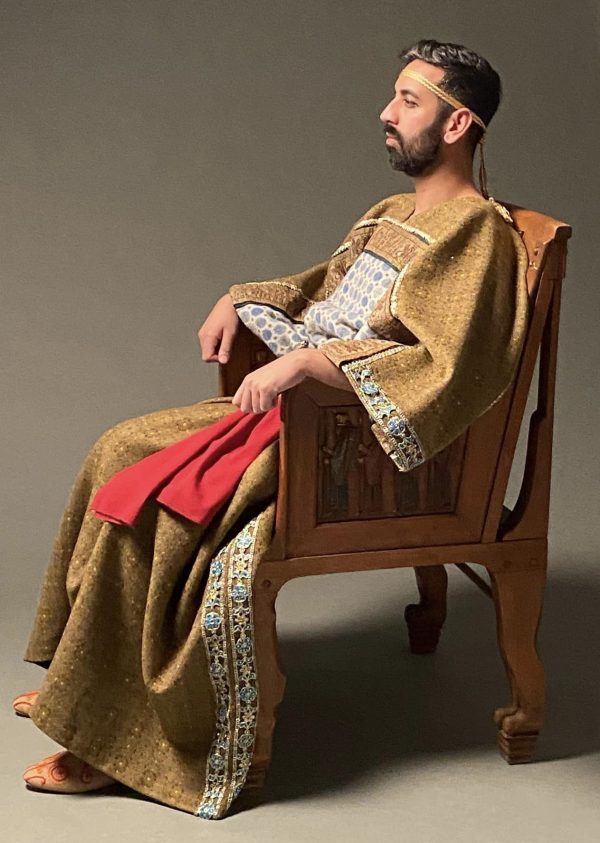
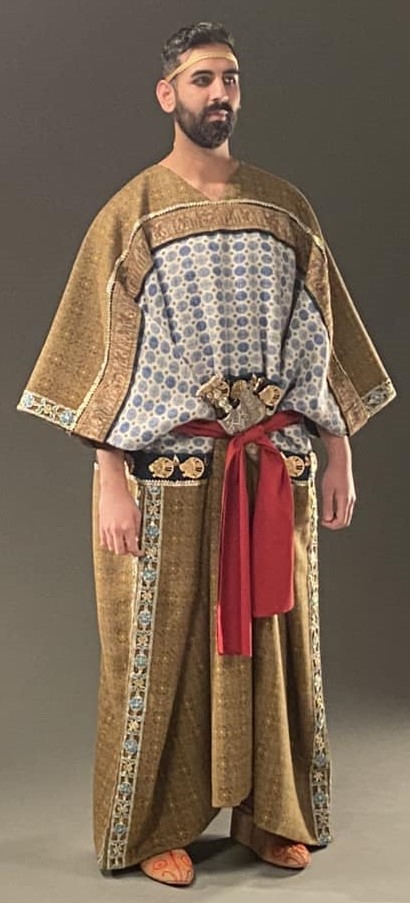
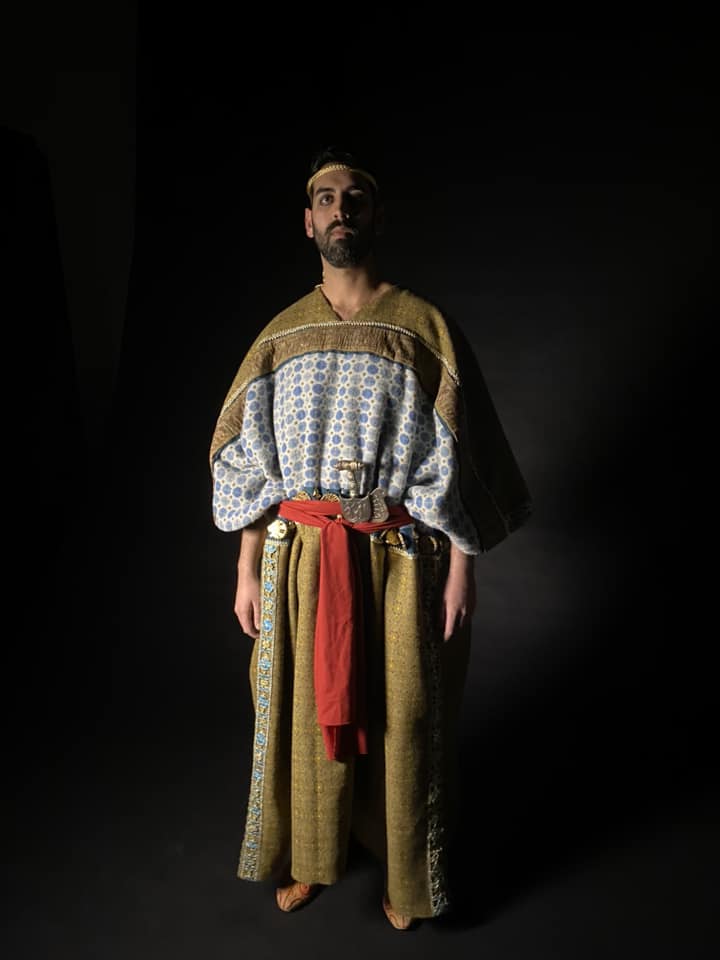
The ‘riding dress’ or ‘cavalry costume’ was made up of five items of clothing – a felt cap, a sleeved coat, sleeved tunic, and trousers with built-in feet – this sort of dress was ideal for a people so dependent on horses for transportation and warfare. Much court etiquette operated around the coat, which is usually shown draped over the wearer’s shoulders with the sleeves hanging loosely at the sides. Again, the lambs’ wool was created by Melyn Tregwynt – and I was particularly pleased with the bold geometric patterns we used for the trousers; they echoed Greek depictions perfectly.
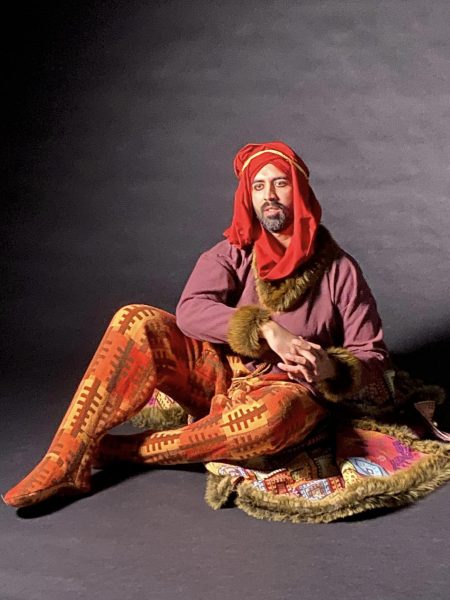
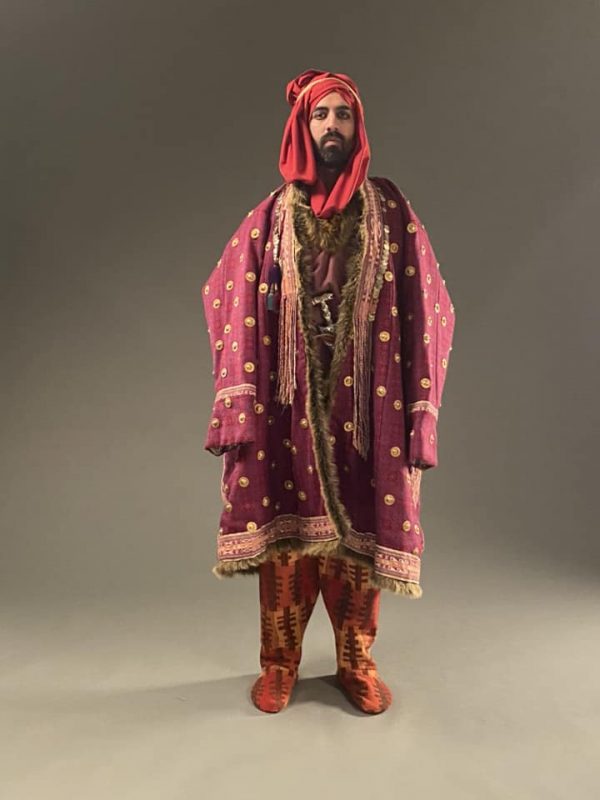
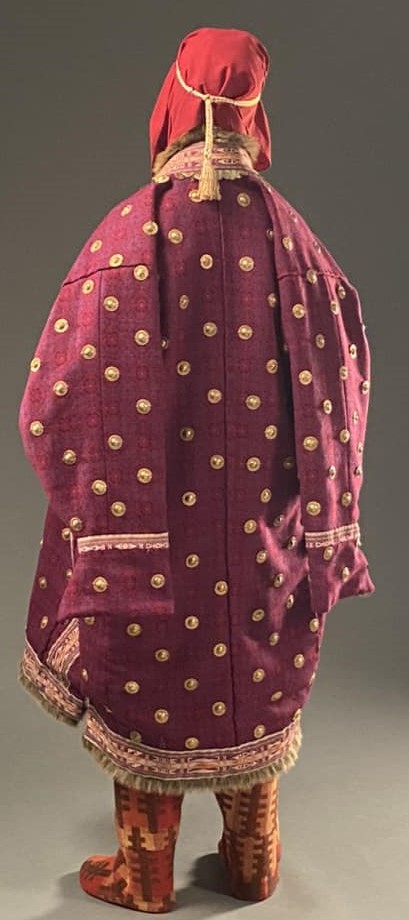
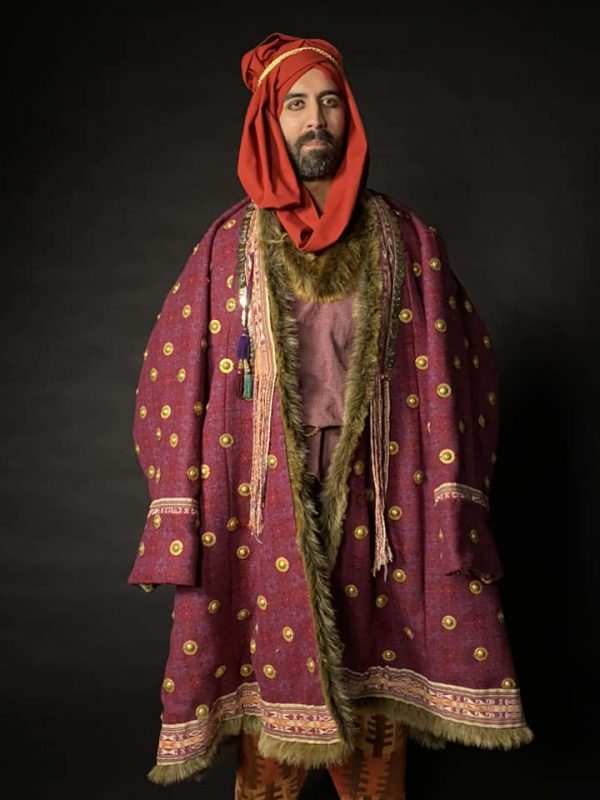
In the exhibition space, the main garments were hung from T-bars to show the shape of their construction, but before their installation, we had the opportunity to photograph the clothes on a male model, so that we could explore drape, movement, and flexibility.
The whole experience – although demanding – was enlightening. The costumes seemed to speak to the visitors of the exhibition and they must have been photographed by thousands! And for me, the project was a wonderful opportunity to put research into practice. I’d love to do more!
Lloyd Llewellyn-Jones
Professor in Ancient History, Cardiff University, author of Persians: the Age of the Great Kings (2022) and Ancient Persia and the Book of Esther: Achaemenid Court Culture in the Hebrew Bible (2023).