Cleopatra, Royal Incest, and the ‘Yuck Response’ – Lloyd Llewellyn-Jones
17 March 2025
This post by Lloyd Llewellyn-Jones discusses the Ptolemaic practice of royal incest and why such socially taboo behaviour occurred.
In the popular imagination, Cleopatra will always be romantically entwined with the names of those two infamous – and ultimately doomed – powerful Roman men, Julius Caesar and Marc Antony. By them Cleopatra had no less than four children, all of whom she presented to the world as legitimate heirs to Egypt’s throne, for she claimed to have married both Caesar and Antony in legal ceremonies. The Roman senate flatly denied that, and while her Egyptian subjects acknowledged that the queen was twice married, her husbands were not those illustrious Romans, but two lads, her younger full-blood brothers. At the age of about seventeen, when she inherited the throne of Egypt, Cleopatra had been required to marry her thirteen-year-old brother, Ptolemy XIII. This was stipulated in their father’s will. After young Ptolemy had died in battle against his sister-wife, Julius Caesar forced Cleopatra to marry the family spare, eleven-year-old Ptolemy XIV. Upon Caesar’s assassination, Cleopatra quickly got rid of her boy-husband and set her sights on an older man – Antony.

Now, it is very unlikely that Cleopatra’s marriages to her two brothers were, in any way, physical unions – although her father had very much hoped they would be, because the Ptolemies, the Macedonian-descended pharaohs of Egypt (305-30 BCE), routinely practiced incest. Cleopatra was the result of a long line of brother-sister, uncle-niece, or cousin-cousin unions. In most cases in the dynasty’s history, married royal siblings had active sexual relationships, undertaken with the intention of begetting children. Even cases of double-incest are known: the queen’s ancestor, Cleopatra II, had a long and fruitful marriage to her elder brother (she bore him four children), and on his death, she moved into the bed of her younger, odious, brother, Ptolemy VIII – known as Potbelly. Cleopatra II had a son by him too, but when she got passed child-bearing age, Potbelly, needing more heirs, married his step-daughter-niece, Cleopatra III (daughter of Cleopatra II and Ptolemy VI) and got a brood of children by her. Of the next generation, Ptolemy IX married two of his sisters, while Ptolemy X took a sister and a niece as wife. All the women bore heirs. And so the dynasty continued…
Across time and cultures, first-degree incest (sex between parents, children, and siblings) has tended to be strictly verboten. Humans have social and psychological mechanisms to deter incest, and rigid taboo cultures surrounding incestuous practices have been formed in every human culture. The primary psychological anti-incest mechanism has been labelled ‘the yuck response’, the repulsion elicited by the prospect of incestuous sex, even in hypothetical situations in which there is no chance of pregnancy. The incest taboo is about as close to a universal law as human moral rules get. Sophocles’ self-loathing and self-mutilating Oedipus, in the tragedy Oedipus the King (c. 429 BCE), wrestles with the realization that he has unwittingly murdered his father and had sex with his mother. His biting cry of unearthly psychological torture captures intensely that sense of the effect of these improper roles on him: ‘born from those who should not have borne me, laying with those I should not have lain with, killing those I should not have killed!’ Right up to our own time, few subjects incite as much abhorrence, outrage, and horror as does first-degree incest; our attitudes are reflected in terms of strong abuse (like ‘motherfucker’) and highly evocative incest terms (such as the German Blutschande, ‘blood shame’). In addition, calculated parent-child incest of such infamous figures as Rose and Fred West or Josef Fritzl is integral to the public perception of their crimes constituting the height of depravity.

Given the standard cultural attitudes towards incest, why did the Ptolemies promote first-degree incest within their family? The answer can be found, I think, in the family’s promotion and projection of its own unique concept of ‘royalty.’ As god-kings and goddess-queens the Ptolemies allowed themselves to engage in behaviours not open to the common herd and, therefore, they did not think of themselves as ‘breaking’ a taboo but as ‘fulfilling’ the taboo by giving it meaning. Through their dynastic incest, the Ptolemies became set apart and untouchable by ordinary standards of human behaviour. Oedipus may well be the embodiment of all the heinous miasmas we associate with incest, but it is worth noting that Sophocles’ greatest tragedy is not entitled Oedipus the Incestuous or Oedipus the Murderer or even simply Oedipus; it is called Oedipus the King. Why? Because Oedipus is a king. And as a king, the incest he committed was crucial to his ascent to the throne. Kings do not operate on the same level as mortals; they are not judged by normal codes of behaviour for kings in Egypt were living gods. And so they behaved like gods – after all, Isis was married to her brother Osiris and stories were told that they adored each other so deeply that they made love while they were still both in the womb. Isis and Osiris were emblematic of a deep and passionate marital love that was, at one and the same time, also a sibling love. In a Greek context, which suited the Macedonian Ptolemies nicely, the mighty Olympian god, Zeus, was married to Hera, his full sister. Incest among humans might have been repugnant to the Greeks, but among their gods, who had every right to engage in any sexual practices they wished, it lacked any taboos. For the incestuous royalty of the Ptolemaic house to replicate the behaviour of the gods, both Egyptian and Greek, meant that that they conceived of themselves as much more than mere mortals; their incestuous behaviour elevated royalty to the plane of the divine.
Lloyd Llewellyn-Jones
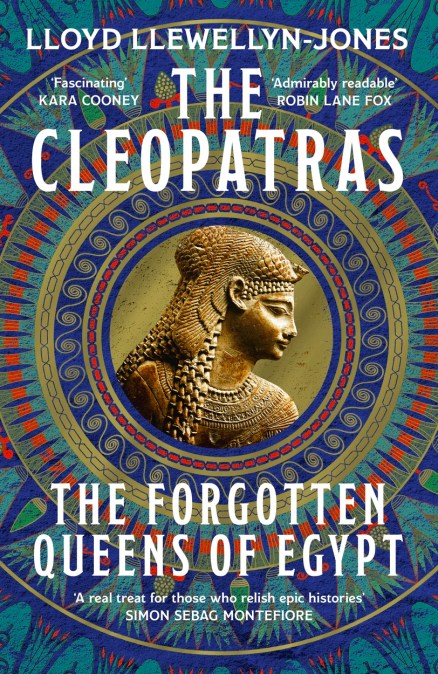
Professor in Ancient History, Cardiff University, author of The Cleopatras: The Forgotten Queens of Egypt (2024).